


Can dogs eat pomegranate? A few seeds, yes. Pomegranate arils, the juicy red seeds, aren't toxic to dogs, and a small pinch is unlikely to cause harm. But dogs often get an upset stomach from pomegranate, the tough peel and white pith can cause problems, and the juice is sugary. It's a fruit to share in tiny amounts, if at all.
A few seeds are OK, but it isn't a great treat. Offer a small pinch of plain arils as a rare taste. Skip the peel, pith, juice, molasses and pomegranate desserts. Dogs with sensitive stomachs will do better with blueberries or apple slices.

Table of Contents
What's in Pomegranate Seeds?
Pomegranate arils bring fiber, vitamin C, vitamin K, potassium and polyphenols, the plant compounds behind pomegranate's antioxidant reputation. They're also fairly high in natural sugar for a fruit. Per 100 g, from USDA FoodData Central:
| Per 100 g | Pomegranate arils | Blueberries | Watermelon |
|---|---|---|---|
| Calories | ~83 kcal | ~57 kcal | ~30 kcal |
| Natural sugar | ~13.7 g | ~10 g | ~6.2 g |
| Fiber | ~4.0 g | ~2.4 g | ~0.4 g |
Approximate USDA values. One tablespoon of arils weighs about 9 g, roughly 7 to 8 calories.
You'll see pomegranate listed in some commercial dog foods, usually as a small amount of extract or powder. That's very different from a dog eating a pile of whole seeds.
Why Pomegranate Can Upset Dogs
Pomegranates are rich in tannins and other polyphenols. In people they're harmless; in dogs, larger amounts are a common cause of vomiting and diarrhea. The seeds inside each aril are also hard and fibrous, and a dog that eats a lot at once can end up with a sore stomach.
Keep the whole fruit and peel out of reach. The leathery peel and bitter white pith are hard to digest. A dog that chews up a whole pomegranate can swallow large pieces that may cause choking or an intestinal blockage. Call your vet if your dog ate a lot of peel and is vomiting, straining or not eating.
How Much Pomegranate Can a Dog Have?
| Dog's weight | Pomegranate arils | How often |
|---|---|---|
| Under 15 lb | 3 to 5 seeds | Rarely |
| 15 to 40 lb | About 1 teaspoon | Rarely |
| 40 to 70 lb | About 2 teaspoons | Rarely |
| Over 70 lb | Up to 1 tablespoon | Rarely |
Our conservative estimates. Calories are small; the limit is stomach upset. All treats should stay under about 10% of daily calories, a guideline from WSAVA.
The first time, try just a few seeds and wait a day. If you see vomiting or loose stool, pomegranate isn't for your dog.
Juice, Molasses and Other Forms
| Form | Verdict | Why |
|---|---|---|
| Fresh arils | Small amounts | Fiber and polyphenols; can upset the stomach |
| Peel and white pith | Avoid | Bitter, tough, blockage risk |
| Pomegranate juice | Avoid | Concentrated sugar, no fiber |
| Pomegranate molasses | Avoid | Very sugary and acidic |
| Pomegranate yogurt or ice cream | Avoid | Added sugar; check for xylitol |
| Dog food with pomegranate extract | OK as labeled | Tiny, measured amounts |
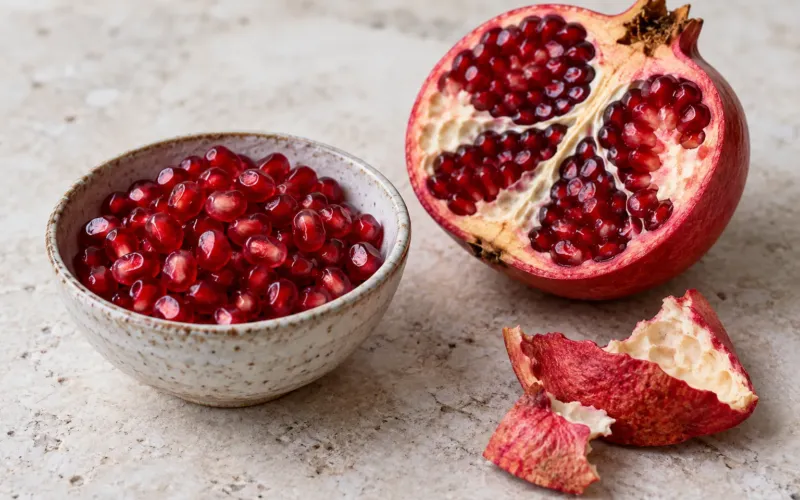
How to Serve Pomegranate Seeds
- Cut the fruit open and tap the arils into a bowl of water; the pith floats and the seeds sink.
- Drain and offer a few loose seeds on their own or mixed into plain yogurt.
- Freeze a few arils in water or plain yogurt in an ice cube tray for a summer treat. See our frozen dog treats guide.
- Bin the peel immediately. Dogs love to steal the empty halves.
Pomegranate juice stains, so serving on an easy-to-clean surface helps.
Gentler Fruit Choices
If your dog loves fruit, these are easier on the stomach:
- Blueberries, small, low in calories and rarely upset dogs
- Strawberries, sliced
- Apple slices, seeds and core removed
- Cranberries, plain and fresh, in small amounts
Is Pomegranate Poisonous?
You may read that pomegranate is poisonous to dogs. That overstates it. It isn't on the ASPCA's list of toxic foods, and dogs that eat a few seeds are usually fine. What's true is that many dogs react with vomiting or diarrhea, especially after larger amounts or the peel. So the honest answer is: not toxic, but not a good match for most dogs' stomachs. When in doubt, choose a fruit with a better track record.
Is pomegranate a healthy treat for dogs? Not really. It's not toxic, but it upsets many dogs' stomachs. A few seeds as a rare taste is fine; blueberries are an easier everyday fruit.
What about dog foods with pomegranate? Those use small, measured amounts, usually as extract. That's not the same as a dog eating a pile of seeds or peel.
— Dr. Sarah Miller, DVM
Pomegranate for Dogs: Quick Serving Guide
✓ Do
- Offer just a few loose seeds
- Remove all peel and white pith
- Try a small amount first
- Mix seeds into plain yogurt
✕ Don't
- Let your dog chew the whole fruit
- Give pomegranate juice or molasses
- Share sweetened pomegranate desserts
- Feed big handfuls of seeds
Dogs with a sensitive stomach should skip pomegranate. Ask your vet if unsure.
Frequently Asked Questions
Are pomegranates toxic to dogs?
No, they're not considered toxic. They just tend to upset dogs' stomachs, especially in larger amounts.
Can dogs eat pomegranate seeds raw?
Yes, fresh raw arils are the only form worth offering, and only a few at a time.
Can dogs drink pomegranate juice?
It's best not to. Juice is concentrated sugar without the fiber, and it can cause diarrhea.
My dog ate a whole pomegranate. What should I do?
Call your vet, especially if your dog swallowed peel. Watch for vomiting, a painful belly and straining.
Can puppies eat pomegranate?
Skip it for puppies. Their stomachs are more sensitive, and there are gentler fruits to try.
For more foods, browse the full what can dogs eat list.
The Bottom Line
Can dogs eat pomegranate? A few plain seeds are safe for most dogs, but pomegranate often upsets the stomach, and the peel, juice and sweet products should stay off the menu. Treat it as an occasional taste and reach for gentler fruits most of the time. More answers in our Can Dogs Eat…? library.
References & Sources
Written by CPD Nutrition Desk using the sources below. We are not affiliated with these organizations, and this guide is not a substitute for advice from your veterinarian.
- USDA — USDA FoodData Central
- WSAVA — WSAVA guidetotreats dogs 251107