
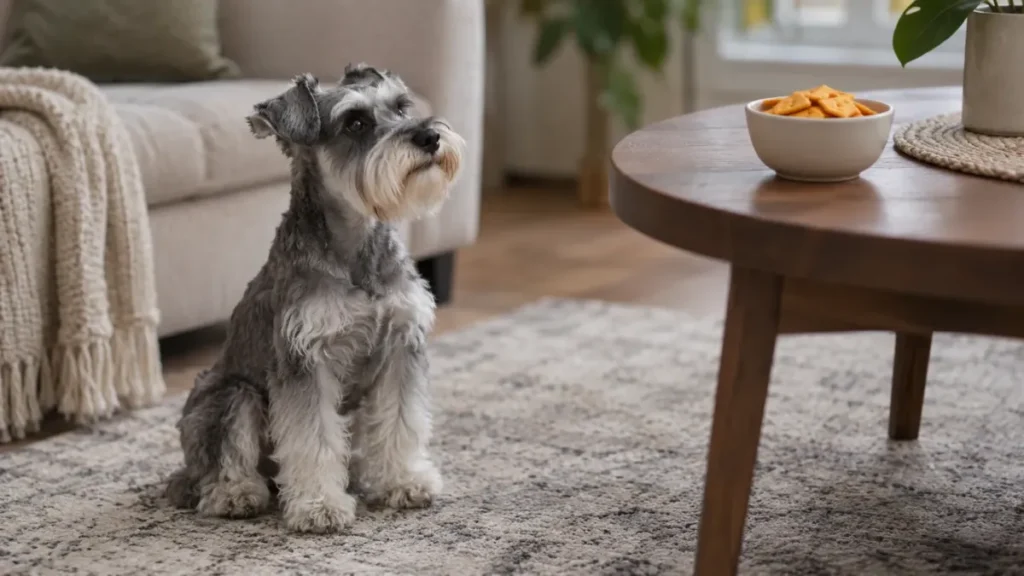

Dogs can have one or two plain Cheez-Its once in a while, but these cheese crackers are not a good dog treat. They are salty, fatty and made from refined flour, and some flavors contain onion or garlic powder. A cracker dropped on the floor is no emergency; a whole box is a reason to call your vet.
Only in moderation. Original Cheez-Its are not toxic, but they offer no real benefit. Keep it to a cracker or two, never flavored varieties, and pick a healthier crunchy treat instead.
Table of Contents
Can Dogs Have Cheez-Its?
The original crackers are made from enriched wheat flour, vegetable oil, cheese, salt and paprika. None of those are toxic for dogs in a tiny amount. The concern is the dose: crackers are calorie-dense, salty, and very easy to overeat, and dogs are not small humans.
One cracker has roughly 5 to 6 calories and about 8 mg of sodium. That sounds small, but a handful of 20 crackers gives a 15 lb dog about a third of its daily calories in one go, plus a big hit of salt.
The Real Risks of Cheese Crackers
Salt
Too much salt can cause vomiting, diarrhea, heavy thirst and, in severe cases, salt poisoning with tremors or seizures. See the Pet Poison Helpline page on salt.
Fat and calories
Crackers add empty calories that lead to weight gain, and a large fatty binge can trigger stomach upset or pancreatitis.
Flavored varieties
Some flavored crackers list onion powder or garlic powder, and spicy versions include chili seasoning. Onion and garlic are on the ASPCA foods to avoid list. Always read the label of the exact box.
Dairy
Cheese crackers contain a little cheese. Most dogs tolerate it, but lactose-sensitive dogs may get gas. Our cheese guide explains which cheeses are best.
Which Cheez-It Flavors Are Worst?
| Type | Risk for dogs | Why |
|---|---|---|
| Original | Low in tiny amounts | Salt and fat only |
| White Cheddar | Low in tiny amounts | Similar to original; check label |
| Extra Toasty | Low in tiny amounts | Same base, darker bake |
| Hot and Spicy | Avoid | Chili and pepper seasoning can upset the stomach |
| Ranch, Zesty and other seasoned flavors | Avoid | Often contain onion or garlic powder |
| Cheese-filled or snack mixes | Avoid | More fat, salt, and mixes may include nuts or pretzels |
Recipes change. Check the ingredient list on the box you have.
How Many Cheez-Its Can a Dog Have?
If you choose to share, these are maximums for an occasional day.
| Dog weight | Approx. daily calories | Plain crackers (max) | Calories added |
|---|---|---|---|
| Under 15 lb | about 350 | 1 to 2 | 6 to 11 kcal |
| 15 to 30 lb | about 690 | 2 to 3 | 11 to 17 kcal |
| 30 to 60 lb | about 1,075 | 3 to 5 | 17 to 28 kcal |
| Over 60 lb | about 1,580 | 5 to 6 | 28 to 33 kcal |
Estimates for a typical neutered adult (70 x kg^0.75 x 1.6) at about 5.5 kcal per original cracker. Not a daily treat.
My Dog Ate a Whole Box of Cheez-Its
First, check the flavor and how much is missing. Then:
- Remove any remaining crackers and the bag or box (bags can be a suffocation risk).
- Offer fresh water and let your dog drink normally.
- Watch for vomiting, diarrhea, extreme thirst, wobbling, tremors or belly pain over the next 24 hours.
- Call your vet or the ASPCA Animal Poison Control Center if your dog is small, ate a flavored variety with onion or garlic, or shows any of those signs.
Large dogs that eat a small box of original crackers usually get away with loose stool. Small dogs and dogs with heart or kidney disease are at more risk from the salt.
Better Crunchy Snacks for Dogs
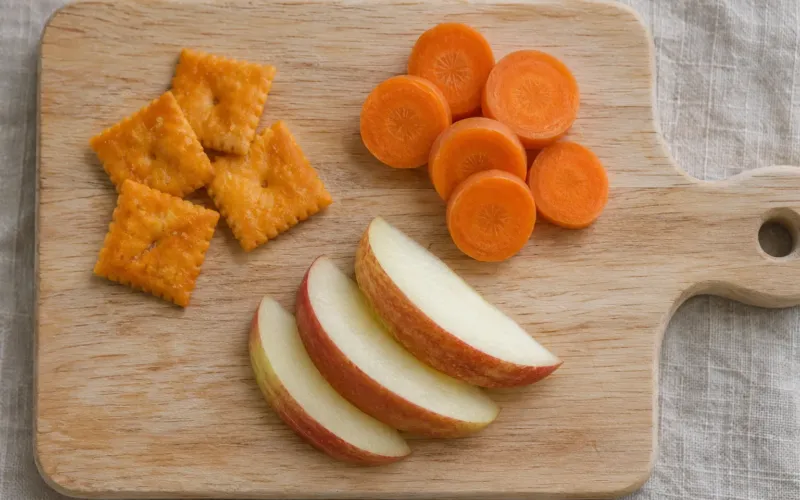
- Carrot coins or baby carrots: crunchy, about 4 calories each. See can dogs eat carrots.
- Apple slices without seeds or core.
- Air-popped plain popcorn, a few kernels. See can dogs eat popcorn.
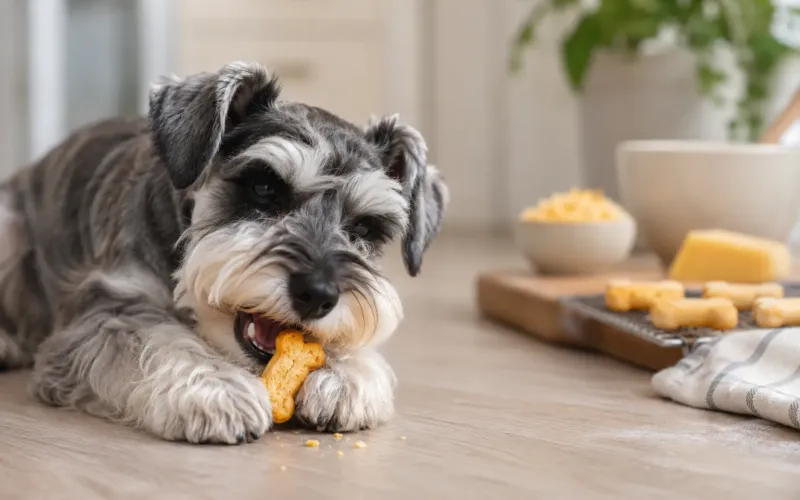
- Homemade cheese biscuits with a small amount of low-salt cheese, like our cheese dog treats.
At what point does eating salty crackers become a vet visit? A few crackers just need fresh water. Call your vet if a small dog ate a whole box, or if any dog vomits repeatedly, seems wobbly, very thirsty or has tremors.
Which salty snacks cause the most problems? The ones eaten in large amounts at once: pretzels, chips, salted popcorn and crackers, plus homemade play dough, which is very high in salt.
— Dr. Sarah Miller, DVM
Cheese crackers and dogs
✕ Risky
- Handfuls of crackers
- Ranch or spicy flavors
- Onion or garlic powder
- Leaving the box in reach
✓ Better swaps
- Carrot coins
- Apple slices
- Plain air-popped popcorn
- Homemade cheese biscuits
Estimate: keep treats under about 10% of daily calories.
Frequently Asked Questions
Can puppies have Cheez-Its?
It's best not to. Puppies have small bodies and sensitive stomachs, so salty snacks hit them harder. Use puppy-safe treats instead.
Are Cheez-Its toxic to dogs?
Original Cheez-Its are not toxic. They are simply salty and fatty. Flavored ones may contain onion or garlic powder, which is a bigger concern.
Can dogs eat Goldfish crackers or other cheese crackers?
The same rules apply: one or two plain crackers is fine, but they are salty snacks. Check for onion and garlic powder in flavored kinds.
Can dogs have Cheez-Its as a training treat?
They are not ideal because they crumble and add salt fast. Small pieces of plain chicken or homemade training treats work better. See homemade dog training treats.
Can dogs have white cheddar Cheez-Its?
A cracker or two is unlikely to cause problems, but the risk profile is the same as the original: salt, fat and refined flour.
The Bottom Line
Can dogs have Cheez-Its? One or two original crackers now and then won't hurt most dogs, but they add salt and empty calories. Avoid flavored varieties, never let your dog finish a box, and reach for carrots, apple slices or homemade biscuits instead.
References & Sources
Written by CPD Nutrition Desk using the sources below. We are not affiliated with these organizations, and this guide is not a substitute for advice from your veterinarian.
- Pet Poison Helpline — Pet Poison Helpline page on salt
- ASPCA — ASPCA foods to avoid list
- ASPCA — ASPCA Animal Poison Control Center