
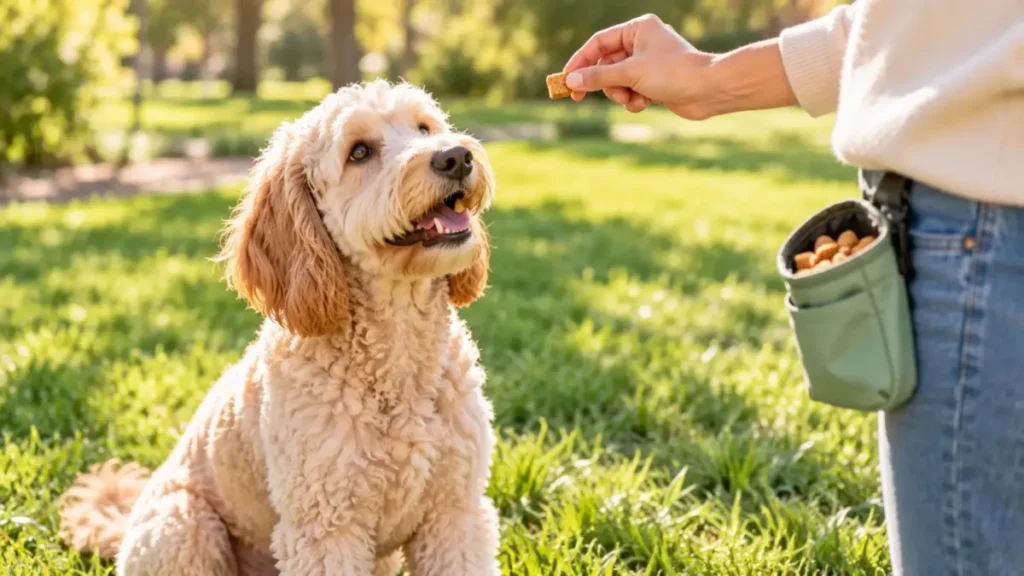

The best homemade dog training treats are tiny, soft, smelly and quick to eat, so your dog stays focused and you can reward 50 times in a session without overfeeding. This guide has two dog training treats recipes that you bake in a pan and cut into hundreds of pea-size pieces: a high-value turkey version and a peanut-free pumpkin version. Each piece has just 3 to 4 calories, and we show how many your dog can have per day.
Recipes: turkey oat training bits, pumpkin oat training bits • Prep: 10 minutes • Cook: 20–25 minutes • Yield: about 150–200 pea-size pieces • Difficulty: easy • Storage: fridge 4–5 days, freezer 3 months
The secret is the “sheet pan” method: bake one flat layer, then cut it into tiny squares with a pizza cutter.
Table of Contents
What Makes Good Homemade Dog Training Treats?
Training treats work differently from snacks. A good one is:
- Tiny: about the size of a pea, or smaller for toy breeds. Your dog only needs a taste.
- Soft: eaten in a second, so training keeps flowing. Crunchy biscuits leave crumbs and slow things down.
- Smelly and tasty: real meat or fish works best for distractions, recall and new skills.
- Low in calories: ideally under 5 calories each, because they add up fast.
- Non-crumbly: easy to carry in a pouch or pocket.
Professional trainers often use a “value ladder”: kibble for easy behaviors at home, and high-value homemade treats for harder ones outdoors.

Recipe 1: High-Value Turkey Training Treats
Turkey Oat Dog Training Treats
Ingredients
Method
- Heat the oven to 350°F (175°C) and line a quarter sheet pan (about 9x13 inches) with parchment.
- Mix the turkey, egg and oat flour into a thick paste. Add water if it is too stiff to spread.
- Spread thinly and evenly, about 1/4 inch thick.
- Bake 20 to 25 minutes until firm and the center reaches 165°F (74°C).
- Cool, then cut with a pizza cutter into 1/2-inch squares.
Notes
The batch is about 830 calories, roughly 4 calories per piece. Chicken works the same way; see our chicken dog treats.
Recipe 2: Pumpkin Training Treats (No Peanut Butter, No Meat)

Pumpkin Oat Dog Training Treats
Ingredients
Method
- Heat the oven to 350°F (175°C).
- Mix everything into a soft dough and press into a thin, even layer on a lined pan.
- Score into a grid of tiny squares before baking.
- Bake 18 to 20 minutes, cool and snap apart.
Notes
Each piece has about 3.5 calories. It’s a good lower-value reward for easy behaviors and for homemade puppy training treats; our puppy treat recipes have more soft ideas.
How Many Training Treats Per Day?
The WSAVA guideline is to keep treats under about 10% of daily calories. With tiny pieces, that’s a lot of rewards:
| Dog’s Weight | Daily Treat Budget | Turkey Bits (4 kcal) | Pumpkin Bits (3.5 kcal) |
|---|---|---|---|
| 10 lb (4.5 kg) | ~35 kcal | 8 | 10 |
| 25 lb (11 kg) | ~70 kcal | 17 | 19 |
| 50 lb (23 kg) | ~115 kcal | 29 | 33 |
| 75 lb (34 kg) | ~160 kcal | 39 | 45 |
Our estimates for neutered adult dogs, using USDA FoodData Central values. Planning a long session? Use part of your dog’s daily kibble as rewards and reduce the meal by the same amount. For small dogs, cut pieces even smaller and double the count.
Tips for Using Treats in Training
- Mark, then treat: say “yes” or click the moment your dog does it right, then deliver the treat within a second or two.
- Match value to difficulty: kibble for easy tasks, turkey bits for recall or busy places.
- Keep sessions short: 5 minutes, a few times a day, works better than one long session.
- Fade treats over time: once a behavior is reliable, reward every second or third time and add praise and play.
- Train before meals, when your dog is a little hungry and more motivated.
The AKC training library has free guides for basic cues if you’re just starting out.
Storing Homemade Dog Training Treats
- Fridge: 4–5 days in an airtight container.
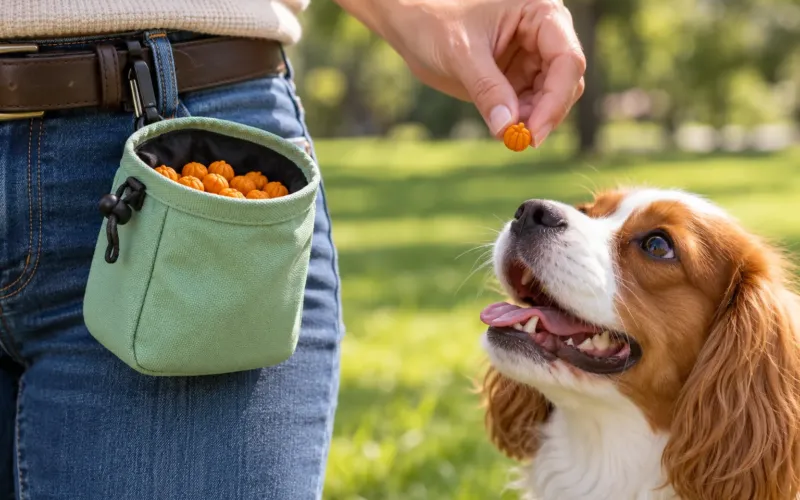
- Freezer: divide into small bags, one per day or session, and freeze for up to 3 months. Pieces thaw in about 15 minutes in a pouch.
- Batch prep: DIY dog training treats are easiest in bulk, so make a double batch on the weekend and freeze in daily portions.
Swaps for Different Dogs
| Need | Swap |
|---|---|
| Extra high value | Use canned salmon or sardines (in water, no salt) instead of turkey; see our salmon dog treats |
| Grain-free | Use chickpea flour instead of oat flour |
| Lower fat | Use 99% lean turkey breast or chicken breast |
| No oven | Tiny pieces of plain boiled chicken or turkey work too, but keep them refrigerated |
| Organ meat | See our liver treats; use liver sparingly because it’s very rich in vitamin A |
How can owners avoid weight gain with lots of training treats? Keep treats tiny, count them, and reduce meals slightly on heavy training days.
Is liver a good training treat? Dogs love it, but it's very rich in vitamin A, so use it sparingly.
Safety tips for homemade meat treats? Cook them fully, keep them refrigerated, and don't leave them in a warm treat pouch all day.
— Dr. Sarah Miller, DVM
Homemade Training Treats: Quick Guide
✓ Do
- Cut treats pea-size or smaller
- Use high-value treats for hard tasks
- Freeze daily portions in small bags
- Subtract treat calories from meals
✕ Don’t
- Use big, crunchy biscuits for training
- Leave moist treats in a warm pouch
- Add garlic, onion or seasoning
- Forget to count treats on long sessions
Every dog is different. Dogs with allergies, pancreatitis or weight issues should get their vet’s okay first.
Frequently Asked Questions
What are the best homemade training treats for dogs?
Soft, pea-size pieces of real meat or fish, like the turkey bits above. They’re high value, quick to eat and low in calories per piece.
How small should training treats be?
About the size of a pea for medium and large dogs, and half that for toy breeds. Your dog just needs a taste.
Can I make homemade puppy training treats?
Yes. Use the pumpkin or turkey recipe cut very small, and count treats toward your puppy’s daily food. Our how much to feed a puppy guide helps you adjust meals.
Can I make training treats without peanut butter?
Yes, both recipes here are peanut-free. Pumpkin, egg and meat bind the dough on their own.
Can I use my dog’s kibble as training treats?
Yes, for easy behaviors at home. Save homemade high-value treats for harder skills and distracting places.
Why does my dog ignore treats outside?
Outdoor distractions are more exciting than low-value treats. Switch to a higher-value reward, move farther from distractions, and keep sessions short.
Find your next bake in our homemade dog treats guide, sorted into baked, frozen, meaty and holiday recipes.
The Bottom Line
Homemade dog training treats are easy: bake a thin sheet of turkey or pumpkin dough, cut it into pea-size squares, and freeze daily portions. At 3 to 4 calories each, you can reward often without overfeeding, as long as you count them in the daily budget. Find more recipes in our Homemade Treats section. This article is general information, not veterinary advice; see our Veterinary Disclaimer.
References & Sources
Written by CPD Nutrition Desk using the sources below. We are not affiliated with these organizations, and this guide is not a substitute for advice from your veterinarian.
- WSAVA — Feeding treats to your dog v2
- USDA — USDA FoodData Central
- American Kennel Club (AKC) — AKC training library