


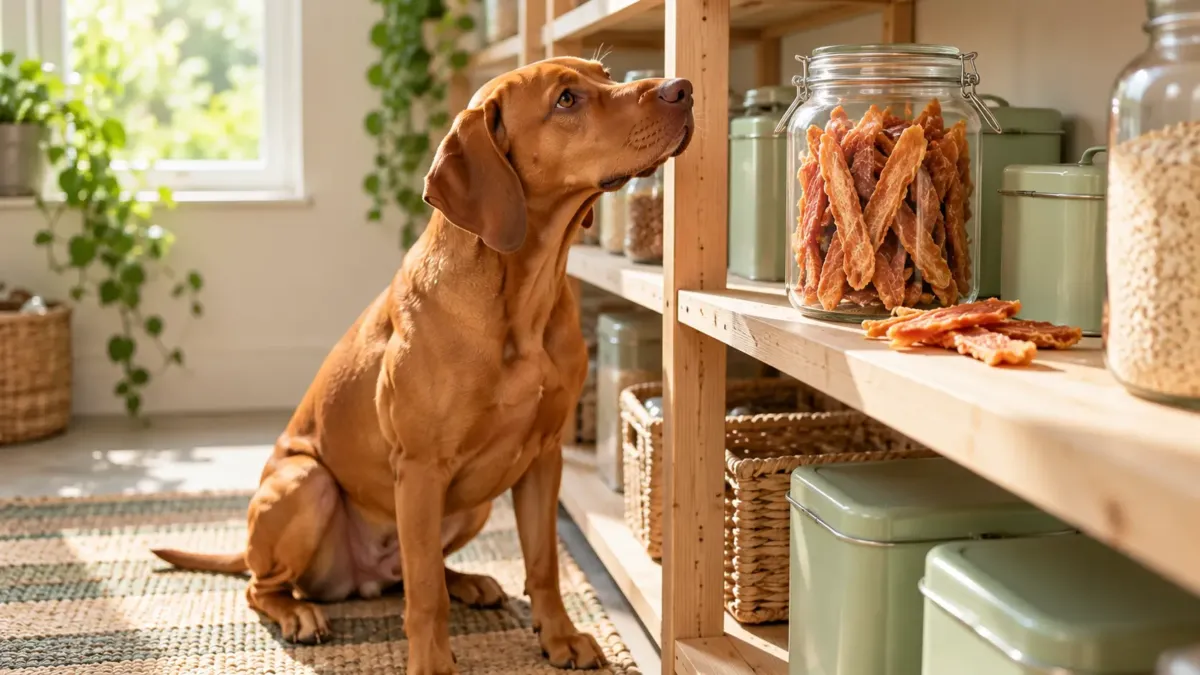
Homemade chicken jerky for dogs takes one ingredient: plain, boneless chicken breast, sliced thin, cooked to a safe temperature and then dried until chewy. Making it yourself means you know exactly what’s in each strip, which matters after years of illness reports tied to store-bought jerky treats. Below you’ll find the oven method, dehydrator and air fryer options, how many strips to give by weight, and how to store a batch safely.
Ingredient: 1 lb (450 g) boneless, skinless chicken breast • Prep: 20 minutes plus 1 hour chilling • Cook: about 2–3 hours in the oven or 4–6 hours in a dehydrator • Yield: about 30 strips • Difficulty: easy • Storage: fridge up to 2 weeks, freezer up to 3 months
The one step this chicken jerky for dogs recipe never skips: bring the chicken to 165°F before drying it.
Table of Contents
Is Chicken Jerky Bad for Dogs?
Plain, fully cooked, homemade chicken jerky is a safe, high-protein treat for most dogs. The worry comes from store-bought jerky. Since 2007, the FDA has received reports involving more than 6,200 dogs and more than 1,140 deaths linked to jerky pet treats, many of them chicken, duck or sweet potato jerky made in China. Signs included stomach upset and a kidney problem called Fanconi-like syndrome. Despite years of testing, no single cause was found.
Homemade jerky avoids that uncertainty, but it brings its own risk: raw chicken can carry Salmonella and Campylobacter. A home dehydrator or a low oven alone may not get hot enough to kill them, which is why the cooking step below matters so much.
Ingredients and Equipment
- 1 lb (450 g) boneless, skinless chicken breast. Breast is lean, so the jerky dries evenly and keeps longer. Thighs work but are fattier and spoil faster.
- Nothing else. No salt, oil, garlic, onion, soy sauce or marinade. Garlic and onion are toxic to dogs, and dogs don’t need added salt.
- Sharp knife and cutting board, or ask the butcher to slice the breast thin.
- Meat thermometer. It’s the only reliable way to confirm 165°F.
- Oven with a wire rack over a lined tray, a food dehydrator, or an air fryer with a dehydrate setting.
How to Make Chicken Jerky for Dogs in the Oven
Oven Chicken Jerky for Dogs
Ingredients
Method
- Freeze the chicken about an hour, until firm but not frozen solid.
- Trim the fat and slice 1/8 to 1/4 inch thick. Across the grain gives tender strips; with the grain gives chewier ones.
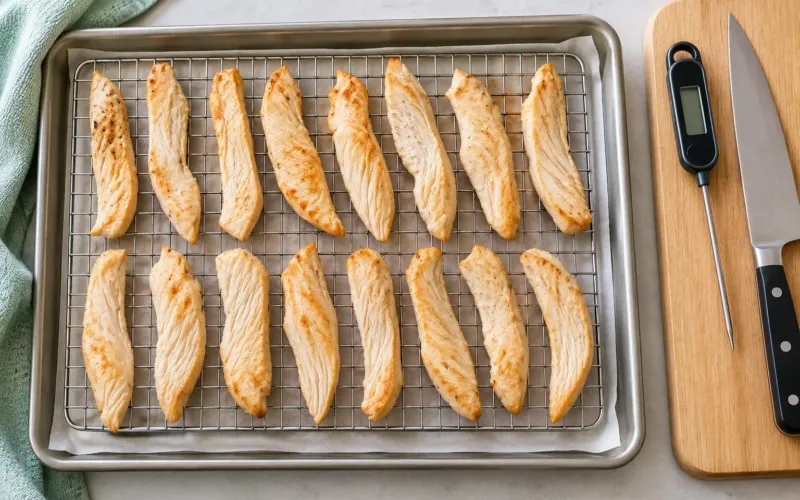
- Simmer the strips in plain water, or bake at 325°F (160°C), until the thickest piece reads 165°F (74°C).
- Blot dry and lay the strips in a single layer on a wire rack over a lined tray.
- Dry on the oven's lowest setting, 170 to 200°F (75 to 95°C), with the door propped open for 2 to 3 hours, flipping halfway.
- Bend a cooled strip: it should be dry, firm and leathery with no moist center.
- Cool completely before storing.
Notes
Dehydrator method
After pre-cooking to 165°F, lay the strips on the trays and dry at the machine’s meat setting, typically 145–160°F, for about 4–6 hours. Rotate the trays once if your dehydrator dries unevenly. See our dehydrated dog treats guide for general drying tips.
Air fryer method
If your air fryer has a dehydrate function, use it on pre-cooked strips in a single layer, checking every 30 minutes. Times vary a lot between models, so go by the bend test rather than the clock. Skip the regular air-fry setting: it browns the outside before the middle dries.
Soft jerky for puppies and seniors
Stop drying when the strips are firm but still pliable, then cut them into small pieces. Soft jerky holds more moisture, so keep it in the fridge and use it within about 4–5 days.
How Much Chicken Jerky Can a Dog Have?
A pound of raw chicken breast has about 545 calories (USDA FoodData Central) and shrinks to roughly a third of its weight as it dries. Cut into 30 strips, each one is around 18 calories. Snipped into half-inch bits, you get about 120 training pieces at roughly 4–5 calories each. Treats should stay a small slice of the day, so these amounts leave room for meals and other rewards:
| Dog’s Weight | Est. Daily Calories | Jerky Strips Per Day | Or Training Bits | Calories From Jerky |
|---|---|---|---|---|
| 10 lb (4.5 kg) | ~350 kcal | 1 strip | 3–4 bits | ~18 kcal |
| 25 lb (11 kg) | ~690 kcal | 2 strips | 7–8 bits | ~36 kcal |
| 50 lb (23 kg) | ~1,160 kcal | 3–4 strips | 12–14 bits | ~55–70 kcal |
| 75 lb (34 kg) | ~1,580 kcal | 4–5 strips | 16–18 bits | ~70–90 kcal |
| 100 lb (45 kg) | ~1,960 kcal | 5–6 strips | 20–22 bits | ~90–110 kcal |
Our estimates for a typical neutered adult (70 × body weight in kg0.75 × 1.6). These stay well inside the extras allowance in the WSAVA treat guide. Strip size varies, so trim your dog’s meal a little if you give more.
How to Store Homemade Chicken Jerky
| Where | How Long | Tips |
|---|---|---|
| Counter | 2–3 days at most | Only fully dry, crisp jerky; no preservatives means it spoils faster than store-bought |
| Fridge | Up to about 2 weeks | Airtight container or jar; soft jerky 4–5 days |
| Freezer | Up to 3 months | Portion into small bags; thaw a few strips at a time |
Throw out any jerky that smells sour, feels sticky or shows mold, even within these times.

Swaps and Variations
- Chicken allergy? Chicken is one of the more common food allergens in dogs. Use turkey breast the same way, or try fish; see our salmon dog treats. Our dog food allergies guide explains how to choose.
- Plant-based option: dried sweet potato chews are a classic; our sweet potato dog treats recipe shows how.
- Higher value for training: a few pieces of liver treats mixed in make the bag more exciting.
- Teeth? Jerky is not a dental chew. Brushing does far more for your dog’s teeth.
Puppies and Dogs With Health Conditions
Puppies can have small, soft pieces once they’re eating solid food, but keep treats light so their growth food stays the main source of nutrition. Dogs with kidney disease may be on a protein- and phosphorus-controlled diet, so ask your vet before adding high-protein treats. Dogs on a food trial for allergies should only get treats their vet approves.
What about store-bought jerky? If a dog has vomiting, diarrhea, or is drinking and peeing more after jerky treats, stop them and call the vet.
Is it okay for sensitive stomachs? Plain, fully cooked jerky is usually well tolerated in small amounts.
How much is too much? When jerky starts replacing meals or crowds out the dog's regular food.
— Dr. Sarah Miller, DVM
Chicken Jerky for Dogs: Quick Guide
✓ Do
- Use plain, boneless, skinless breast
- Heat to 165°F before drying
- Dry until leathery with no moist center
- Keep the batch in the fridge or freezer
✕ Don’t
- Add salt, garlic, onion or marinade
- Share seasoned jerky made for people
- Leave homemade jerky out for days
- Let big dogs gulp whole strips
Every dog is different. Dogs with kidney disease or food allergies should get their vet’s okay before new treats.
Frequently Asked Questions
Is chicken jerky good for dogs?
Homemade chicken jerky is a lean, high-protein treat that most dogs love. It’s still a treat, so keep portions small and balance it with a complete diet.
Are store-bought chicken jerky dog treats safe?
Many are fine, but the FDA’s long investigation into jerky treats never found a single cause. If you buy them, choose brands that clearly state where the chicken is sourced and made, and stop feeding them if your dog shows any signs of illness.
Can I make chicken jerky for dogs without a dehydrator?
Yes. The oven method above works well: lowest temperature, door propped open, strips on a wire rack. An air fryer with a dehydrate setting also works.
Do I need to cook the chicken before dehydrating?
Yes. Heat it to 165°F first. Low drying temperatures alone may not kill bacteria like Salmonella.
How long does homemade chicken jerky last?
About 2 weeks in an airtight container in the fridge and up to 3 months in the freezer. Fully dry jerky can sit out for a day or two, but the fridge is safer.
Is chicken jerky safe for puppies?
Small, soft pieces are fine for most puppies. Avoid hard, long strips they might swallow whole, and keep treats to a small share of their food.
Looking for another recipe? Browse all our homemade dog treats by type.
The Bottom Line
Chicken jerky for dogs is one of the simplest homemade treats: one ingredient, a thermometer and some patience. Heat the strips to 165°F, dry them until leathery, store them cold and keep portions in line with your dog’s size. Find more easy recipes in our Homemade Treats section. This article is general information, not veterinary advice; see our Veterinary Disclaimer.
References & Sources
Written by CPD Nutrition Desk using the sources below. We are not affiliated with these organizations, and this guide is not a substitute for advice from your veterinarian.
- U.S. Food and Drug Administration — FDA investigates animal illnesses linked jerky pet treats
- WSAVA — WSAVA treat guide