


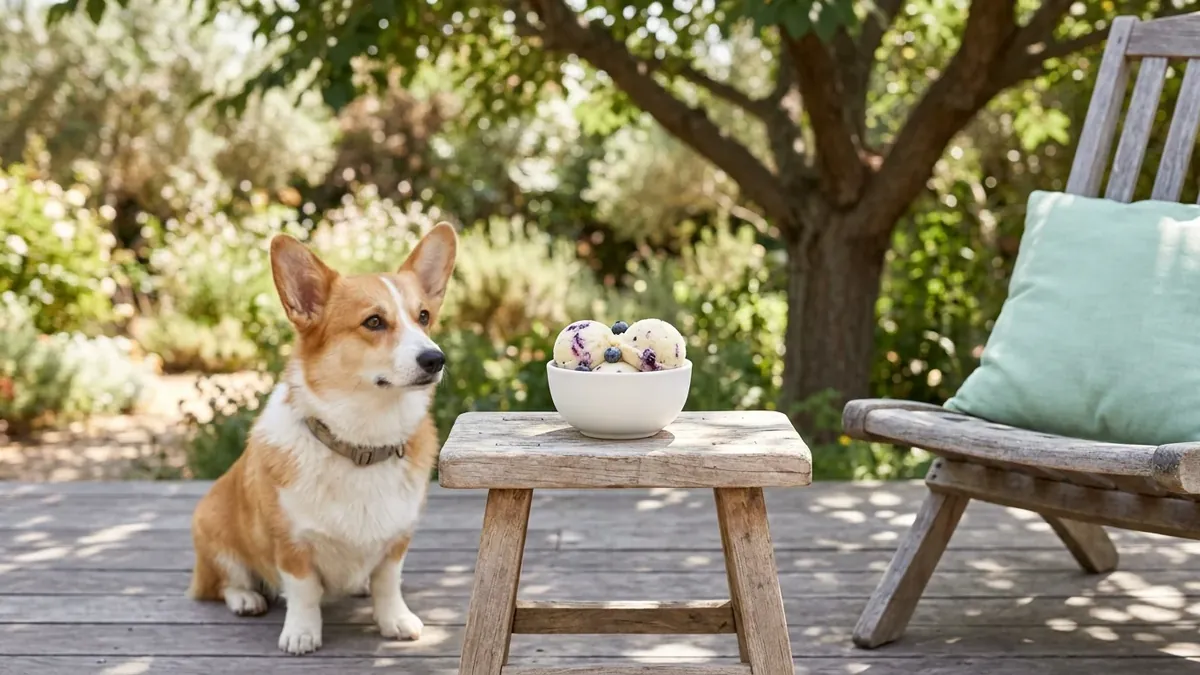
On a hot afternoon, a dog watching you eat ice cream is a hard sight to ignore. The good news: you can make them their own in about five minutes. This dog ice cream recipe blends frozen banana with plain Greek yogurt and a handful of blueberries into a soft-serve that needs no ice cream maker and no added sugar. Read on for why regular ice cream is a poor choice, the step-by-step method, dairy-free and peanut butter twists, portion sizes, and what’s really in a pup cup.
Prep: 5 minutes, plus overnight to freeze the bananas • Freeze: serve right away as soft-serve, or freeze 3–4 hours for scoops • Yield: about 10 quarter-cup servings • Equipment: blender or food processor • Storage: freezer up to 1 month
Each quarter cup has roughly 40 calories, so most dogs get a few spoonfuls.
Table of Contents
Why Dogs Shouldn’t Share Your Ice Cream
A lick from your cone is unlikely to cause harm, but regular ice cream isn’t a good treat for three reasons:
- Lactose: the ASPCA explains that pets have little of the enzyme needed to digest milk sugar, so dairy can lead to diarrhea or an upset stomach.
- Sugar and fat: a scoop packs plenty of both, with nothing your dog needs.
- Risky flavors: chocolate, coffee, rum raisin and macadamia nut are all on the ASPCA’s list of foods to avoid, and some “sugar-free” ice creams use sweeteners that are unsafe for dogs.
Ingredients for This Dog Ice Cream Recipe
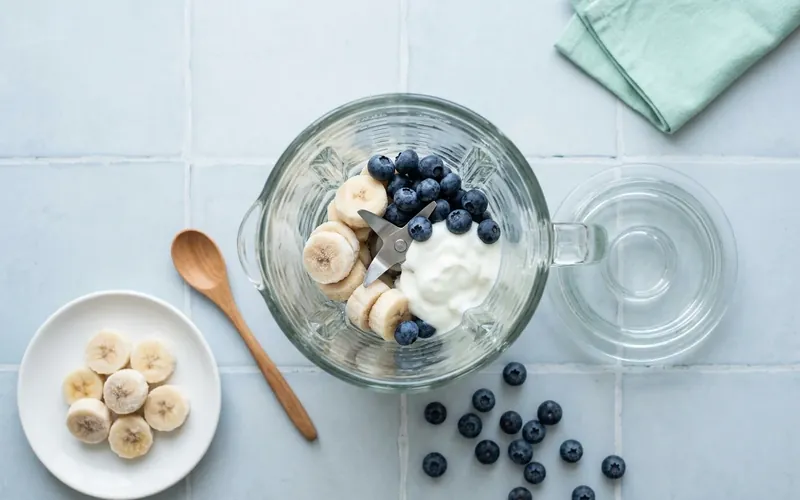
- 2 ripe bananas, peeled, sliced and frozen overnight. Frozen banana is what gives the creamy, scoopable texture. See our guide to bananas for dogs.
- 1 cup plain, unsweetened Greek yogurt: nonfat or low-fat. Greek yogurt is strained, so it carries less lactose than milk, though not zero. Check the label for sweeteners and added flavors.
- ½ cup fresh or frozen blueberries: for color and a little extra flavor. More on blueberries for dogs.
How to Make It: Soft-Serve or Scoops
Banana Blueberry Dog Ice Cream
Ingredients
Method
- Blend the frozen banana and yogurt in a blender or food processor until thick and smooth.
- Pulse in the blueberries briefly, or fold them in whole. Mash them first for toy breeds.
- Serve a portion right away as soft-serve, or freeze the rest in small cups or molds for 3 to 4 hours.
- Let frozen scoops soften 5 to 10 minutes before serving.
Notes
Dairy-Free and Peanut Butter Variations
- Without yogurt: blend the frozen bananas with ½ cup plain canned pumpkin and a splash of water. Our pumpkin dog treats guide explains which can to buy.
- Peanut butter swirl: drizzle in 1–2 tablespoons of xylitol-free peanut butter. It adds a lot of calories, so make the portions a little smaller.
- Strawberry: swap the blueberries for a few sliced fresh strawberries.
- Lick mat version: spread a thin layer on a lick mat and freeze it for slow, long-lasting enrichment.

How Much Ice Cream Can a Dog Have?
Based on USDA FoodData Central values, the full batch adds up to about 400 calories: bananas (~210), Greek yogurt (~145) and blueberries (~42). That’s roughly 40 calories per quarter cup, or about 10 per tablespoon.
The WSAVA recommends that treats stay under about 10% of daily calories. These amounts leave a little room for other rewards:
| Dog Size | Weight | Serving | Approx. Calories |
|---|---|---|---|
| Toy | Under 10 lb | 1–2 tablespoons | 10–20 kcal |
| Small | 10–25 lb | 2–4 tablespoons | 20–40 kcal |
| Medium | 25–50 lb | ¼–½ cup | 40–80 kcal |
| Large | 50–90 lb | About ½ cup | ~80 kcal |
| Giant | 90+ lb | Up to ¾ cup | ~120 kcal |
For healthy adult dogs, a few times a week. Start with a spoonful the first time to see how your dog’s stomach handles the yogurt.
Pup Cups and Store-Bought Dog Ice Cream
The “pup cup” handed out at coffee shops is usually just a small cup of whipped cream. A rare one is unlikely to hurt a healthy dog, but it’s dairy, fat and sugar, so it can upset sensitive stomachs and isn’t a good habit. For a homemade version, offer a dollop of this ice cream or a spoonful of plain Greek yogurt in a paper cup.
Frozen dog ice creams sold in pet stores are made for dogs and are generally a better choice than human ice cream. Still read the label, check the calories per cup, and count it as a treat.
Never add these to homemade dog ice cream: chocolate or cocoa, coffee, grapes or raisins, macadamia nuts, sweetened or flavored yogurt, and any product with xylitol. If your dog eats something risky, call your vet or the ASPCA Animal Poison Control Center at (888) 426-4435.
Dog Ice Cream: Quick Serving Guide
Do
- Use plain, unsweetened yogurt
- Freeze small portions
- Let scoops soften before serving
- Start with a spoonful
Don't
- Share chocolate or coffee ice cream
- Use flavored or sweetened yogurt
- Add raisins or macadamias
- Make pup cups a daily habit
Every dog is different. Check with your veterinarian first if your dog has a dairy sensitivity, diabetes or another health condition.
Frequently Asked Questions
Is it okay to give dogs a little ice cream?
A small lick of plain vanilla is unlikely to cause more than a mild stomach upset in most dogs. Skip chocolate, coffee, nut and raisin flavors entirely, and anything labeled sugar-free. Homemade dog ice cream is the safer way to share.
Can I make dog ice cream without peanut butter?
Yes. This recipe doesn’t use any. Frozen banana and yogurt make the creamy base, and peanut butter is just an optional swirl.
What is the 10% treat rule for dogs?
It’s a guideline that treats, chews and extras should make up no more than about 10% of a dog’s daily calories, with the other 90% coming from a complete and balanced diet. It keeps treats from crowding out nutrition or adding extra weight.
What flavors of ice cream can a dog eat?
For homemade frozen dog treats, stick to dog-safe ingredients like banana, blueberry, strawberry, plain pumpkin and xylitol-free peanut butter. With human ice cream, plain vanilla is the least risky, but it still isn’t a recommended treat.
Can puppies have dog ice cream?
A tiny taste is fine once they’re eating solid food, but their stomachs can be sensitive to dairy. Try the yogurt-free version first and keep it to a spoonful.
Looking for another recipe? Browse all our homemade dog treats by type.
The Bottom Line
This dog ice cream recipe proves a summer treat doesn’t need sugar or an ice cream maker. Blend frozen banana with plain Greek yogurt and blueberries, serve it by the spoonful, and leave your own pint for yourself. Looking for more ideas? Browse every recipe in our Homemade Treats collection. This article is general information, not veterinary advice; see our Veterinary Disclaimer.
References & Sources
Written by CPD Nutrition Desk using the sources below. We are not affiliated with these organizations, and this guide is not a substitute for advice from your veterinarian.