
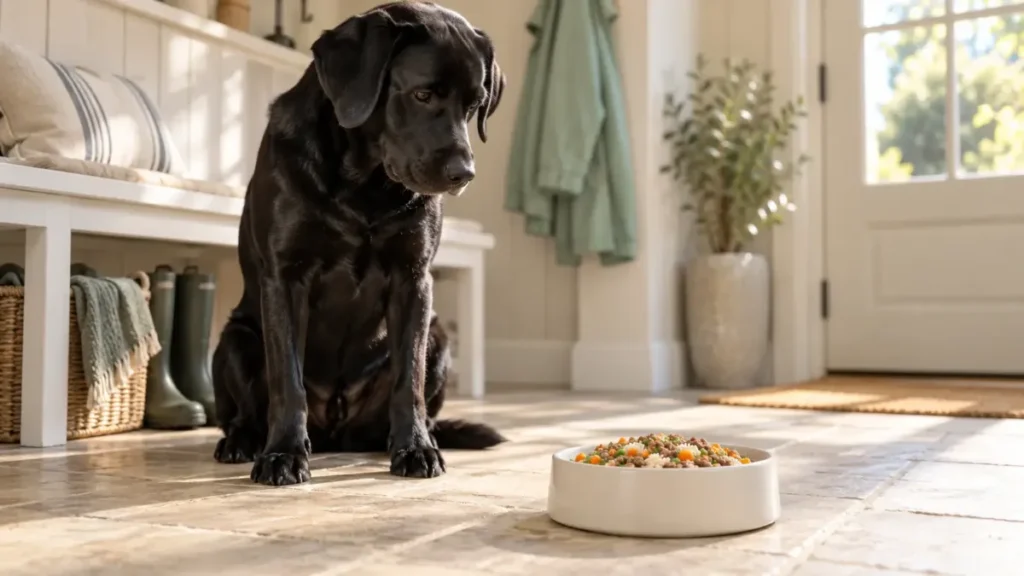

Fresh food for dogs can be a great choice, as long as the recipe is complete and balanced and fits your budget. These gently cooked, chilled or frozen meals are tasty and easy to digest, but cost more and need fridge space. Below: fresh vs. kibble, how much to feed by weight, real cost and safe storage.
Fresh dog food is a good option, not a must. Pick one with an AAFCO “complete and balanced” statement, made by a company with a qualified nutritionist. Feed by calories, keep it cold, and if the price is too high, mix a partial fresh plan with quality kibble.
Table of Contents
What Is Fresh Dog Food?
It’s a ready-to-serve meal of recognizable meat, vegetables and grains, lightly cooked and kept cold. It’s about 70 to 75% water versus around 10% for kibble, per Today’s Veterinary Practice. “Fresh” describes style, not quality; the AAFCO statement tells you if it’s complete. Forms include:
- Refrigerated rolls, tubs or bags from store fridges.
- Frozen subscription meals portioned for your dog.
- Raw fresh or frozen food, with extra bacteria risk (see our raw food diet guide).
- Homemade, which needs a balanced recipe.
Is Fresh Dog Food Better Than Kibble?
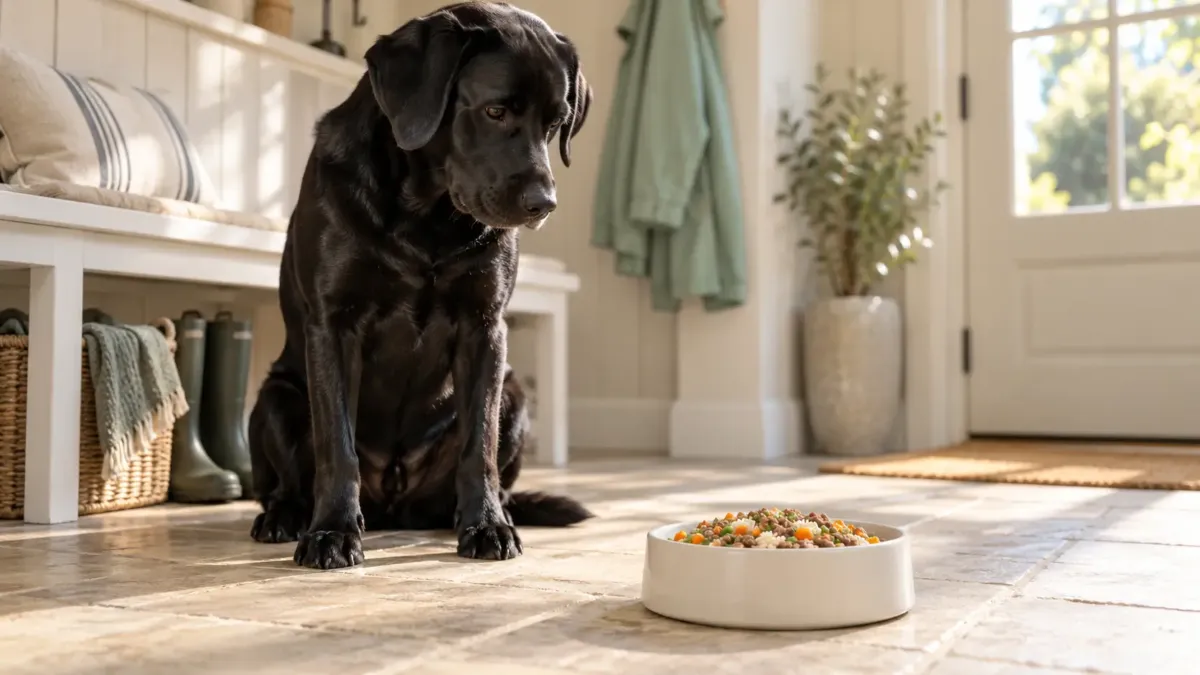
It can be for some dogs, but research is small. A 2021 University of Illinois study in the Journal of Animal Science found fresh diets more digestible, with kibble-fed beagles producing 1.5 to 2.9 times as much stool. It was short, small and funded by a fresh food company. Less poop isn’t proof of better health, and highly digestible foods can be calorie-rich. Good kibble and good fresh food can both keep a dog healthy.
| Format | Water | Shelf Life | Cost per Calorie | Main Trade-Off |
|---|---|---|---|---|
| Fresh (cooked) | ~70-75% | Days chilled, months frozen | High | Price and fridge space |
| Dry kibble | ~10% | Months sealed | Lowest | Most processed; easy to overfeed |
| Canned | ~75% | Years unopened | Medium to high | Cans to store |
| Raw | ~60-75% | Days thawed | High | Bacteria risk |
Fresh food tempts picky eaters and seniors, adds water and comes pre-portioned. Downsides: higher cost, fridge space, short life once opened, and some “fresh” recipes are still incomplete or high in fat.
How Much Fresh Dog Food to Feed
Because fresh food is mostly water, the portion looks much bigger than kibble for the same calories:
| Dog’s Weight | Est. Daily Calories | 100% Fresh | Same Calories as Kibble | 25% Fresh Plan |
|---|---|---|---|---|
| 10 lb (4.5 kg) | ~350 kcal | ~270 g | ~1 cup | ~65 g + ¾ cup kibble |
| 20 lb (9 kg) | ~585 kcal | ~450 g | ~1½ cups | ~115 g + 1¼ cups |
| 30 lb (13.6 kg) | ~795 kcal | ~610 g | ~2 cups | ~155 g + 1½ cups |
| 50 lb (22.7 kg) | ~1,165 kcal | ~895 g | ~3 cups | ~225 g + 2⅓ cups |
| 70 lb (31.8 kg) | ~1,500 kcal | ~1,150 g | ~4 cups | ~290 g + 3 cups |
| 90 lb (40.8 kg) | ~1,810 kcal | ~1,390 g | ~4¾ cups | ~350 g + 3½ cups |
Our estimates for a neutered adult (70 × kg0.75 × 1.6), assuming fresh food at ~1.3 kcal/g and kibble at ~380 kcal/cup. Use your food’s label.
Start with the package guide and adjust every two weeks so the ribs are easy to feel but not see.
What Does Fresh Dog Food Cost?
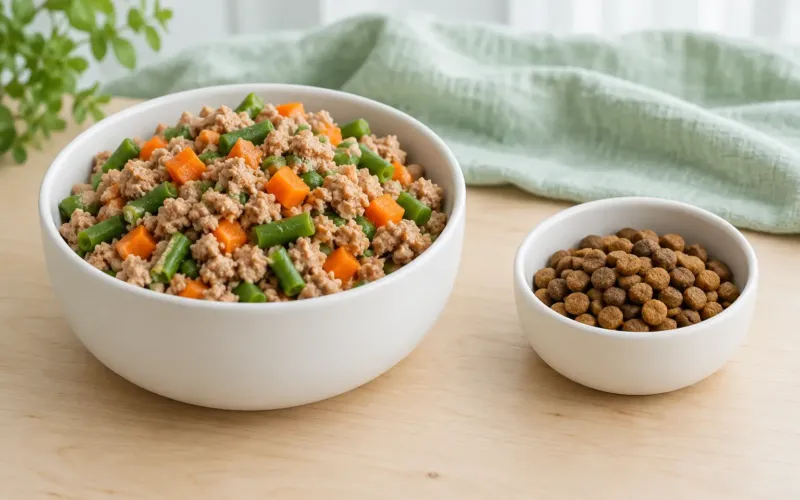
Prices vary, so compare cost per 100 calories: divide the pack price by its total calories and multiply by 100. Example with round numbers: a $6 pack holding 600 kcal is $1 per 100 kcal, so a 30-lb dog eating ~795 kcal costs about $7.95 a day. Run the same math on your kibble. Fresh is easiest to afford for small dogs; for big dogs, the 25% plan gives taste and moisture for less.
How to Choose a Good Fresh Dog Food
The WSAVA selection guide says judge who makes the food, not buzzwords:
- AAFCO statement: “complete and balanced” for your dog’s life stage, not “supplemental feeding” (see AAFCO’s label guide).
- A qualified nutritionist formulating recipes.
- Calories per pack for accurate feeding.
- Cooked, not raw, for homes with children, older adults or weak immune systems.
- Moderate fat for sensitive stomachs.
- Caution with legume-heavy recipes: the FDA has investigated heart disease (DCM) reports; no cause is proven, but ask your vet.
“Human grade” covers handling, not nutrition; see our human grade dog food guide.
Storage and Food Safety
| Situation | What to Do |
|---|---|
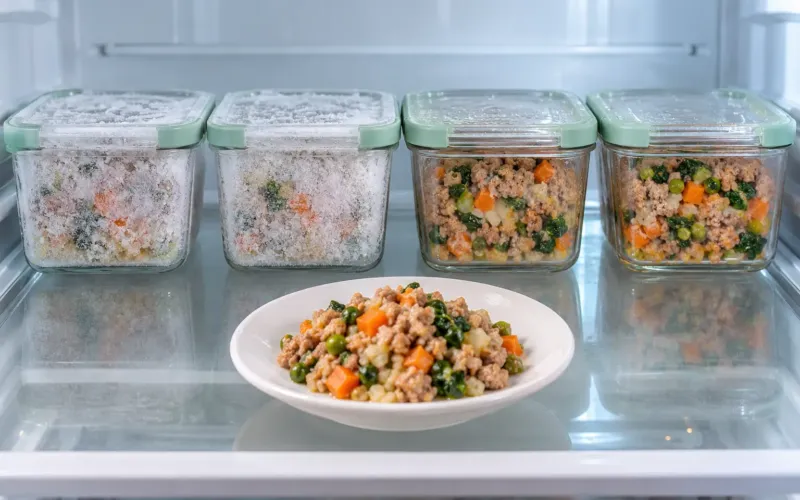
| Frozen packs | Keep frozen; follow the “use by” date. |
| Thawing | In the fridge a day or two ahead, never on the counter. |
| Opened pack | Sealed at 40°F (4°C) or below; use within the brand’s window, often a few days. |
| Bowl leftovers | Toss within about 2 hours (1 hour when hot). |
| Bowls and scoops | Wash after every meal. |
Based on FDA storage tips and the USDA “danger zone” rule. Brand instructions come first.
Is Fresh Food Right for Your Dog?
- Puppies: only if labeled for growth or all life stages, including large-size dogs for breeds over 70 lb.
- Allergies and sensitive stomachs: single-protein recipes can help but don’t replace an elimination diet. See dog food allergies and the best dog food for a sensitive stomach.
- Pancreatitis: some recipes are high in fat, so choose with your vet.
- Weight loss: packs help control calories, but total calories decide the result.
- Kidney, liver or heart disease: don’t replace a prescription diet without your vet.
How to Switch Your Dog to Fresh Food
Go from about 25% fresh on days 1 to 3, to half on days 4 to 6, 75% on days 7 to 9, and your chosen mix by day 10. Pause if stools soften; if diarrhea lasts over a day or two, read what to feed a dog with diarrhea and call your vet. Prefer to cook? See our homemade dog food recipes.
What is the first thing you check on the label? The AAFCO statement for the dog's life stage, then calories per pack.
Do you see digestive upsets with fresh food? Mostly when owners switch too fast. Take 7 to 10 days.
Is a partial plan reasonable for large dogs? Yes, 25% fresh with a quality kibble is reasonable if total calories stay the same.
— Dr. Sarah Miller, DVM
Fresh Food for Dogs: Quick Serving Guide
✓ Do
- Choose a “complete and balanced” recipe
- Feed by the calories on the pack
- Thaw packs in the fridge
- Switch slowly over about 10 days
✕ Don’t
- Judge a food by the word “fresh” alone
- Leave a full bowl out for hours
- Feed a pack that smells sour or looks puffed
- Replace a prescription diet without your vet
Every dog is different. Puppies and dogs with health conditions should get their vet’s okay before changing diets.
Frequently Asked Questions
Do vets recommend fresh dog food?
Many care less about format than whether the food is complete, well made and suits your dog.
How long does fresh dog food last in the fridge?
Usually a few days once opened or thawed. Check the pack.
Can I mix fresh dog food with kibble?
Yes. Reduce the kibble so calories stay the same, like the 25% plan above.
Why does my dog have diarrhea on fresh food?
Usually a fast switch or a richer recipe. Slow down, and call your vet if it’s severe or lasts.
Explore more in the complete dog food guide.
The Bottom Line
Fresh food for dogs is tasty, easy to portion and highly digestible, but not magic. Choose a complete and balanced recipe, feed by calories, keep it cold, and use a partial plan if needed. Start with our Start Here page or the Dog Food section. This article is general information, not veterinary advice; see our Veterinary Disclaimer.
References & Sources
Written by CPD Nutrition Desk using the sources below. We are not affiliated with these organizations, and this guide is not a substitute for advice from your veterinarian.
- Today's Veterinary Practice — Commercial fresh pet food diets
- doi.org — Journal of Animal Science
- WSAVA — WSAVA selection guide
- AAFCO — AAFCO's label guide
- U.S. Food and Drug Administration — FDA has investigated
- U.S. Food and Drug Administration — FDA storage tips
- USDA — USDA “danger zone” rule