
Megaesophagus in dogs is a condition where the esophagus, the food tube from mouth to stomach, becomes enlarged and loses the muscle movement that pushes food down. Food and water pool in it and come back up as regurgitation. It can't usually be cured, but upright feeding, the right food texture and quick care for pneumonia help many dogs live well.
Main sign: regurgitation, food coming back up without heaving. Biggest danger: aspiration pneumonia from inhaled food. It can be inherited in puppies or acquired later, often with myasthenia gravis. Management centers on feeding upright, often in a Bailey chair, and finding the food texture your dog handles best.

Table of Contents
What Is Megaesophagus in Dogs?
Normally, waves of muscle contraction move each swallow into the stomach in seconds. With megaesophagus, the esophagus is floppy and dilated, so food sits there until it either slides down by gravity or comes back up. VCA Animal Hospitals and the Merck Veterinary Manual both describe it as a motility disorder rather than a blockage.
Symptoms: Regurgitation vs Vomiting
| Regurgitation (megaesophagus) | Vomiting (stomach) |
|---|---|
| Effortless; food just slides out | Heaving and belly contractions first |
| Undigested food, often tube-shaped and slimy | Partly digested, may contain yellow bile |
| Can happen minutes to hours after eating | Usually with nausea, drooling and lip licking first |
| Often no warning | Dog seems sick before it happens |
Other signs include weight loss or poor growth in puppies, bad breath, drooling, a gurgling throat, and coughing or fast breathing if food has been inhaled.
Fever, cough, fast or labored breathing, or lethargy in a dog with megaesophagus can mean aspiration pneumonia. This needs a vet the same day.
What Causes Megaesophagus?
Congenital (from birth)
Puppies often show signs at weaning, when they start solid food. Breeds reported more often include Great Danes, German Shepherds, Irish Setters, Miniature Schnauzers, Wire Fox Terriers and Shar-Peis. A vascular ring anomaly, a blood vessel that traps the esophagus, can look similar and may be fixable with surgery.
Acquired (later in life)
The most common identifiable cause in adults is myasthenia gravis, an immune disease affecting nerve signals to muscles. Others include low thyroid, Addison's disease, some toxins and nerve or muscle diseases. In many adults no cause is found (idiopathic).
Is megaesophagus in dogs painful?
The condition itself isn't thought to be very painful, but regurgitation, hunger, and especially pneumonia make dogs feel unwell. Good management keeps most dogs comfortable.
How It's Diagnosed
Chest X-rays usually show the dilated esophagus. Your vet may add a contrast study, blood tests, a myasthenia gravis antibody test, thyroid and adrenal tests, and sometimes endoscopy. Finding a treatable cause can improve the outlook a lot, especially with myasthenia gravis.
How to Feed a Dog With Megaesophagus
Feeding is the heart of daily care:
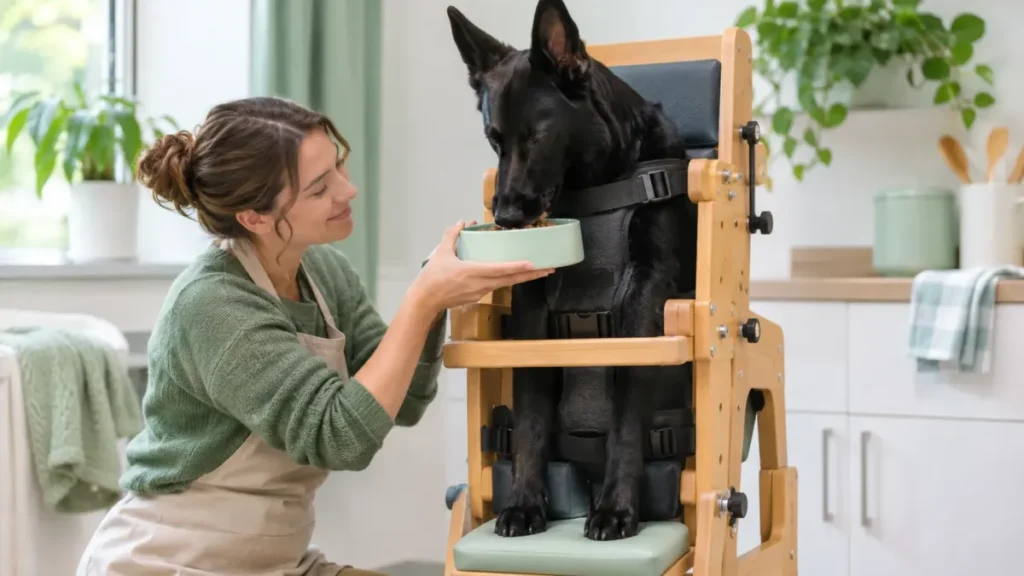
- Feed upright. Many owners use a Bailey chair or a raised, supported sitting position so the esophagus is vertical.
- Stay upright 10 to 30 minutes after each meal and drink, as your vet advises.
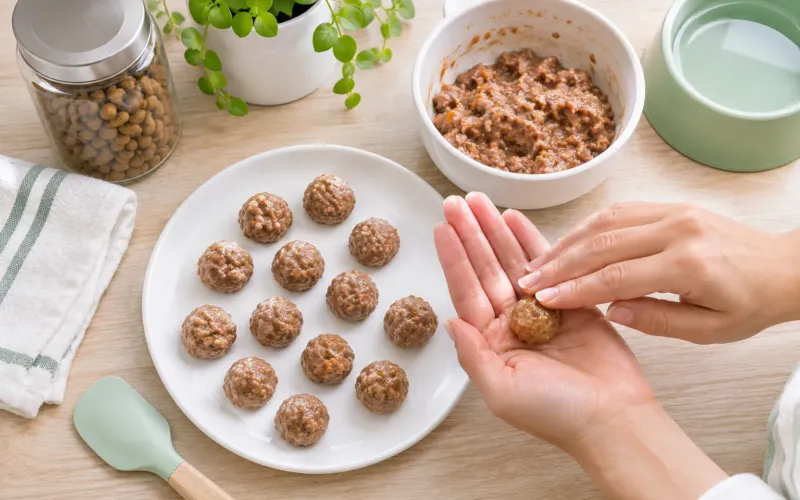
- Find the right texture. Some dogs do best with soft meatballs of canned food, others with a smooth slurry or gruel. Test one at a time and keep a log.
- Small, frequent meals, 3 to 4 a day, instead of one or two big ones.
- Water: some dogs need thickened water or water gel cubes.
- Keep calories up. Weight loss is common; a calorie-dense food can help. Read high calorie dog food.
| Food texture | May suit |
|---|---|
| Soft meatballs (canned food rolled) | Dogs that regurgitate liquids |
| Thick slurry | Dogs that struggle with solid lumps |
| Thin gruel | A few dogs; try under vet guidance |
Every dog is different. Ask your vet before switching textures or foods; our soft dog food guide explains options.
Other Treatment
Treat the underlying disease when one is found. Medicines may include drugs for myasthenia gravis, thyroid or adrenal problems, acid reducers for esophagitis, and antibiotics for pneumonia. Some vets use sildenafil to relax the lower esophageal sphincter in selected dogs. Severe cases may need a feeding tube.

Life Expectancy
It varies widely. Some puppies improve as they grow, and dogs whose myasthenia gravis responds to treatment can recover. Others need lifelong management. Repeated aspiration pneumonia is the biggest risk to life, so careful feeding and fast vet care for coughing or fever matter most.
What feeding method has worked best? Upright feeding in a Bailey chair, with the dog kept upright for 15 to 30 minutes after meals. The best food texture differs per dog, so test meatballs, slurry and soft food.
What signs of aspiration pneumonia should owners watch for? Coughing, fast or labored breathing, fever, nasal discharge, tiredness or not eating. See a vet the same day.
— Dr. Sarah Miller, DVM
Megaesophagus feeding
✓ What helps
- Feed upright
- Stay upright after meals
- Small frequent meals
- Log which texture works
✕ Don't
- Feeding on the floor
- Big meals
- Ignoring a cough or fever
- Swallowable chews
Ask your vet before changing food texture.
Frequently Asked Questions
Can a dog with megaesophagus live a normal life?
Many can live happily with a routine of upright feeding and watchful care. It takes commitment, but most owners adapt quickly.
What is a Bailey chair?
A high-sided chair that holds a dog in a begging-style sitting position during and after meals. Many owners build their own.
Can megaesophagus in dogs be cured?
Usually it's managed rather than cured. Cases caused by treatable conditions like myasthenia gravis or a vascular ring can improve.
Should dogs with megaesophagus have chew toys?
Avoid toys and chews that can be swallowed in pieces or lodge in the esophagus. Ask your vet which enrichment is safe.
What does a megaesophagus X-ray show?
A widened, often air- or food-filled esophagus along the chest. Contrast studies make it clearer.
The Bottom Line
Megaesophagus in dogs makes eating hard, but it is manageable. Feed upright, find the food texture your dog keeps down, offer small frequent meals, and act fast on any cough or fever to protect against aspiration pneumonia.
References & Sources
Written by CPD Nutrition Desk using the sources below. We are not affiliated with these organizations, and this guide is not a substitute for advice from your veterinarian.
- VCA Animal Hospitals — View source
- Merck Veterinary Manual — Disorders of the esophagus in dogs