

Soft dog food is any food your dog can eat without hard chewing: canned (wet) food, fresh refrigerated food, softened kibble or soft homemade toppers. It's a good choice for senior dogs, dogs with bad or missing teeth, dogs recovering from dental surgery, and picky eaters. The key is to keep it complete and balanced and to adjust portions, because soft foods often have different calories than dry food.
The easiest soft food is your dog's current kibble soaked in warm water for 10-15 minutes. Canned and fresh foods are other options. Whatever you choose, look for an AAFCO "complete and balanced" statement, measure calories, and keep up with dental care, since soft food doesn't clean teeth.

Table of Contents
Which Dogs Need Soft Food?
- Senior dogs with worn, loose or painful teeth (see senior dog diet).
- Dogs with few or no teeth after extractions. Dogs swallow most food whole anyway, so many toothless dogs eat well.
- After dental surgery: vets usually advise soft food for 1-2 weeks while the gums heal.
- Small breeds and toy dogs with crowded or fragile teeth.
- Picky eaters or sick dogs that need a tempting, aromatic meal (see dog food for picky eaters).
- Puppies being weaned onto solid food.
Dropping food, chewing on one side, drooling, bad breath or pawing at the mouth can mean dental pain. Have your vet check your dog's mouth; soft food helps, but it doesn't treat the cause.
Types of Soft Dog Food Compared
| Type | Texture | Pros | Watch out for |
|---|---|---|---|
| Softened kibble | Mushy | Cheap, same diet, easy to switch | Spoils faster once wet |
| Canned / wet food | Pate, chunks or stew | Very soft, high moisture, tasty | Cost, fewer calories per volume |
| Fresh refrigerated food | Soft, moist | Appealing, minimal processing | Cost, short shelf life (see fresh food for dogs) |
| Semi-moist food | Chewy, soft pieces | Easy to chew | Often higher in sugar and salt |
| Homemade soft meals | Mashed, minced | Full control of ingredients | Must be balanced by a nutritionist |
For a full comparison of textures, see wet vs dry dog food and our canned dog food guide.
How to Soften Dry Dog Food (Step by Step)
- Measure your dog's normal portion of kibble.
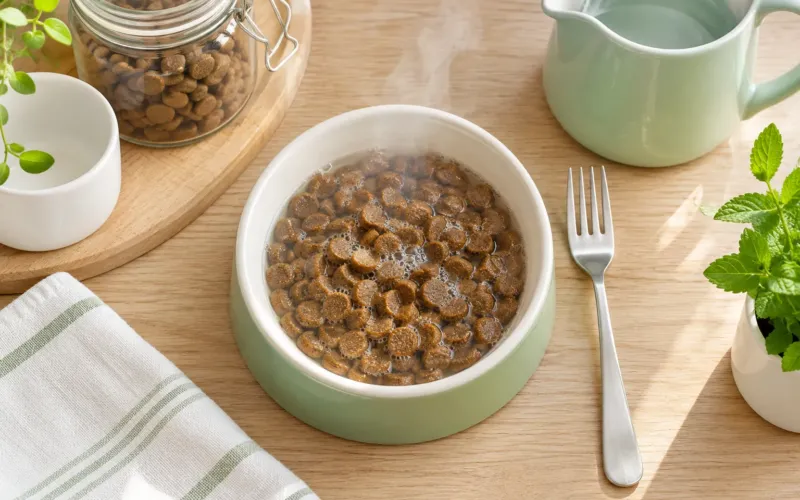
- Add warm water (not boiling): about 1 part water to 2 parts kibble for soft, or 1:1 for mushy.
- Wait 10-15 minutes until the kibble swells and breaks apart easily.
- Mash with a fork for dogs with no teeth or after surgery.
- Serve right away and throw out leftovers after 30-60 minutes, or refrigerate and use within 24 hours.
You can use low-sodium, onion-free bone broth instead of water for extra flavor; see bone broth for dogs.
How Much Soft Food to Feed
Calories change when you switch textures, so check the label. A typical cup of dry food has about 350-450 kcal; a 13 oz can of wet food often has 350-500 kcal.
| Dog weight | Daily calories (estimate)* | Example: wet food only |
|---|---|---|
| 10 lb (4.5 kg) | about 350 kcal | about 3/4 to 1 can (13 oz) |
| 30 lb (14 kg) | about 790 kcal | about 2 cans |
| 60 lb (27 kg) | about 1,330 kcal | about 3 cans |
*Estimate for a neutered adult: 70 x kg^0.75 x 1.6. Seniors and less active dogs may need 10-20% less. Use your food's kcal per can and our dog feeding chart.
Mixing wet and dry
Many owners top kibble with a spoon of wet food. Reduce the kibble so total calories stay the same: for example, replace 1/4 cup of kibble with about 1/3 can of wet food (varies by brand).
Soft Homemade Toppers
These plain, soft foods are easy to mash into a meal (keep extras under 10% of daily calories):
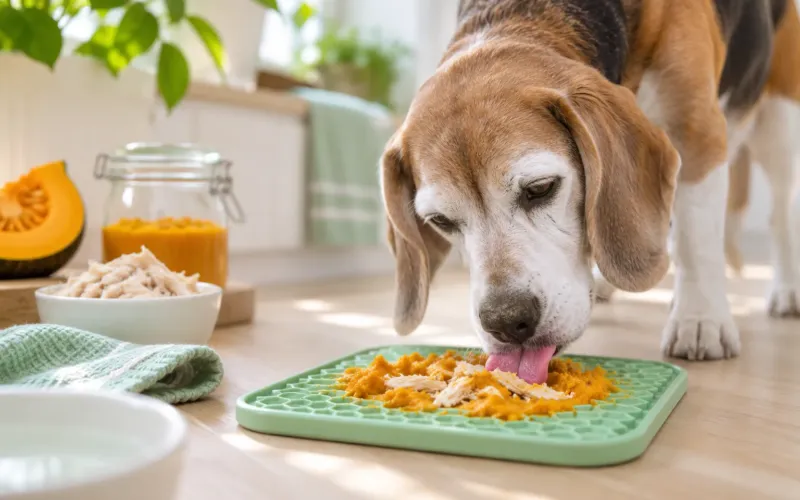
- Plain canned pumpkin or mashed cooked sweet potato.
- Scrambled or hard-boiled eggs, mashed.
- Shredded boiled chicken or plain ground turkey.
- Plain cooked white rice or oatmeal.
Soft Food and Dental Health
Soft food sticks to teeth a little more than kibble, and neither replaces brushing. The AAHA dental care guidelines recommend daily tooth brushing and regular dental exams. If you use dental chews, look for the VOHC seal.
How long should a dog stay on soft food after a dental extraction? Usually 10 to 14 days, until the gums heal and the recheck confirms it.
Is softened kibble as good as canned food for a senior dog with bad teeth? Yes, if it is the same complete food soaked until soft. Canned food adds moisture and may be tastier for picky seniors.
— Dr. Sarah Miller, DVM
Soft Food for Sensitive Mouths
✓ What helps
- Soak kibble 10-15 minutes
- Use warm water or plain broth
- Check calories per can
- Keep brushing teeth
✕ Don't
- Milk to soften food
- Leaving wet food out for hours
- Semi-moist food high in sugar
- Skipping the vet for mouth pain
Soft food helps; a dental exam finds the cause.
Frequently Asked Questions
What can I feed my dog with no teeth?
Softened or mashed kibble, canned pate, or fresh food all work. Many toothless dogs do well because dogs swallow most food without chewing.
Is soft food bad for dogs' teeth?
It doesn't damage teeth, but it doesn't clean them either. Brushing and vet dental cleanings matter for every dog.
How long should a dog eat soft food after tooth extraction?
Usually 7-14 days, until the gums heal. Follow your vet's instructions for your dog.
Can I soften dry dog food with milk?
It's better to use warm water or onion-free broth. Many dogs don't digest milk well.
Is wet food enough on its own?
Yes, if it says "complete and balanced" for your dog's life stage.
The Bottom Line
Soft dog food can be as simple as soaking your dog's kibble in warm water, or switching to canned or fresh food. Keep it complete and balanced, adjust portions to calories, and keep up with dental care. Seniors and dogs with mouth pain should also see the vet.
References & Sources
Written by CPD Nutrition Desk using the sources below. We are not affiliated with these organizations, and this guide is not a substitute for advice from your veterinarian.
- aaha.org — AAHA dental care guidelines
- vohc.org — View source