
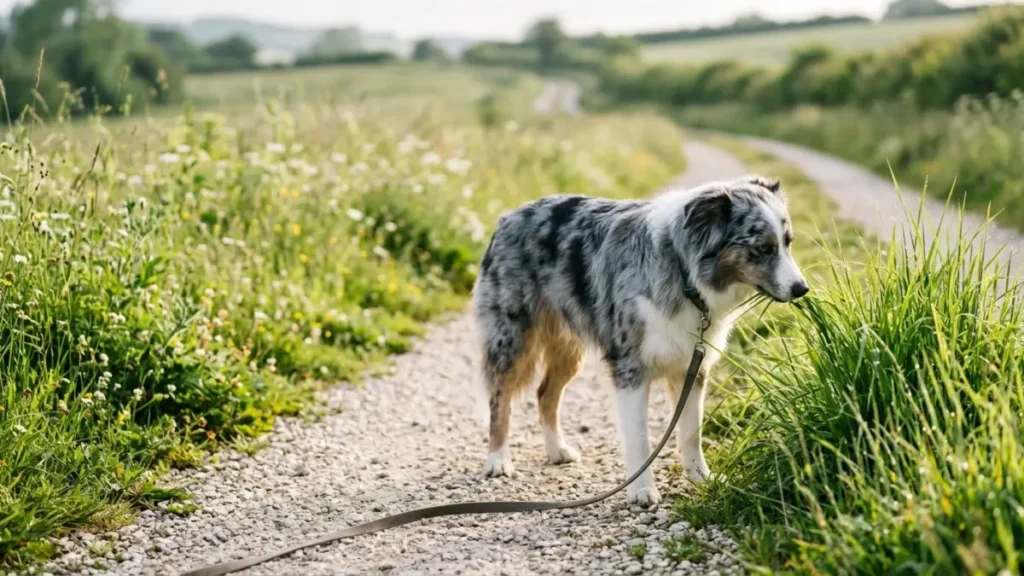

If you’ve ever watched your dog graze like a small, furry sheep and wondered “why does my dog eat grass?”, you’re in good company. For most dogs it’s ordinary behavior, not a warning sign. Here’s what research shows, the likely reasons, the real risks in the lawn and when to call your vet.
- Usually normal: in a large UC Davis survey, most grass-eating dogs didn’t seem unwell before they grazed.
- Vomiting is the exception: fewer than one in four plant-eating dogs regularly threw up afterward.
- The lawn is the bigger risk: weed killers, fertilizers, toxic plants, parasites and barbed grass seeds cause more trouble than grass itself.
- Watch for change: sudden, frantic grazing, repeated vomiting or other symptoms deserve a vet visit.
Table of Contents
Is It Normal for Dogs to Eat Grass?
Yes. A UC Davis team including veterinary behaviorist Dr. Benjamin Hart surveyed owners of more than 1,500 plant-eating dogs; the 2008 results are summarized here.
| Survey finding | What it tells us |
|---|---|
| 68% ate plants daily or weekly | For many dogs, it’s a routine habit |
| 79% of plant eaters chose grass most often | Grass is by far the favorite |
| Only 8% often seemed ill beforehand | Most dogs aren’t grazing because they feel sick |
| 22% regularly vomited afterward | Throwing up is the exception, not the rule |
| Younger dogs grazed more often | They were also less likely to vomit afterward |
| Diet type made no difference | Kibble, raw and home-fed dogs all did it |
Source: Sueda, Hart & Cliff, Applied Animal Behaviour Science, 2008.
The researchers concluded plant eating is normal; wild canids graze too.
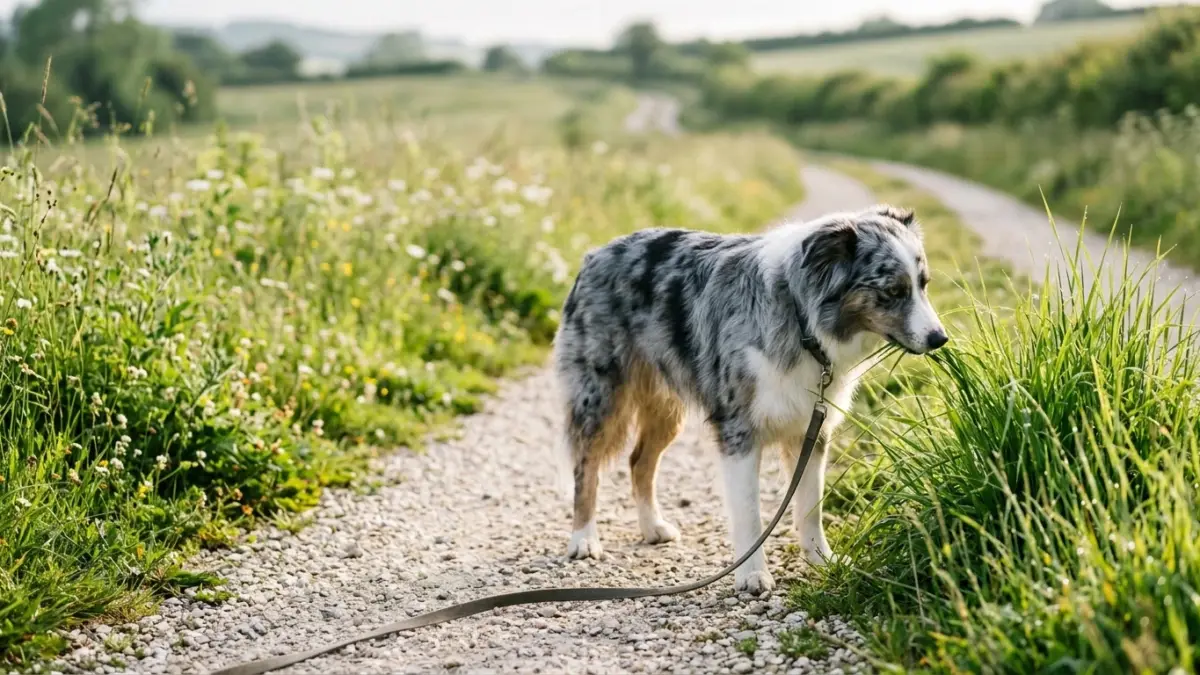
Why Does My Dog Eat Grass? The Most Likely Reasons
Different dogs graze for different reasons:
| Possible reason | What it can look like | What to try |
|---|---|---|
| They like it | Relaxed, picky nibbling of fresh, tender shoots | Usually nothing, if the grass is untreated |
| Boredom or attention | Grazing when left alone outside or when you’re busy | More walks, play and puzzle toys |
| Inherited instinct | Regular grazing in an otherwise healthy, energetic dog | Supervise and keep the lawn chemical-free |
| Wanting more fiber | Frequent grazing, sometimes with irregular stools | Ask your vet whether a diet change makes sense |
| An upset stomach | Sudden, urgent gulping, lip licking, then vomiting | Monitor closely and call your vet if it repeats |
Dr. Hart’s team suggests grazing may once have helped wild canids move intestinal worms through the gut, a theory, not a fact. The AKC notes extreme cases may point to pica.
Does Eating Grass Mean My Dog Is Sick?
Not usually. The idea that dogs graze to make themselves vomit isn’t supported for most dogs. In the UC Davis data, most grazers showed no sign of illness; vomiting happens alongside plant eating rather than being its purpose.
A change matters more. Sudden gulping, drooling or lip licking may mean nausea. A one-off in a bright, hungry dog usually just needs watching.
Grass eating doesn’t prove worms, but grass soiled by droppings can spread them. Regular stool tests and parasite prevention protect your dog (see why dogs eat poop).
Hidden Risks in the Grass
Plain grass is rarely the problem. What’s on or near it can be.
- Lawn chemicals: weed killers, insecticides and some fertilizers can make dogs ill. The ASPCA advises keeping pets off treated areas as long as the label recommends.
- Toxic plants: dogs that graze often sample other greenery too. Check your garden against the ASPCA’s toxic and non-toxic plant list.
- Grass awns (foxtails): barbed seed heads can lodge in the nose, ears, eyes or paws. Sudden sneezing, head shaking or limping needs a prompt vet check.
- Large amounts: lots of grass or sticks can cause a blockage, especially in puppies.

What Is a Dog Lacking When They Eat Grass?
Often nothing. A complete and balanced dog food covers nutrients, and diet type had no link to grazing.
Fiber is the exception. In a 2007 case report, a Miniature Poodle that grazed and vomited daily for seven years stopped within three days on a high-fiber diet (Kang et al.). One dog proves little, but it’s a hint.
No supplement has been shown to stop grass eating. Ask your vet before changing foods; they may suggest more fiber, such as plain pumpkin, introduced slowly.
How to Stop My Dog From Eating Grass
Occasional nibbling of untreated grass is fine. If it’s frequent or boredom-driven:
- Keep your dog leashed in parks and along verges where you don’t know what’s been sprayed.
- Practice “leave it” at home first, then outdoors, and reward the moment your dog turns away from the grass.
- Carry something better: a favorite toy or a few low-calorie treats, such as plain cucumber pieces, to redirect them.
- Build in daily enrichment: sniffing games, snuffle mats, puzzle feeders and chews.
- Keep the areas your dog uses chemical-free, and ask any lawn service for its treatment schedule.

When to call your veterinarian:
- Your dog suddenly eats grass frantically or far more than usual.
- They vomit more than once, or there’s blood in the vomit or stool.
- They seem lethargic, refuse food, or have a tense, painful belly.
- They’re losing weight or also eating rocks, fabric or other non-food items.
- They sneeze suddenly, shake their head or limp after time in long grass.
- They may have eaten from a freshly treated lawn or a toxic plant. Call your vet or the ASPCA Animal Poison Control Center at (888) 426-4435.
Frequently Asked Questions
Should I be worried if my dog is eating grass?
Usually not. Worry about sudden changes, repeated vomiting or possibly sprayed grass.
What should I give my dog if they keep eating grass?
There’s no special remedy. A complete diet, enough exercise and plenty to chew and sniff cover the basics. If it’s constant, ask your vet about fiber or a check-up.
Does eating grass mean my dog has worms?
Not necessarily. Grass eating isn’t a reliable sign of worms, but grass contaminated with droppings can spread them. Routine stool tests and parasite prevention are the way to know and to protect your dog.
Should you let a dog eat grass if it wants to?
A little untreated grass is fine for a healthy dog. Avoid unknown lawns and seed heads.
Browse every topic, from tummy trouble to supplements, in our dog nutrition and health guide.
Final Word
So, why does my dog eat grass? Usually instinct, taste and boredom, not illness. Keep grass chemical-free, supervise, and call your vet if grazing ramps up or comes with vomiting. More guides in Nutrition & Health. This is general information, not veterinary advice; see our Veterinary Disclaimer.
References & Sources
Written by CPD Nutrition Desk using the sources below. We are not affiliated with these organizations, and this guide is not a substitute for advice from your veterinarian.
- dvm360 — Cvc 2008 highlights why do dogs and cats eat grass
- American Kennel Club (AKC) — Why does my dog eat grass
- ASPCA — Grow your garden and keep your pets safe mothers day
- ASPCA — ASPCA's toxic and non-toxic plant list
- PubMed (NIH) — Kang et al.