


Maybe your vet has just said the words “low-fat diet,” or maybe you’ve noticed how much cheese and peanut butter sneak into your dog’s day. Either way, low fat dog treats are easier to find than you might think, and many are already in your fridge. This guide compares common treats by fat content, shares a simple chicken and pumpkin bite recipe, explains how treats fit a pancreatitis or weight-loss plan, and flags the fatty favorites to swap out.
Recipe: chicken and pumpkin bites, 4 ingredients • Bake: 20–25 minutes at 350°F (175°C) • Yield: about 40 bites • Per bite: roughly 18 calories and well under 1 gram of fat • Storage: fridge 3–4 days, freezer 3 months
If your dog has pancreatitis or another medical condition, ask your vet which treats fit their plan before trying anything new.
Table of Contents
Which Treats Are Lowest in Fat?
Plain vegetables, most fruit and skinless white meat sit at the bottom of the fat scale. Here’s how some common options compare per 100 grams, based on approximate USDA FoodData Central values:
| Treat | Fat per 100 g | Notes |
|---|---|---|
| Cucumber, green beans, carrots | ~0.1–0.2 g | Crunchy and very low in calories |
| Watermelon, blueberries | ~0.2–0.3 g | Natural sugar, so keep portions small |
| Plain canned pumpkin | ~0.3 g | Great base for baked or frozen treats |
| Plain nonfat Greek yogurt | ~0.4 g | Skip for dogs that don’t tolerate dairy |
| Cooked white fish (cod) | ~0.9 g | Plain, boneless, unseasoned |
| Skinless chicken breast, cooked | ~3.6 g | Lean, high-value reward |
| Cheddar cheese | ~33 g | A common hidden fat source |
| Peanut butter | ~51 g | Very rich, even in small amounts |
Approximate values; brands and cuts vary.
For ready-made ideas, see our guides to cucumbers and carrots, both near-zero-fat crunchy snacks.
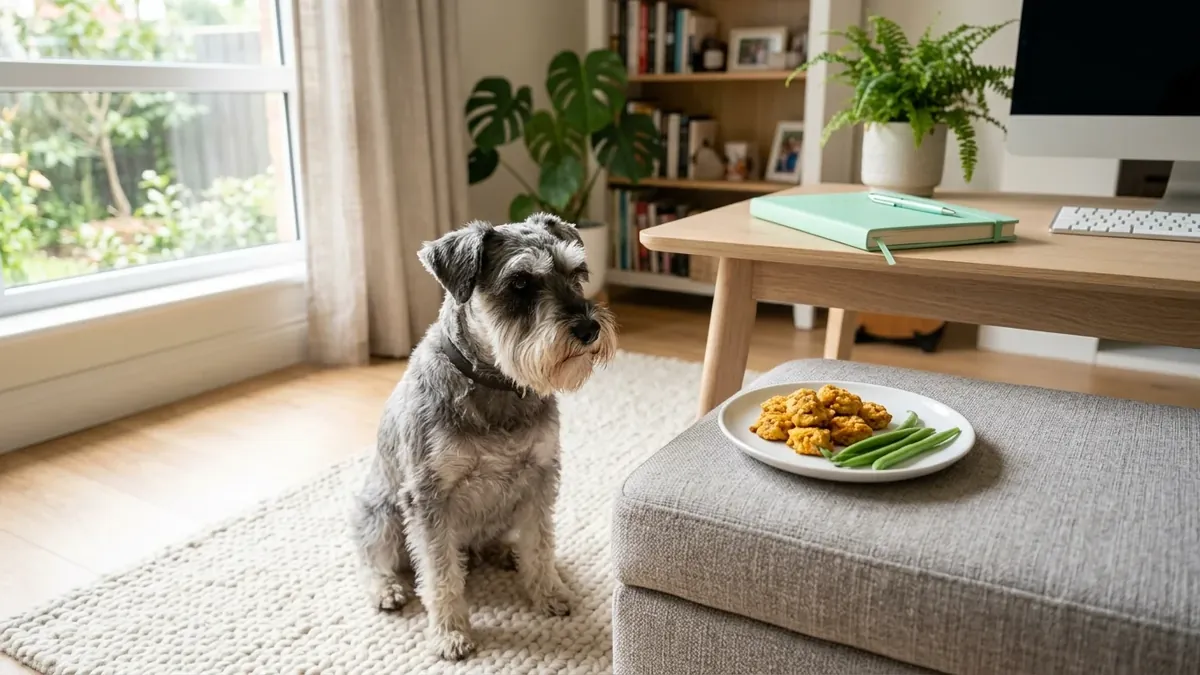
Homemade Low Fat Dog Treats: Chicken and Pumpkin Bites
Low Fat Chicken and Pumpkin Dog Bites
Ingredients
Method
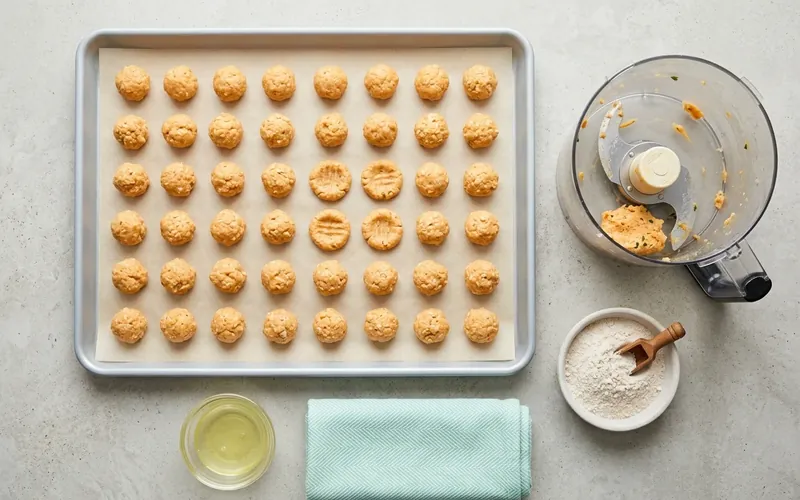
- Heat the oven to 350°F (175°C) and line a baking sheet with parchment.
- Blend the chicken, pumpkin and egg white in a food processor into a thick paste.
- Mix in the flour until the dough holds its shape.
- Roll into marble-size balls and flatten each slightly.
- Bake 20 to 25 minutes, until firm and dry outside. Cool completely.
Notes
Using USDA values, the batch totals about 720 calories and roughly 9 grams of fat, mostly from the chicken and flour. Across 40 bites, that’s about 18 calories and a fraction of a gram of fat each.
Treats for Dogs With Pancreatitis
Fatty meals are a well-known trigger for pancreatitis, and the Merck Veterinary Manual notes that dogs with mild cases are usually switched to a low-fat diet along with low-fat treats. A carefully chosen food can be undone by a few bites of cheese or bacon, so treats matter.
- Follow your vet’s fat target. Some dogs need a prescription diet with a strict limit, and your vet may want treats to come from that same food.
- Keep it plain and simple: single-ingredient vegetables or lean, unseasoned chicken are the easiest to fit in.
- Change one thing at a time, so you can tell what agrees with your dog.
Repeated vomiting, a painful belly, a hunched posture or loss of appetite need a vet visit right away. Treats are not a home remedy for pancreatitis.
Low-Fat Isn’t the Same as Low-Calorie
A rice-flour biscuit can be almost fat-free and still carry a fair number of calories. For a dog on a weight-loss plan, calories count more than fat alone. Veterinary guidelines suggest treats make up no more than about 10% of daily calories, and weight-loss plans often trim that further.
Watery vegetables give the most crunch for the fewest calories. Frozen options like the watermelon pupsicles in our frozen dog treats guide are another light choice.
| Dog Size | Weight | Chicken Bites Per Day | Approx. Calories |
|---|---|---|---|
| Toy | Under 10 lb | 1–2 | 18–36 kcal |
| Small | 10–25 lb | 2–3 | 36–54 kcal |
| Medium | 25–50 lb | 3–5 | 54–90 kcal |
| Large | 50–90 lb | 5–8 | 90–144 kcal |
| Giant | 90+ lb | Up to 9 | ~160 kcal |
For healthy adult dogs at maintenance weight. Dogs on a weight-loss or medical diet should follow their vet’s treat allowance.
Fatty Treats to Swap Out
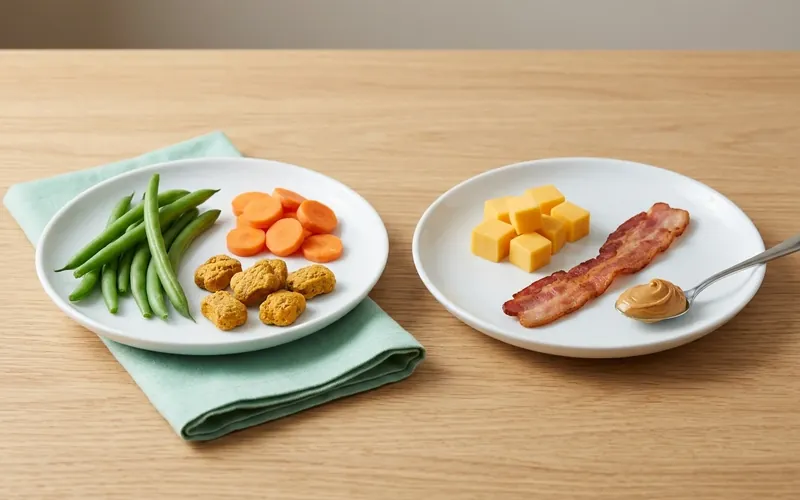
- Cheese, bacon and sausage: among the fattiest scraps dogs get.
- Peanut butter: even a spoonful is rich. Our peanut butter treats are best saved for dogs without fat restrictions.
- Poultry skin, fat trimmings and drippings.
- Rotisserie chicken: the skin is fatty and the meat is often salted and seasoned.
Store bite-size treats in the fridge for 3–4 days, since they contain cooked chicken, or freeze them for up to 3 months.
Low-Fat Treats for Dogs: Quick Serving Guide
Do
- Choose plain veggies and fruit
- Use skinless, unseasoned chicken
- Count calories, not just fat
- Follow your vet's diet plan
Don't
- Cheese, bacon or sausage
- Spoonfuls of peanut butter
- Poultry skin or fat trimmings
- Seasoned rotisserie chicken
Every dog is different. If your dog has pancreatitis, high blood fats or another condition, check with your veterinarian before adding any treat.
Frequently Asked Questions
What are the best low-fat treats for dogs with pancreatitis?
Plain vegetables like green beans, carrots and cucumber, small pieces of plain skinless chicken breast, and treats your vet approves are common choices. Always check with your vet first, as some dogs need even tighter limits.
What can I give my dog on a low-fat diet?
Lean, plain protein in small amounts, most vegetables, and fruits like blueberries or watermelon in moderation. Pieces of their own low-fat kibble also make easy rewards.
Why can’t dogs eat rotisserie chicken?
Store-bought rotisserie chicken is usually salted and seasoned, sometimes with garlic or onion, and the skin is fatty. Cooked bones can splinter. A little plain white meat with no skin or bones is a safer share.
Do low-fat treats help a dog lose weight?
They can help if they’re also low in calories and replace richer snacks. Weight loss still depends mainly on how much your dog eats overall, so ask your vet for a target.
Which meats are lowest in fat for dogs?
Skinless chicken or turkey breast and plain white fish such as cod are among the leanest. Cook them plain, remove bones, and trim any visible fat.
Want more ideas? See the full collection of homemade dog treat recipes.
The Bottom Line
The simplest low fat dog treats are plain vegetables, fruit and lean chicken, and homemade bites let you control every ingredient. Swap out cheese, bacon and peanut butter, count calories as well as fat, and follow your vet’s plan if your dog has pancreatitis. Browse more recipes in our Homemade Treats collection. This article is general information, not veterinary advice; see our Veterinary Disclaimer.
References & Sources
Written by CPD Nutrition Desk using the sources below. We are not affiliated with these organizations, and this guide is not a substitute for advice from your veterinarian.
- Merck Veterinary Manual — Pancreatitis and other disorders of the pancreas in dogs