


Can dogs eat eggs? Yes. A plain, fully cooked egg is one of the best protein snacks you can share, and most dogs love it. The catch is in the details: raw eggs, buttery scrambles and a whole egg a day for a small dog all cause problems. Here’s how much to give by size, which styles are safe, and what to do if your dog steals a raw egg.
Yes, cooked and plain. Boiled, scrambled or poached eggs with no butter, oil, salt or seasoning are safe for most dogs. Skip raw eggs because of Salmonella. One large egg has about 72 calories, so small dogs need only a quarter to a half.

Table of Contents
Are Eggs Good for Dogs?
For most healthy dogs, yes. Eggs are a complete protein, meaning they supply every essential amino acid, and the yolk adds vitamin A, B vitamins, riboflavin, selenium and choline. The American Kennel Club notes they can even help settle an upset stomach as a bland protein. Here’s what each part brings, using USDA FoodData Central values for one large egg:
| Part (large egg) | Calories | Protein | Fat | Best for |
|---|---|---|---|---|
| Whole egg | ~72 kcal | 6.3 g | 4.8 g | Most healthy dogs |
| Egg white only | ~17 kcal | 3.6 g | <0.1 g | Weight loss, low-fat diets |
| Yolk only | ~55 kcal | 2.7 g | 4.5 g | Small amounts; rich in vitamins |
Approximate USDA values for a 50 g large egg. Cooking changes the numbers only slightly.
Can Dogs Eat Raw Eggs?
It’s best not to. Raw eggs carry two real risks:
- Salmonella: it can cause vomiting, diarrhea and fever in dogs, and a dog can shed the bacteria and pass it to people at home. The FDA warns about this with all raw pet foods.
- Biotin: raw whites contain avidin, which blocks this B vitamin. Deficiency is rare and needs regular raw whites, but cooking removes the problem entirely.
Cooking keeps the protein and loses the risks, so there’s no real upside to raw. Even eggs from backyard chickens can carry Salmonella on or inside the shell.
Scrambled, Boiled, Fried: Which Eggs Are Safe?
| Egg style | Verdict | Why |
|---|---|---|
| Hard-boiled | Best choice | No added fat; easy to chop and portion |
| Scrambled, plain | Safe | Cook in a dry nonstick pan with no milk, butter or salt |
| Poached | Safe | Cook until the yolk is set |
| Fried | Occasionally | Oil or butter adds fat; blot well or skip |
| Omelet or breakfast scramble | Avoid | Often contains onion, garlic, cheese, ham or salt |
| Deviled eggs, egg salad | Avoid | Mayo, mustard, onion and spices |
| Raw | Avoid | Salmonella and biotin risk |
A pinch of salt and pepper in a family scramble won’t hurt most dogs, but it’s better to set some aside before seasoning. Onion and garlic are the real danger, since both damage red blood cells.
How Many Eggs Can a Dog Eat?
Count eggs as a treat. A widely used guideline from WSAVA keeps all treats under about 10% of daily calories. We turned that into eggs:
| Dog’s weight | Est. daily calories | Max per day (only treat) | Comfortable amount |
|---|---|---|---|
| 10 lb (4.5 kg) | ~350 kcal | ½ egg | ¼ egg, a few times a week |
| 25 lb (11 kg) | ~690 kcal | 1 egg | ½ egg |
| 50 lb (23 kg) | ~1,160 kcal | 1½ eggs | ¾ to 1 egg |
| 75 lb (34 kg) | ~1,580 kcal | 2 eggs | 1 egg |
| 100 lb (45 kg) | ~1,960 kcal | 2½ eggs | 1 to 1½ eggs |
Our estimates for a typical neutered adult (70 × kg0.75 × 1.6) at ~72 kcal per large egg. The comfortable amount leaves room for other treats. Active dogs, puppies and seniors differ.
Daily eggs: small daily portions are fine for many healthy dogs if you trim their regular food to match. Our dog calorie calculator helps you set the budget.

How to Prepare Eggs for Your Dog
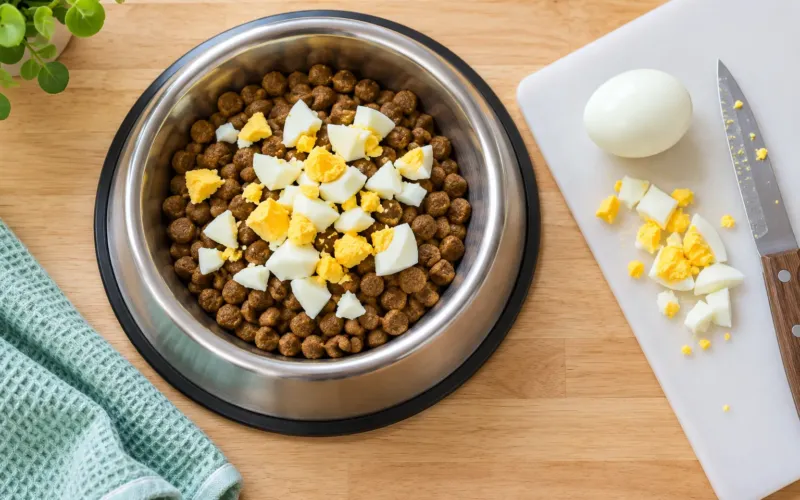
- Boil 10 to 12 minutes, or scramble in a dry nonstick pan until no wet egg remains.
- Cool and chop into bite-size pieces; toy breeds can choke on big chunks of white.
- Keep it plain: no butter, oil, milk, cheese, salt or seasoning.
- Serve as a topper on kibble or as a training reward. See our dog food toppers guide.
- Refrigerate leftovers and use within 3 to 4 days.
Can Dogs Eat Eggshells?
Eggshells are mostly calcium carbonate, so a crushed bit won’t hurt. Sharp, large pieces can scratch the mouth or throat, and raw shells can carry Salmonella. If you want to use shells as a calcium source, bake them, grind them to a fine powder and ask your vet for the right amount. A dog on a complete commercial food doesn’t need extra calcium, and too much can harm growing large-breed puppies.
My dog ate a raw egg or eggshells. What now? Don’t panic; most dogs are fine. Pick up any shell pieces, offer water and watch for 24 to 72 hours for vomiting, diarrhea, fever or lethargy. Call your vet if those appear, if your dog ate several eggs, or if the egg dish contained onion, garlic or lots of butter. Wash your hands and the floor, since raw egg can carry Salmonella.
Puppies, Allergies and Health Conditions
- Puppies: a few small pieces of cooked egg are fine once they eat solid food. Their puppy food should still supply nearly all calories; see our puppy treat recipes.
- Diarrhea or upset stomach: plain scrambled egg is a common bland protein. Pair it with rice as in what to feed a dog with diarrhea.
- Pancreatitis or a low-fat diet: yolks are fatty, so use cooked whites only, with your vet’s okay.
- Kidney disease: eggs add protein and phosphorus; ask your vet before adding them. See our kidney diet for dogs guide.
- Itchy skin or ear infections: egg allergy is uncommon but possible. Stop eggs and read dog food allergies.
Raw or cooked eggs? Cooked, every time. Cooking kills Salmonella and stops raw egg white from blocking biotin, so plain scrambled or boiled eggs are the simple choice.
My dog ate a raw egg. Should I worry? Most healthy dogs are fine. Watch for vomiting or diarrhea over the next day or two, and call your vet if it does not settle.
— Dr. Sarah Miller, DVM
Eggs for Dogs: Quick Serving Guide
✓ Do
- Cook eggs all the way through
- Serve them plain, boiled or scrambled
- Chop them small as a food topper
- Start with a little to test the tummy
✕ Don't
- Feed raw eggs
- Add butter, oil, salt or cheese
- Share fried eggs or egg dishes
- Give big pieces of eggshell
Ask your vet first if your dog has allergies, pancreatitis or kidney disease.
Frequently Asked Questions
Can dogs eat eggs every day?
Yes, in small amounts that fit the treat budget, with the main meal reduced to match.
Can dogs eat egg yolks?
Yes, cooked. Yolks are nutrient-dense but fatty, so keep portions small for dogs prone to weight gain or pancreatitis.
Can dogs eat scrambled eggs with cheese?
A little plain cheese is fine for most dogs, but it adds fat and lactose. Plain scrambled egg is the safer habit.
Can dogs eat hard-boiled eggs with the shell?
Peel them first. Shell shards can scratch the mouth and throat, and whole shells offer no benefit over a calcium source your vet recommends.
Are eggs good for a dog’s coat?
Eggs supply protein, biotin (when cooked) and fatty acids that support skin and coat, but they won’t fix a poor diet or a skin condition on their own.
Checking another food? See our What Can Dogs Eat? A-Z list of safe and unsafe foods.
The Bottom Line
Can dogs eat eggs? Yes, when they’re cooked, plain and portioned to size. Hard-boiled or dry-scrambled eggs make a cheap, high-protein treat, while raw eggs, seasoned dishes and oversized portions are best avoided. Browse more answers in our Can Dogs Eat…? library or our Start Here guide. For another soft, high-protein snack, see cottage cheese. This article is general information, not veterinary advice; see our Veterinary Disclaimer.
References & Sources
Written by CPD Nutrition Desk using the sources below. We are not affiliated with these organizations, and this guide is not a substitute for advice from your veterinarian.
- American Kennel Club (AKC) — Can dogs eat eggs
- USDA — USDA FoodData Central
- U.S. Food and Drug Administration — Get facts raw pet food diets can be dangerous you and your pet
- WSAVA — WSAVA guidetotreats dogs 251107