


Dog food toppers are small extras spooned over your dog’s regular meal to add flavor, moisture or variety, from plain pumpkin to a broth or freeze-dried crumble. Used well, they tempt picky eaters. Used carelessly, they add calories or unbalance a complete diet. Below: healthy options with calories, what a 10% portion looks like, and how to read a topper label.
Toppers are optional, not essential. Keep them plain and dog-safe, count them toward the roughly 10% of daily calories set aside for extras, and trim the main meal if you go over. A dog who suddenly needs toppers to eat should see a vet.
Table of Contents
What Are Dog Food Toppers?
A topper is anything added on top of, or stirred into, a complete meal. The American Kennel Club notes owners use them for variety or to tempt reluctant eaters, though dogs on a complete diet generally don’t need them. There are two groups:
- Homemade: plain cooked chicken, eggs, pumpkin, plain yogurt, vegetables and some fruits.
- Commercial: broths, wet toppers, freeze-dried crumbles and powders, some with supplements.
Either way, a topper should be a small addition to a balanced bowl, never a replacement for it.
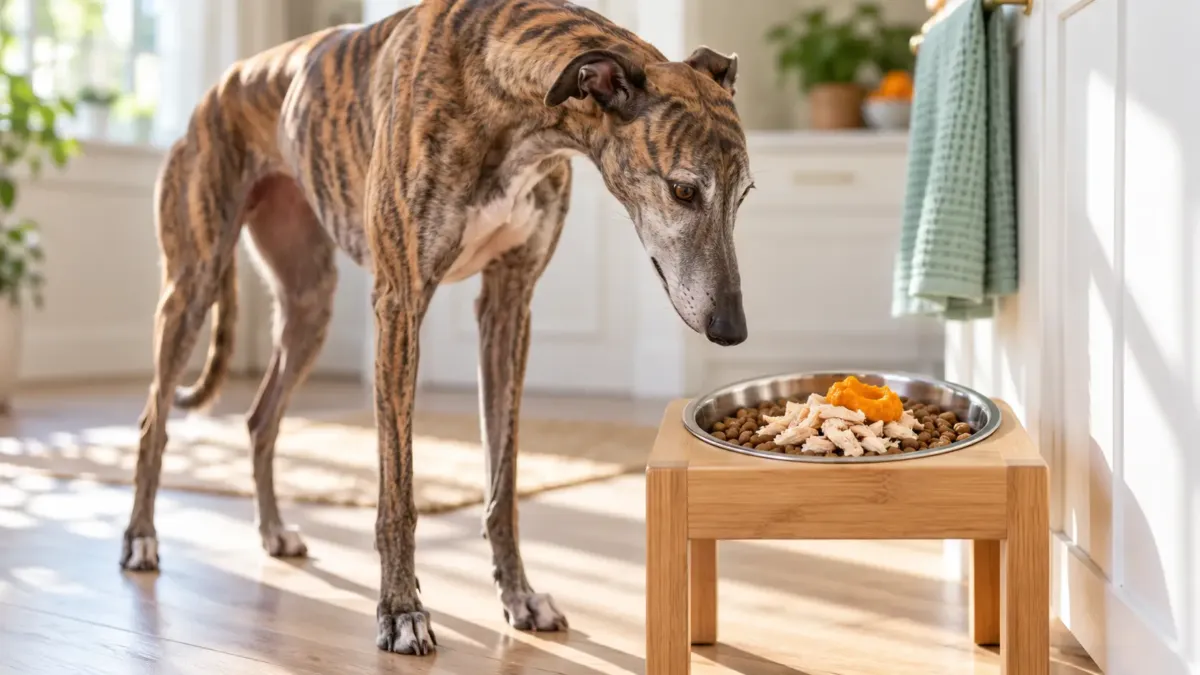
Healthy Homemade Dog Food Toppers (With Calories)
| Topper | Serving | Approx. Calories | Why Owners Use It |
|---|---|---|---|
| Plain canned pumpkin | 1 tbsp | ~5 kcal | Fiber, very low calorie |
| Green beans, chopped | 1 tbsp | ~2 kcal | Bulk for weight control |
| Carrot, grated | 1 tbsp | ~3 kcal | Sweet, low calorie |
| Blueberries | 1 tbsp | ~5 kcal | Easy to sprinkle |
| Plain nonfat Greek yogurt | 1 tbsp | ~10 kcal | Creamy; some have live cultures |
| Low-fat cottage cheese | 1 tbsp | ~11 kcal | Soft, gentle protein |
| Mashed sweet potato | 1 tbsp | ~13 kcal | Fiber and flavor |
| Sardine (in water, no salt) | 1 small fish | ~25 kcal | Omega-3s and aroma |
| Plain cooked chicken breast | 1 oz | ~45 kcal | Lean, very appealing |
| Hard-boiled egg | 1 large | ~78 kcal | Complete protein |
Approximate values from USDA FoodData Central. Serve everything plain: no salt, butter, oil, garlic, onion or seasoning.
More detail: cottage cheese, blueberries, sweet potatoes and our bone broth guide.
How Much Topper Is Too Much?
The World Small Animal Veterinary Association suggests keeping all extras (toppers, treats and chews) under about 10% of daily calories. Here’s what that looks like:
| Dog’s Weight | Est. Daily Calories | 10% Budget | Example |
|---|---|---|---|
| 10 lb (4.5 kg) | ~350 kcal | ~35 kcal | 2 tbsp pumpkin + ½ oz chicken |
| 25 lb (11 kg) | ~690 kcal | ~70 kcal | 1 oz chicken + 2 tbsp green beans + 1 tbsp blueberries |
| 50 lb (23 kg) | ~1,160 kcal | ~115 kcal | 1 egg + 2 tbsp cottage cheese + 2 tbsp pumpkin |
| 75 lb (34 kg) | ~1,580 kcal | ~160 kcal | 2 oz chicken + 2 tbsp sweet potato + 3 tbsp green beans |
| 100 lb (45 kg) | ~1,960 kcal | ~195 kcal | 1 egg + 2 oz chicken + 2 tbsp pumpkin |
Estimates for a typical neutered adult (70 × kg0.75 × 1.6), assuming no other treats that day.
Giving more? Cut the main food by the same calories. Our dog calorie calculator helps set a target.

Commercial Toppers: What to Look For
| Type | Watch For |
|---|---|
| Broth and gravy | Onion or garlic in human broths; sodium; calories in thick gravies |
| Wet toppers | Complete or supplemental; calories per pouch |
| Freeze-dried crumbles | Raw versions carry bacteria; very calorie-dense |
| Powders and functional toppers | Doubling up on supplements your dog already takes |
- AAFCO statement: “intended for intermittent or supplemental feeding only” means it can’t replace meals.
- Calories per serving on the package.
- Ingredients: a chicken topper can undo an elimination trial built on another protein.
See our freeze-dried dog food guide for raw safety, and our probiotics and fish oil guides before combining products.
Toppers for Common Needs
- Picky eaters: warm dog-safe broth or shredded chicken, mixed in so your dog can’t lick it off. If your dog suddenly stopped eating, read dog not eating and call your vet.
- Sensitive stomachs: plain pumpkin or a little plain chicken, one new topper at a time. See dog upset stomach.
- Weight loss: green beans, carrot or pumpkin replacing part of the kibble.
- Weight gain: eggs or lean meat, added gradually after a vet check.
- Seniors: warm, aromatic toppers help dull appetites. With kidney, heart or liver disease, ask your vet first.
Toppers to Avoid
Xylitol-free peanut butter is fine in tiny amounts; check our peanut butter guide.
Which toppers do you suggest for picky eaters? A spoonful of plain cooked chicken, pumpkin, or a little complete wet food, kept within about 10% of daily calories.
When should a picky dog see a vet instead? If a dog that used to eat well suddenly stops, check for illness first.
— Dr. Sarah Miller, DVM
Dog Food Toppers: Quick Serving Guide
✓ Do
- Keep toppers plain and unseasoned
- Count them in the daily extras budget
- Introduce one new topper at a time
- Mix toppers into the food
✕ Don’t
- Use broth or leftovers with onion or garlic
- Let toppers replace a complete diet
- Use toppers to mask a sudden loss of appetite
- Break an elimination diet with new proteins
Every dog is different. Dogs with kidney, heart or digestive conditions should get their vet’s okay before adding toppers.
Frequently Asked Questions
Are dog food toppers good for dogs?
They can be, when plain, dog-safe and kept small. Dogs on a complete diet don’t need them.
Can I use dog food toppers every day?
Yes, if they fit your dog’s calorie target and don’t replace the complete food.
Is wet food a good topper for kibble?
Yes. A spoonful of complete wet food won’t unbalance the diet; reduce the kibble slightly.
Will my dog stop eating plain kibble if I use toppers?
Some dogs hold out for extras. Mix toppers in, keep them small and offer meals for 15 to 20 minutes at set times.
What can I add to my dog’s food to make it healthier?
Low-calorie vegetables like green beans and carrots, a little plain pumpkin, or a small amount of lean cooked protein are common choices. If you think the food is missing something, ask your vet before adding supplements.
Can puppies have dog food toppers?
Small amounts of plain, safe toppers are generally fine, but growth food should make up nearly all of a puppy’s diet. Ask your vet, especially for large-breed puppies.
Want the bigger picture? Our dog food guide covers choosing a food, portions and homemade meals.
The Bottom Line
Dog food toppers add flavor and moisture as long as they’re plain, safe and a small part of the day’s calories. Choose pumpkin, green beans or a little cooked chicken, check commercial labels for the AAFCO statement and calories, and adjust the main meal. Explore our Dog Food section for more. This article is general information, not veterinary advice; see our Veterinary Disclaimer.
References & Sources
Written by CPD Nutrition Desk using the sources below. We are not affiliated with these organizations, and this guide is not a substitute for advice from your veterinarian.
- American Kennel Club (AKC) — What are dog food toppers
- WSAVA — World Small Animal Veterinary Association
- ASPCA — People foods avoid feeding your pets