


Can dogs eat cauliflower? Yes. Plain cauliflower, raw or cooked, is a safe, low-calorie vegetable for dogs. A few small florets add fiber and crunch without many calories, which makes it handy for dogs watching their weight. The main side effect is gas, so keep portions modest and skip cheesy or buttery cauliflower dishes.
Yes, plain and in small pieces. Steamed or raw florets are safe for most dogs. Start with one or two pieces, cut them small, and serve them without butter, cheese, salt, garlic or onion. Large amounts can cause gas and an upset stomach.

Table of Contents
Is Cauliflower Good for Dogs?
It can be a smart swap for higher-calorie treats. Cauliflower is about 92% water, with fiber, vitamin C, vitamin K and folate. Here's how it lines up with two cousins, using USDA FoodData Central values per 100 g raw:
| Per 100 g (raw) | Cauliflower | Broccoli | Green beans |
|---|---|---|---|
| Calories | ~25 kcal | ~34 kcal | ~31 kcal |
| Fiber | ~2.0 g | ~2.6 g | ~2.7 g |
| Vitamin C | ~48 mg | ~89 mg | ~12 mg |
| Gas potential | Moderate | Moderate to high | Low |
Approximate USDA values. Gas potential is a general observation, not a measured value.
Because it's so light, cauliflower works well for dogs on a diet. Swapping a commercial biscuit for a few florets can trim real calories over a week. Our weight control dog food guide has more tips.
Raw or Cooked Cauliflower?
Both are safe. The difference is digestion:
- Steamed or boiled: softer and easier to digest, with less gas for many dogs. Cook plain until fork-tender, cool, then chop.
- Raw: crunchier, and some dogs enjoy it as a chew. Cut florets into small, bite-size pieces so they don't become a choking risk.
- Roasted: fine only if roasted plain, with no oil, salt or spices.
- Frozen: plain frozen florets can be thawed and served, or given frozen to larger dogs on a hot day.
Stems, Leaves and Cauliflower Rice
The stem and leaves are edible too. The stem is tough and fibrous, so slice it thin or cook it until soft; a big chunk can be hard to chew and swallow. Cauliflower rice is just finely chopped cauliflower, so plain cauliflower rice is fine as a topper. Store-bought cauliflower rice mixes and cauliflower pizza crusts are another story: they often contain cheese, garlic, salt and oil.
How Much Cauliflower Can a Dog Eat?
| Dog's weight | Suggested amount | Rough calories |
|---|---|---|
| Under 15 lb | 1 to 2 small florets | ~2 to 4 kcal |
| 15 to 40 lb | 3 to 4 small florets | ~6 to 8 kcal |
| 40 to 70 lb | ¼ cup chopped | ~7 kcal |
| Over 70 lb | Up to ½ cup chopped | ~13 kcal |
Our estimates; a small floret is about 8 to 10 g. All treats should stay under about 10% of daily calories, a guideline from WSAVA. Here the real limit is gas, not calories.
Introduce it over a few days. If your dog clears the room after a serving, cut back.
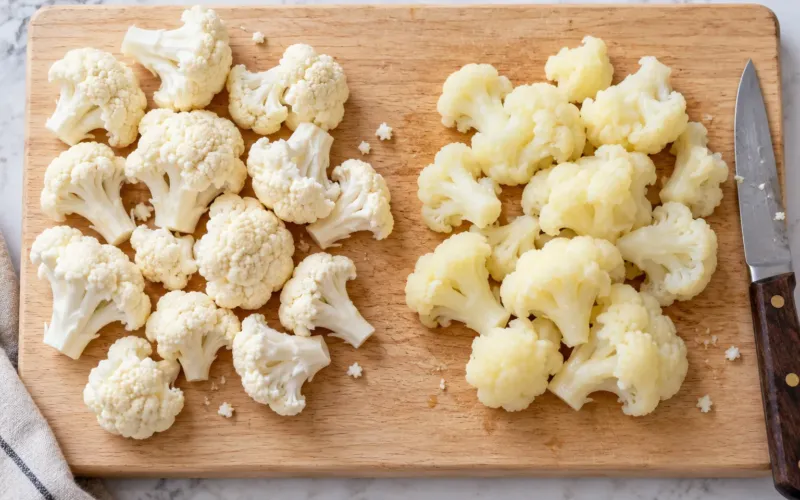
Risks and Dishes to Skip
Watch for gas and bloating. Cauliflower is a cruciferous vegetable, and large portions can cause gas, belly discomfort and loose stool. A tight, swollen belly with unproductive retching is different: that can be bloat, an emergency, so call your vet right away.
Skip these cauliflower dishes:
- Cauliflower cheese and gratins: butter, cheese and salt.
- Mashed cauliflower: usually made with butter, cream and garlic.
- Buffalo cauliflower: spicy sauce and fried batter.
- Cauliflower pizza crust: cheese, salt and often garlic.
- Roasted cauliflower with spice rubs: garlic and onion powder are common, and both are toxic, says the ASPCA.
Dogs That May Need Less
- Sensitive stomachs: start with one steamed floret. See our sensitive stomach diet guide.
- Dogs with thyroid disease: very large, regular servings of raw cruciferous vegetables are sometimes discussed as a concern. Small treats are unlikely to matter, but ask your vet.
- Puppies: a tiny piece is fine once they're eating solid food well.
Easy Serving Ideas
- Mix a spoonful of plain cauliflower rice into regular food as a low-calorie topper.
- Combine steamed florets with plain broccoli and carrots for a mini veggie mix.
- Freeze small steamed pieces in a silicone tray for summer.
Raw or steamed cauliflower? Both are safe. Steamed is gentler for dogs that get gassy or have sensitive stomachs.
When is a gassy belly a concern? Ordinary gas passes on its own. A swollen, hard belly with retching that brings nothing up is an emergency, so call your vet right away.
— Dr. Sarah Miller, DVM
Cauliflower for Dogs: Quick Serving Guide
✓ Do
- Steam it plain or serve raw
- Cut florets into bite-size pieces
- Start with one or two pieces
- Use plain cauliflower rice as a topper
✕ Don't
- Add butter, cheese or salt
- Share buffalo or gratin dishes
- Give big chunks of stem
- Serve big portions at once
Dogs with thyroid disease or a sensitive stomach should get a vet OK first.
Frequently Asked Questions
Can dogs eat raw cauliflower?
Yes, in small pieces. Some dogs get more gas from raw than cooked, so steam it if your dog seems uncomfortable.
Can dogs eat cauliflower and broccoli together?
Yes, plain and in small amounts. Both are cruciferous, so the combined portion should stay small to limit gas.
Can dogs eat cauliflower rice?
Plain cauliflower rice is fine. Avoid seasoned, buttered or cheesy store-bought versions.
Can dogs eat cauliflower every day?
A few florets a day is fine for many dogs if stool and gas stay normal. Variety is better than the same veggie every day.
Is cauliflower good for dogs with diabetes?
It's low in sugar and calories, so it can be a good treat, but check with your vet about any changes to a diabetic dog's diet.
For more foods, browse the full what can dogs eat list.
The Bottom Line
Can dogs eat cauliflower? Yes. Plain florets, raw or steamed and cut small, make a light, crunchy treat that suits dogs watching their weight. Keep portions modest to avoid gas, and skip cheesy, buttery or seasoned dishes. For more veggie answers, browse our Can Dogs Eat…? library or the Start Here guide.
References & Sources
Written by CPD Nutrition Desk using the sources below. We are not affiliated with these organizations, and this guide is not a substitute for advice from your veterinarian.
- USDA — USDA FoodData Central
- WSAVA — WSAVA guidetotreats dogs 251107
- ASPCA — People foods avoid feeding your pets