


Small breed puppy food is made for puppies that will weigh under about 20-25 lb as adults, such as Chihuahuas, Yorkies, Shih Tzus, Dachshunds and Pomeranians. It has smaller kibble and more calories per bite, because tiny puppies burn energy fast but can only eat a little at a time. Toy puppies also need frequent meals to prevent low blood sugar.
Choose a puppy food with an AAFCO "growth" or "all life stages" statement and small kibble. Feed 3-4 measured meals a day (toy breeds may need 4-5 at first), keep your puppy lean, and switch to adult food at about 9-12 months.
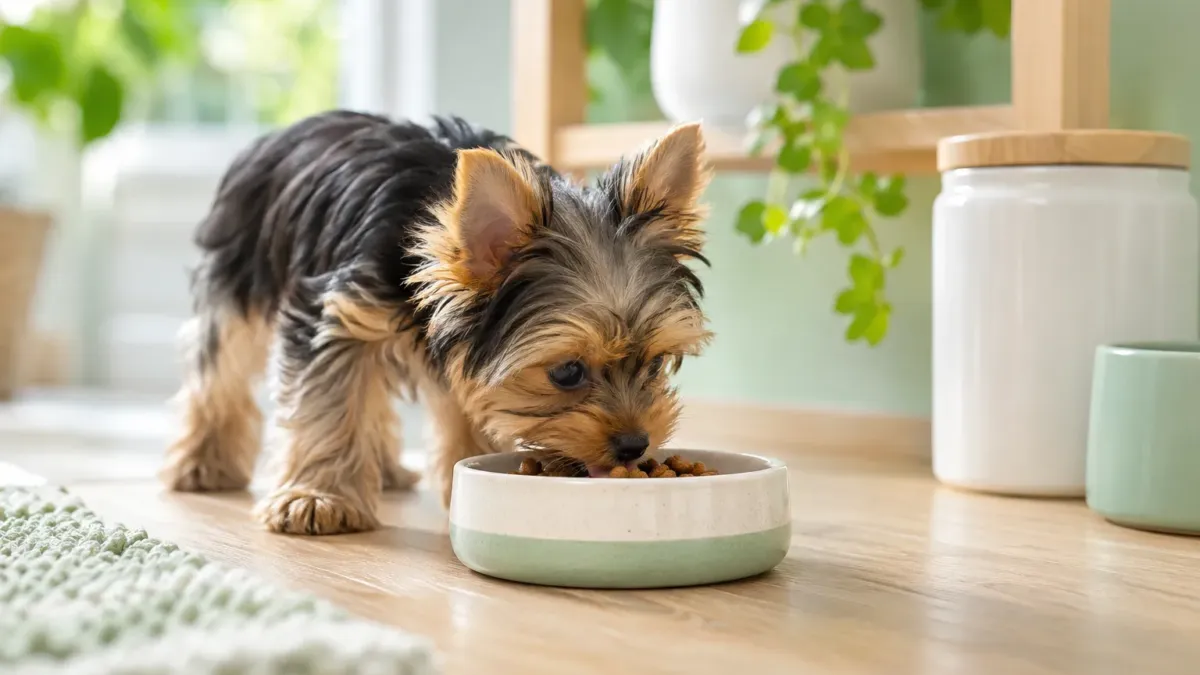
Table of Contents
Small Breed Puppy Food vs Regular Puppy Food
| Feature | Regular puppy food | Small breed puppy food |
|---|---|---|
| Kibble size | Medium | Small, easy to crunch |
| Calories per cup | Moderate | Often higher, so portions stay small |
| Meals per day | 3 | 3-5 depending on size |
| Growth period | Up to 12-18 months | Usually done by 9-12 months |
| Label | "Growth" or "all life stages" | Same standard, sized for small mouths |
Nutrient standards for growth are the same; the differences are kibble size, calorie density and feeding schedule. Learn to read the label in our dog food label guide.
Why small puppies need more frequent meals
Toy and small puppies have little fat and glycogen stored, and a fast metabolism. Long gaps between meals can lead to hypoglycemia (low blood sugar), especially in puppies under 3-4 months or under 2-3 lb.
Weakness, trembling, wobbling, a glassy stare, extreme sleepiness or a seizure in a tiny puppy can mean low blood sugar. This is an emergency: call your vet right away. Your vet may suggest rubbing a little corn syrup on the gums on the way.
How Much to Feed a Small Breed Puppy
Start with the bag's chart for your puppy's current weight and age, then adjust to body condition.
| Current puppy weight | Under 4 months (about 3 x RER) | 4 months to adult (about 2 x RER) |
|---|---|---|
| 1 kg (2.2 lb) | about 210 kcal/day | about 140 kcal/day |
| 2 kg (4.4 lb) | about 350 kcal/day | about 235 kcal/day |
| 3 kg (6.6 lb) | about 480 kcal/day | about 320 kcal/day |
| 5 kg (11 lb) | about 700 kcal/day | about 470 kcal/day |
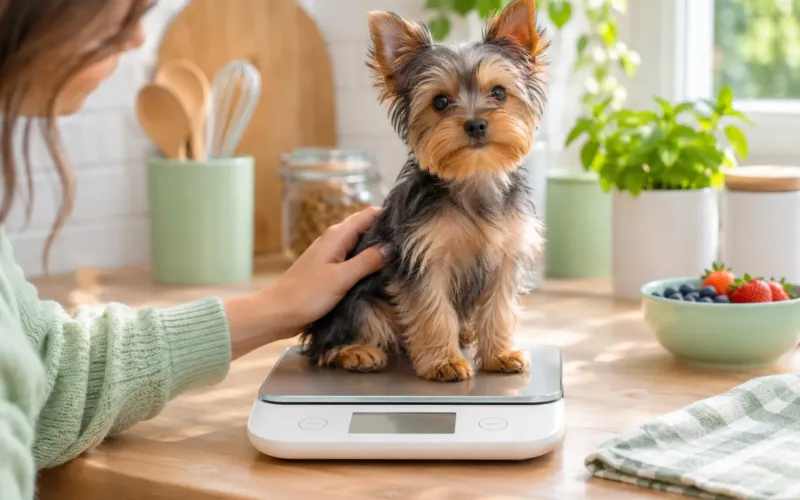
Estimates using RER = 70 x kg^0.75. Small dogs vary a lot; weigh weekly on a kitchen or baby scale and adjust by about 10%.
Meals per day by age
| Age | Toy breeds (adult under 10 lb) | Small breeds (adult 10-25 lb) |
|---|---|---|
| 8-12 weeks | 4-5 meals | 4 meals |
| 3-6 months | 4 meals | 3 meals |
| 6-12 months | 3 meals | 2-3 meals |
| Adult | 2-3 meals | 2 meals |
For all puppy sizes, see how much to feed a puppy.
How to Choose a Small Breed Puppy Food
- AAFCO statement for growth or all life stages (see AAFCO’s label guide).
- Small kibble your puppy can crunch; soak it in warm water at first if needed (soft dog food).
- Calories per cup printed on the bag, so portions are accurate.
- A company with nutrition expertise; see the WSAVA guidelines.
- Grain free? Not needed for most puppies; see grain free puppy food.
When to Switch to Adult Food
Most small breeds reach adult size at about 9-12 months, so that's when to start a slow, 7-10 day change to adult food (how to transition dog food). Toy breeds sometimes switch closer to 9 months; ask your vet. Then see small breed dog food for adult needs.

Feeding Tips for Tiny Puppies
- Measure meals with a measuring spoon or scale; a few extra kibbles matter in a 3 lb dog.
- Keep treats tiny and under 10% of calories; try our puppy treat recipes.
- Use a shallow bowl so the puppy can reach easily.
- Start dental care early: small breeds often have crowded teeth.
- Avoid table food; even small scraps are big for a small dog.
How many meals a day for toy breed puppies under 3 months? Four or more small meals a day, so blood sugar stays steady.
What should I do on the way to the clinic if my tiny puppy is weak and shaky? Rub a little corn syrup or honey on the gums, keep the puppy warm, and drive straight in. Weakness in toy puppies can be low blood sugar.
— Dr. Sarah Miller, DVM
Feeding a Small Breed Puppy
✓ Do
- 3-5 measured meals a day
- Small, crunchable kibble
- Weigh weekly
- Switch to adult at 9-12 months
✕ Don't
- Long gaps between meals
- Big table scraps
- Guessing portions
- Ignoring weakness or trembling
Tiny puppies, frequent meals.
Frequently Asked Questions
Do small breed puppies need small breed puppy food?
They need a complete puppy food they can chew comfortably. Small breed formulas make that easier with smaller kibble and more calories per bite.
Can a small breed puppy eat regular puppy food?
Yes, if the kibble isn't too big and it meets AAFCO growth standards. Soak larger kibble in warm water.
How many times a day should a small breed puppy eat?
Usually 3-4 times a day until 6 months, and toy breeds may need 4-5 meals when very young.
When should I switch my small breed puppy to adult food?
Around 9-12 months, when your puppy is close to adult size.
Is wet food good for small breed puppies?
Yes, if it's complete and balanced for growth. Many owners mix wet and dry; see canned dog food.
The Bottom Line
Small breed puppy food gives tiny puppies small kibble and calorie-dense meals. Feed 3-5 measured meals a day depending on size, watch toy puppies for signs of low blood sugar, keep them lean, and switch to adult food around 9-12 months.
References & Sources
Written by CPD Nutrition Desk using the sources below. We are not affiliated with these organizations, and this guide is not a substitute for advice from your veterinarian.
- AAFCO — AAFCO's label guide
- WSAVA — Global nutrition guidelines