

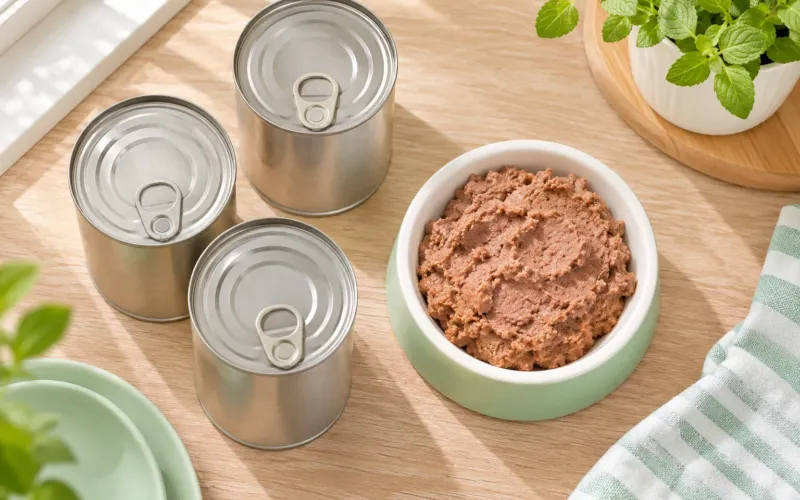
Canned dog food (wet food) is a complete meal sealed in a can or tray, usually about 75-80% water. It's tasty, soft and hydrating, which makes it great for picky eaters, seniors, dogs with dental problems and dogs that drink too little. It costs more per calorie than kibble, so many owners mix the two.
Choose a canned food with an AAFCO "complete and balanced" statement for your dog's life stage, check calories per can, and compare protein on a dry matter basis. Refrigerate leftovers covered and use within 3-5 days. Feed by calories, not by can count alone.

Table of Contents
Canned Dog Food: Pros and Cons
| Pros | Cons |
|---|---|
| High moisture helps hydration | Costs more per calorie |
| Strong smell tempts picky eaters | Spoils fast once opened |
| Soft for seniors and sore mouths | Fewer calories per cup, so bigger portions |
| Often fewer carbohydrates | Can be messy; more packaging |
| Easy to add medication | Doesn't clean teeth (neither does most kibble) |
For a side-by-side with kibble, read wet vs dry dog food.
How to Choose a Good Canned Dog Food
1. Check the AAFCO statement
It should say "complete and balanced" for growth, adult maintenance or all life stages. "Intermittent or supplemental feeding only" means it's a topper, not a meal. See AAFCO approved dog food.
2. Understand the name rules
The product name tells you how much of the named ingredient is inside, under AAFCO labeling rules explained on AAFCO's label guide:
| Name on the label | Minimum of the named ingredient |
|---|---|
| "Beef Dog Food" | 95% (not counting water) |
| "Beef Dinner", "Entree", "Platter" or "Formula" | 25% |
| "Dog Food With Beef" | 3% |
| "Beef Flavor" | Enough to detect the flavor |
3. Compare on a dry matter basis
Wet food labels look low in protein because of the water. Convert before comparing with kibble:
- Dry matter % = nutrient % / (100 – moisture %) x 100.
- Example: 8% protein with 78% moisture = 8 / 22 x 100 = about 36% protein on a dry matter basis.
Our dog food label guide walks through the full math.
4. Look at calories per can
Cans vary a lot, from about 300 to 500+ kcal per 13 oz can. This decides how many cans you need.
How Much Canned Food to Feed
| Dog weight | Daily calories (estimate)* | 13 oz cans at 400 kcal | 3.5 oz trays at 100 kcal |
|---|---|---|---|
| 10 lb (4.5 kg) | about 350 kcal | about 7/8 can | about 3-4 trays |
| 30 lb (14 kg) | about 790 kcal | about 2 cans | n/a |
| 60 lb (27 kg) | about 1,330 kcal | about 3 1/3 cans | n/a |
| 90 lb (41 kg) | about 1,800 kcal | about 4 1/2 cans | n/a |
*Estimate for a neutered adult: 70 x kg^0.75 x 1.6. Use your food's own kcal and adjust every 2-4 weeks to body condition. See our dog feeding chart.
Mixing canned and dry food
A common split is 25% of calories from wet food and 75% from kibble. Work out the calories of each, then reduce the kibble to make room for the wet food. Our dog food toppers guide explains how to keep totals balanced.
Storage and Safety
- Unopened cans: store in a cool, dry cupboard; check the best-by date and skip dented, bulging or leaking cans.
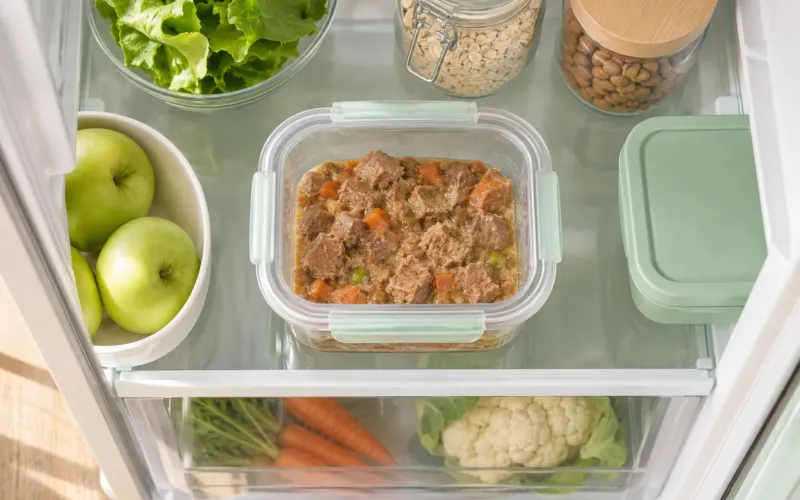
- Opened cans: cover and refrigerate; use within 3-5 days (check your brand's label).
- Serving: warm cold food to room temperature or slightly warmer; stir to remove hot spots if microwaved.
- In the bowl: throw away wet food left out longer than about 1-2 hours, sooner in hot weather.
- Recalls: you can check the FDA pet food page for recall news.
Never feed food from a swollen or leaking can. Signs like vomiting, diarrhea or weakness after a new food should be reported to your vet.
Who Benefits Most From Canned Food?
- Picky eaters (dog food for picky eaters).
- Seniors and dogs with dental pain (soft dog food).
- Dogs that drink little or have a history of urinary crystals (with your vet's guidance).
- Dogs on weight loss plans: wet food's volume can help them feel full (weight control dog food).
Which dogs benefit most from canned food? Dogs that need more water (urinary or kidney issues), seniors with dental problems, picky eaters, and dogs on weight loss, since canned food is more filling per calorie.
How long can an opened can stay in the fridge? Covered, about 3 to 5 days, or follow the label.
— Dr. Sarah Miller, DVM
Feeding Canned Dog Food
✓ Do
- Check the AAFCO statement
- Feed by calories per can
- Refrigerate opened cans
- Warm to room temperature
✕ Don't
- Bulging or dented cans
- Leaving wet food out for hours
- Comparing protein without dry matter math
- Adding wet food without cutting kibble
Wet food is a meal or a topper: know which.
Frequently Asked Questions
Is canned dog food better than dry?
Neither is better for every dog. Wet food adds moisture and flavor; dry food is cheaper and easier to store. A complete and balanced diet of either can be healthy.
How long is canned dog food good after opening?
Covered in the fridge, usually 3-5 days. Follow the brand's instructions.
Can I feed my dog only canned food?
Yes, if it's labeled complete and balanced for your dog's life stage.
Should I warm up canned dog food?
Room temperature or slightly warm food smells better to dogs. Never serve it hot.
Can I make homemade canned dog food?
Home canning meat safely is difficult and risky. Cook fresh meals with a balanced recipe instead; see homemade dog food recipes.
The Bottom Line
Canned dog food is a tasty, hydrating option, especially for picky, senior or low-drinking dogs. Choose a complete and balanced can, compare protein on a dry matter basis, feed by calories, and store leftovers safely in the fridge for no more than a few days.
References & Sources
Written by CPD Nutrition Desk using the sources below. We are not affiliated with these organizations, and this guide is not a substitute for advice from your veterinarian.
- AAFCO — AAFCO's label guide
- U.S. Food and Drug Administration — FDA pet food page