
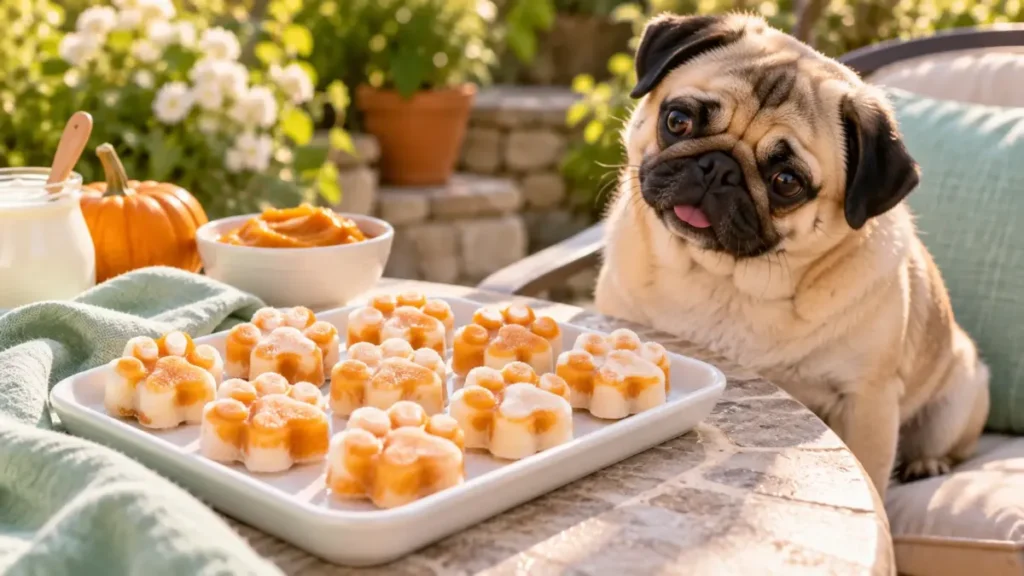

Yogurt dog treats are about as simple as homemade treats get: plain yogurt, a spoon of pumpkin or fruit, and a freezer. This guide covers two versions, frozen yogurt dog treats with pumpkin and peanut butter, and baked yogurt biscuits for dogs that prefer something crunchy and not frozen. Each recipe includes calories per treat and portions by weight, plus the label check that matters most: no xylitol, no added sugar.
Recipes: frozen pumpkin peanut butter yogurt bites, baked yogurt biscuits • Prep: 10–15 minutes • Cook: 3 hours freezing or 25 minutes baking • Yield: about 30 bites or 40 biscuits • Difficulty: very easy • Storage: frozen bites 2 months, biscuits 1 week airtight
Use plain, unsweetened yogurt only. Flavored, “light” and sugar-free yogurts can contain sugar or xylitol.
Table of Contents
Is Yogurt Good for Dogs?
Plain yogurt is safe for most dogs in small amounts. It adds protein, calcium and a creamy texture dogs love, and it freezes into a smooth, lickable treat. Greek yogurt is strained, so it has more protein and less lactose than regular yogurt.
Two cautions. Many adult dogs digest lactose poorly, so start small and watch for gas or loose stool. And while yogurt contains live cultures, the amount and type vary, so don’t count on yogurt snacks for dogs as a probiotic; our probiotics for dogs guide covers products made for that job.
| Yogurt Type | Good for Dog Treats? | Notes |
|---|---|---|
| Plain nonfat or low-fat Greek | Best choice | Thick, higher protein, lower lactose |
| Plain whole-milk yogurt | Yes, in small amounts | More calories and fat |
| Flavored or fruit yogurt | No | Added sugar; some contain xylitol |
| “Light” or sugar-free yogurt | No | Check for xylitol and other sweeteners |
| Plant-based yogurt | Only plain, unsweetened | Avoid macadamia-based and sweetened types |
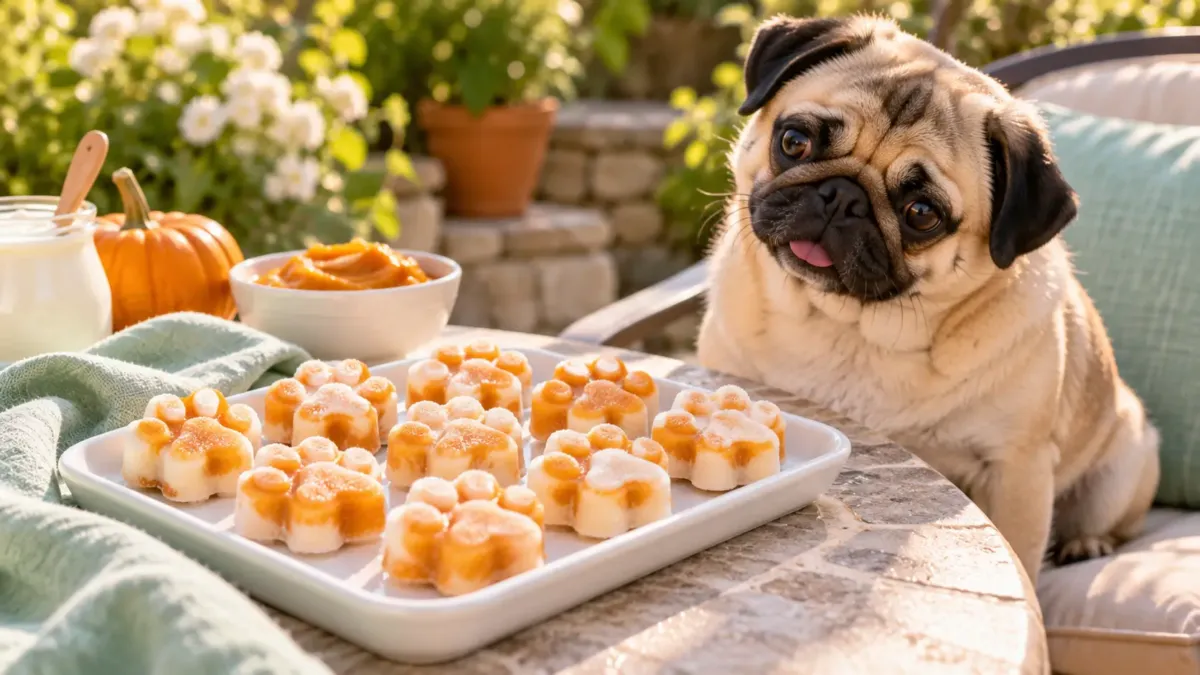
Recipe 1: Frozen Yogurt Dog Treats With Pumpkin and Peanut Butter
Frozen Pumpkin Peanut Butter Yogurt Dog Bites
Ingredients
Method
- Stir or blend everything until smooth.
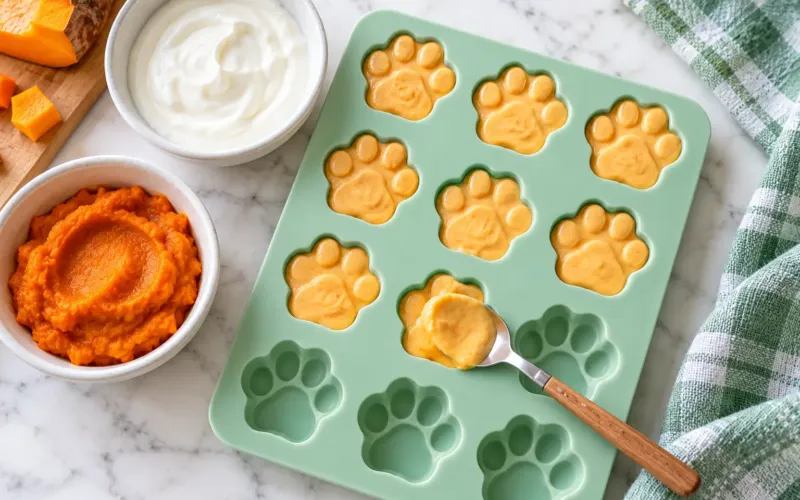
- Spoon into a mini silicone mold, or drop teaspoon-size dollops on a parchment-lined tray.
- Freeze at least 3 hours, then pop out and store in a freezer bag.
Notes
Each bite has about 12 calories. Serve on a plate or outdoors, since they melt quickly.
Easy frozen yogurt for dogs variations
- Blueberry: swap the pumpkin and peanut butter for ½ cup blueberries (see blueberry dog treats).
- Banana: blend half a ripe banana into the yogurt.
- Lick mat: spread a thin layer on a lick mat and freeze for a long-lasting, calming activity.
Recipe 2: Baked Yogurt Dog Treats (Not Frozen)
For dogs who like crunch, or for treats you can carry on walks.
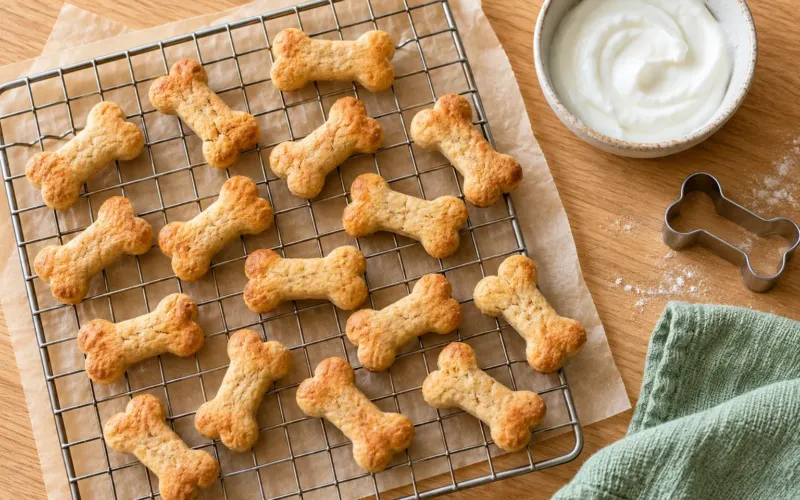
Baked Yogurt Dog Biscuits
Ingredients
Method
- Heat the oven to 350°F (175°C).
- Mix the yogurt and egg, then add the flour and enough water to make a firm dough.
- Roll to 1/4 inch and cut about 40 small biscuits.
- Bake 22 to 25 minutes until firm and lightly golden. Cool in the oven for extra crunch.
Notes
Each biscuit has about 24 calories.
How Many Yogurt Treats Per Day?
Keep all treats under about 10% of daily calories, as the WSAVA treat guide advises. Calories are based on USDA FoodData Central values:
| Dog’s Weight | Daily Treat Budget | Frozen Bites (12 kcal) | Baked Biscuits (24 kcal) |
|---|---|---|---|
| 10 lb (4.5 kg) | ~35 kcal | 2 | 1 |
| 25 lb (11 kg) | ~70 kcal | 4-5 | 2 |
| 50 lb (23 kg) | ~115 kcal | 6-8 | 4 |
| 75 lb (34 kg) | ~160 kcal | 8-10 | 6 |
Our estimates for neutered adult dogs. Frozen bite counts are capped below the math to limit dairy for lactose-sensitive dogs. Start with one or two the first time.
Storage Tips
- Frozen bites: airtight freezer bag for up to 2 months. Don’t refreeze bites that have thawed.
- Baked biscuits: airtight for up to a week, or 2 weeks in the fridge.
- Yogurt-covered treats: a yogurt coating never fully hardens at room temperature, so keep coated biscuits in the fridge.
Want more cold treats? See our frozen dog treats and dog ice cream recipe.
Is plain yogurt okay for most dogs? Yes, in small amounts; start slowly because some dogs don't digest lactose well.
Does yogurt work as a probiotic? Not reliably. If your dog needs a probiotic, use one made for dogs.
What should owners check on the label? Plain and unsweetened, with no xylitol or chocolate.
— Dr. Sarah Miller, DVM
Yogurt Dog Treats: Quick Guide
✓ Do
- Use plain, unsweetened yogurt
- Check labels for xylitol
- Start with one or two treats
- Keep frozen bites in a sealed bag
✕ Don’t
- Use flavored or “light” yogurt
- Add sugar, honey or chocolate
- Give lots to lactose-sensitive dogs
- Rely on yogurt as a probiotic
Every dog is different. Dogs with pancreatitis, allergies or digestive problems should get their vet’s okay first.
Frequently Asked Questions
Can dogs have Greek yogurt?
Yes, plain unsweetened Greek yogurt is a good choice for dogs in small amounts. It’s lower in lactose than regular yogurt.
How do I make yogurt dog treats that aren’t frozen?
Bake them: Recipe 2 uses yogurt in a biscuit dough. You can also dip baked biscuits in yogurt, but those need to stay in the fridge.
Can I give my puppy frozen yogurt treats?
Yes, once your puppy eats solid food. Make the bites smaller and soften them slightly to protect young teeth. Frozen bites can soothe teething gums.
Is frozen yogurt from the store okay for dogs?
No. Human frozen yogurt is high in sugar and may contain chocolate or xylitol. Make your own or buy treats made for dogs.
Can I use coconut yogurt?
Plain, unsweetened coconut yogurt is fine in small amounts for dogs that can’t have dairy. It’s higher in fat, so keep portions small.
How long do frozen yogurt dog treats last?
About 2 months in a sealed freezer bag. After that they’re still safe but can get freezer burn.
Find your next bake in our homemade dog treats guide, sorted into baked, frozen, meaty and holiday recipes.
The Bottom Line
Yogurt dog treats are quick, cheap and loved by most dogs: freeze plain Greek yogurt with pumpkin and peanut butter, or bake it into crunchy biscuits. Always use plain, unsweetened yogurt with no xylitol, start small for lactose-sensitive dogs, and keep treats within the daily budget. Find more recipes in our Homemade Treats section. This article is general information, not veterinary advice; see our Veterinary Disclaimer.
References & Sources
Written by CPD Nutrition Desk using the sources below. We are not affiliated with these organizations, and this guide is not a substitute for advice from your veterinarian.
- WSAVA — WSAVA treat guide
- USDA — USDA FoodData Central