
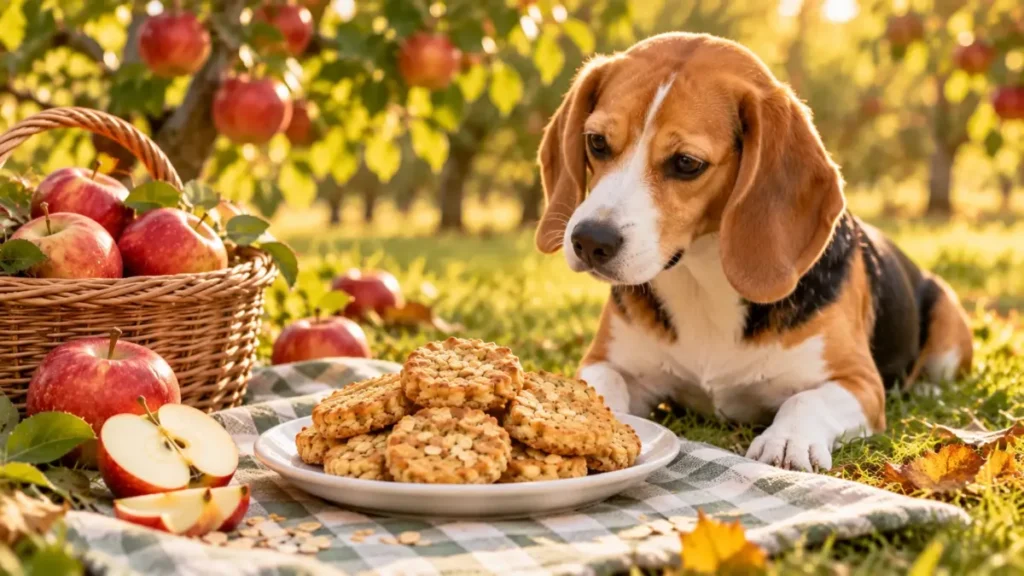

Apple dog treats are one of the easiest ways to turn a fruit bowl into a cookie jar. This apple dog treats recipe guide covers two homemade apple dog treats: crunchy applesauce and peanut butter dog treats made with oats and fresh grated apple, and one-ingredient baked apple chips. You’ll also find calories per treat, how many to give by weight, and the one step you can’t skip: removing the core and seeds.
Recipes: apple oat biscuits with applesauce and peanut butter, baked apple chips • Prep: 15 minutes • Cook: 25 minutes (biscuits) or 2 hours low and slow (chips) • Yield: about 45 biscuits or 40 chips • Difficulty: easy • Storage: 1 week airtight, 3 months frozen
Always core the apple and remove every seed, and use unsweetened applesauce.
Table of Contents
Why Apples Work in Dog Treats
Plain apple is safe for dogs and adds fiber, a little vitamin C and natural sweetness, so you don’t need sugar. A medium apple has about 95 calories and 19 grams of natural sugar (USDA FoodData Central), so it shines as an ingredient spread across a batch rather than as a huge snack. Our can dogs eat apples guide covers plain apple portions.
Grated fresh apple keeps biscuits moist, while unsweetened applesauce works as a binder and lets you use less egg or oil. Sweet, crisp varieties like Gala, Fuji or Honeycrisp work best.

Recipe 1: Applesauce and Peanut Butter Dog Treats
Apple Oat Dog Biscuits With Peanut Butter
Ingredients
Method
- Heat the oven to 350°F (175°C) and line two trays with parchment.
- Squeeze excess juice out of the grated apple.
- Mix the apple, applesauce, peanut butter and egg in a bowl.
- Add the oat flour gradually until the dough is firm enough to roll.
- Roll to 1/4 inch and cut into small shapes.
- Bake 22 to 25 minutes until firm and golden. Cool on a rack.
Notes
The batch is about 1,180 calories, so each biscuit has roughly 26 calories.
Recipe 2: Baked Apple Chips (One Ingredient)

Baked Apple Chips for Dogs
Ingredients
Method
- Heat the oven to 225°F (110°C) and line trays with parchment.
- Core the apples completely, remove all seeds and slice into 1/8-inch (3 mm) rounds.
- Lay the slices in a single layer and bake about 2 hours, flipping halfway, until dry and slightly crisp.
- Turn off the oven and let them cool inside for extra crunch.
Notes
You’ll get about 40 chips at roughly 5 calories each. They’re light enough to use as training rewards, but they’re still sugary, so don’t give a whole handful at once.
How Many Apple Treats Per Day?
Following the WSAVA guideline of about 10% of calories from treats:
| Dog’s Weight | Daily Treat Budget | Apple Biscuits (26 kcal) | Apple Chips (5 kcal) |
|---|---|---|---|
| 10 lb (4.5 kg) | ~35 kcal | 1 | up to 7 |
| 25 lb (11 kg) | ~70 kcal | 2 | up to 13 |
| 50 lb (23 kg) | ~115 kcal | 4 | up to 20 |
| 75 lb (34 kg) | ~160 kcal | 6 | up to 25 |
Our estimates for neutered adult dogs, using USDA FoodData Central values. Chip counts are capped lower than the math allows, because a pile of dried fruit is a lot of sugar at once.
Storage and Shelf Life
Homemade apple treats for dogs have no preservatives, so store them with care:
- Apple oat biscuits: airtight for 5–7 days, or 2 weeks in the fridge. The fresh apple adds moisture, so they don’t last as long as plain biscuits.
- Apple chips: up to 2 weeks in an airtight jar if fully dry; any softness means they should go in the fridge.
- Freezer: biscuits keep about 3 months.
Swaps and Variations
| Variation | How |
|---|---|
| Apple and carrot | Replace half the grated apple with grated carrot |
| Apple and pumpkin | Use plain pumpkin instead of applesauce (see our pumpkin dog treats) |
| Peanut-free | Skip the peanut butter and add 2 more tablespoons of applesauce |
| Grain-free | Use chickpea flour instead of oat flour; see our grain-free dog cookies |
| Frozen apple bites | Blend applesauce with plain yogurt and freeze in a mini mold; see frozen dog treats |
Are apple seeds really dangerous? A few swallowed seeds are unlikely to cause harm, but remove them anyway; cores can be a choking risk.
Are dried apple chips healthy? In small amounts, yes, but drying concentrates the sugar, so don't give a big handful.
Who should skip sweet fruit treats? Diabetic and overweight dogs. Ask your vet first.
— Dr. Sarah Miller, DVM
Apple Dog Treats: Quick Guide
✓ Do
- Core apples and remove every seed
- Use unsweetened applesauce
- Check peanut butter for xylitol
- Keep portions within the treat budget
✕ Don’t
- Give whole cores to small dogs
- Use pie filling or caramel
- Add sugar or nutmeg
- Hand out dried chips by the fistful
Every dog is different. Dogs with diabetes or weight issues should get their vet’s okay before sugary treats.
Frequently Asked Questions
Can I leave the apple skin on?
Yes. The skin is safe and holds much of the fiber. Wash the apple well first.
Can I make apple dog treats without peanut butter?
Yes. Replace it with extra applesauce or plain pumpkin. The dough may need a little more flour.
Can I use apple juice or apple cider vinegar?
Skip apple juice, which is mostly sugar. A splash of apple cider vinegar isn’t harmful, but it adds nothing useful to treats.
Are apple treats okay for puppies?
Yes, broken into small pieces once your puppy eats solid food. Our puppy treat recipes have softer options.
Can I use apple pulp from my juicer?
Yes, if it’s from plain apples with the cores and seeds removed before juicing. Use it in place of grated apple.
Why did my apple biscuits turn soft?
Fresh apple adds moisture. Bake a few minutes longer, dry them in the cooling oven, and store them in the fridge.
Looking for another recipe? Browse all our homemade dog treats by type.
The Bottom Line
Apple dog treats are simple to make with grated apple, unsweetened applesauce, oats and a little peanut butter, or with nothing but thin apple slices baked low and slow. Core every apple, skip sugar and xylitol, and keep portions within your dog’s treat budget. Find more recipes in our Homemade Treats section. This article is general information, not veterinary advice; see our Veterinary Disclaimer.
References & Sources
Written by CPD Nutrition Desk using the sources below. We are not affiliated with these organizations, and this guide is not a substitute for advice from your veterinarian.
- USDA — USDA FoodData Central
- WSAVA — Feeding treats to your dog v2