


Dehydration in dogs happens when your dog loses more fluid than they take in, usually from vomiting, diarrhea, heat, exercise or illness. Early signs are sticky gums, low energy and slow-returning skin. Mild cases can often be helped at home, but moderate or severe dehydration needs a vet.
Check gums, skin and energy first. Offer small amounts of water often, not a full bowl. Call your vet for vomiting, diarrhea, refusal to drink, or a puppy or senior. Pale gums, sunken eyes or collapse need emergency care.
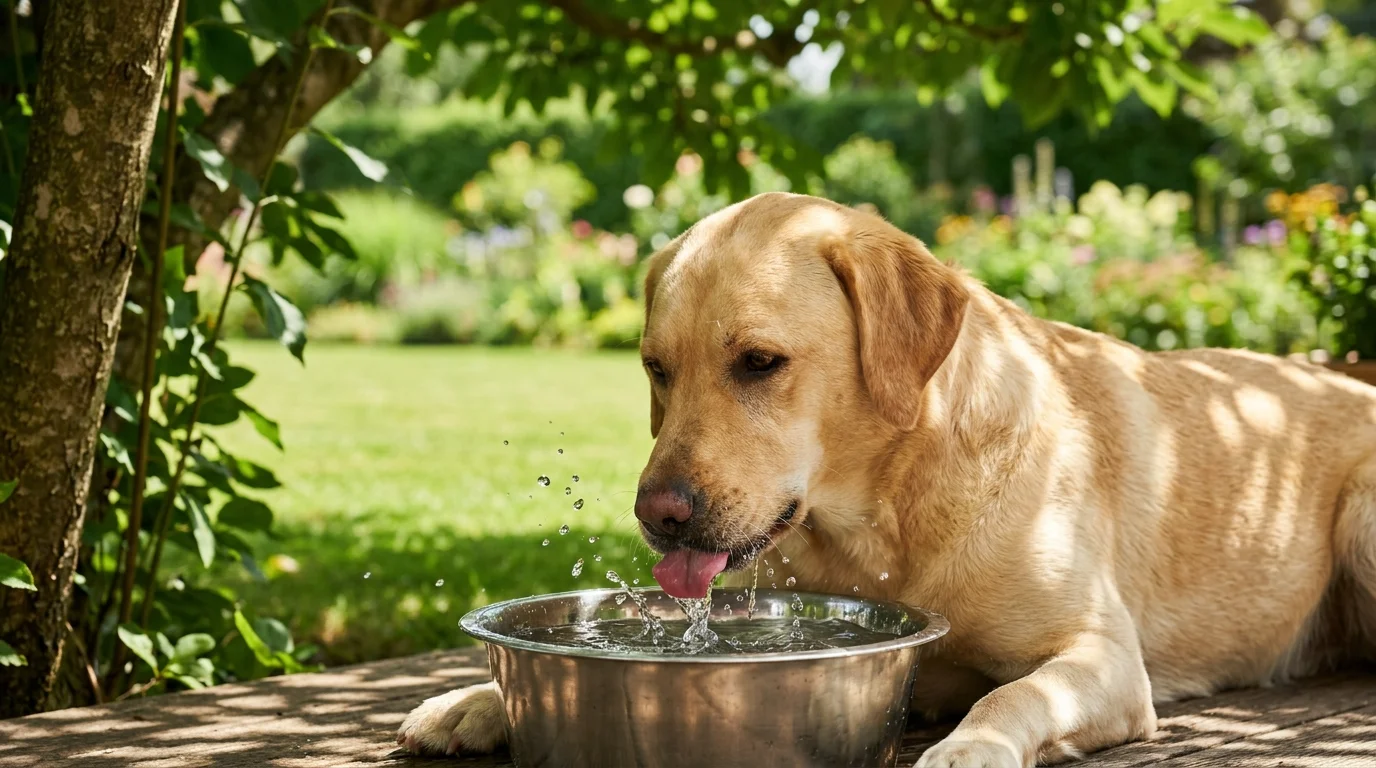
Table of Contents
What Is Dehydration in Dogs?
Dogs constantly lose water through urine, stool and panting. When losses outpace intake, they lose water and electrolytes such as sodium and potassium. Even mild dehydration makes dogs feel unwell; severe cases can cause shock and organ damage.
Signs of Dehydration in Dogs
- Dry, sticky or tacky gums and thick, stringy saliva
- Skin that stays “tented” or returns slowly when gently pinched
- Sunken, dull or dry-looking eyes
- Lethargy, weakness or reluctance to move
- Loss of appetite
- Less urine, or dark yellow urine
- In severe cases: pale gums, fast heart rate, cold paws, wobbling or collapse
The 60-Second Dehydration Check You Can Do at Home
- Gums: healthy gums are pink, moist and slippery; sticky or dry suggests dehydration.
- Capillary refill: press the gum until pale; color should return in 1 to 2 seconds.
- Skin tent test: lift the skin between the shoulder blades; it should spring back at once. Less reliable in thin, senior or overweight dogs.
- Eyes: look for a sunken or dull appearance.
- Energy: is your dog alert and responsive, or flat and weak?
How Serious Is It? Mild vs. Moderate vs. Severe
| Level | What you may notice | What to do |
|---|---|---|
| Mild | Slightly tacky gums, a bit tired | Cool rest, small frequent drinks; call your vet if no improvement within hours |
| Moderate | Dry gums, skin tent clearly slow, sunken eyes, low energy | Call your vet today; your dog may need fluids under the skin |
| Severe | Pale or very dry gums, slow capillary refill, weakness, fast heartbeat, cold legs, collapse | Emergency vet now; intravenous fluids are usually needed |
Home checks are a guide, not a diagnosis.
What Causes Dehydration in Dogs?
- Vomiting and diarrhea, the most common cause (see dog vomiting yellow and diarrhea diet).
- Heat and exercise, especially for flat-faced breeds, heavy-coated dogs and overweight dogs.
- Not drinking enough: empty or dirty bowls, travel, a sore mouth, or a dog that simply forgets.
- Fever and infection.
- Illnesses that increase urination, such as kidney disease and diabetes.
- Not eating, since food provides water (see dog not eating).
Dogs at Higher Risk of Dehydration
| Dog | Why the risk is higher | Extra precautions |
|---|---|---|
| Puppies | Small fluid reserves, more prone to vomiting and diarrhea from infections | Call the vet early for any vomiting or diarrhea |
| Seniors | Reduced thirst, kidney changes, mobility issues reaching the bowl | Place bowls near resting spots; watch daily intake |
| Flat-faced breeds (Bulldogs, Pugs, Frenchies) | Less efficient panting, overheat easily | Short, cool walks; avoid heat and humidity |
| Dogs with kidney disease or diabetes | They lose more water through urine | Never restrict water; follow your vet’s plan |
| Working and very active dogs | High fluid loss through panting | Water breaks every 15 to 20 minutes during activity |
How Much Water Does a Dog Need a Day?
A rule of thumb is about 1 ounce of water per pound of body weight daily, from drinking and food.
| Dog weight | Approx. water per day | On hot or active days |
|---|---|---|
| 10 lb | about 1 1/4 cups (10 oz) | more, often up to double |
| 25 lb | about 3 cups (25 oz) | more, often up to double |
| 50 lb | about 6 cups (50 oz) | more, often up to double |
| 75 lb | about 9 cups (75 oz) | more, often up to double |
| 100 lb | about 12 1/2 cups (100 oz) | more, often up to double |
Rough estimates. A sudden big rise in thirst warrants a vet visit.

How to Rehydrate a Dog Safely at Home (Mild Cases)
- Move your dog somewhere cool and calm.
- Offer a few tablespoons to a quarter cup every 15 to 30 minutes.
- Try ice cubes or ice chips if your dog is nauseous or drinks too fast.
- Add water to food or offer wet food to increase intake.
- Add a splash of onion-free, low-sodium bone broth.
- Call your vet if your dog vomits the water or isn’t improving within hours.
Can I give my dog Pedialyte?
Plain, unflavored electrolyte solution is sometimes suggested for mild cases, but ask your vet first. Avoid xylitol-sweetened products and sports drinks, and never give it to a vomiting dog without advice.
Emergency signs: go to a vet now
- Pale, white or very dry gums, or gums that take more than 2 seconds to refill
- Weakness, wobbling, collapse or unresponsiveness
- Repeated vomiting or diarrhea, or vomiting water back up
- Heavy panting, drooling or a hot body after heat or exercise (possible heatstroke)
- A puppy, toy breed or senior dog with any signs of dehydration
For suspected heatstroke, wet your dog with cool (not ice-cold) water and drive to the vet. See VCA’s heatstroke guide.
How Vets Treat Dehydration
Your vet may run blood tests for electrolytes and kidney values. Mild to moderate cases often get fluids under the skin; severe cases need IV fluids. The cause, such as vomiting or heatstroke, is treated too.
How to Prevent Dehydration
- Keep fresh, clean water available at all times, with more than one bowl in larger homes.
- Carry water and a collapsible bowl on walks, hikes and car trips.
- Avoid exercise in the hottest part of the day; follow the AVMA’s warm-weather safety tips.
- Never leave a dog in a parked car.
- Add water-rich snacks such as a few cubes of watermelon or cucumber on hot days.
Frequently Asked Questions
What do a dehydrated dog’s gums look like?
Dry or sticky instead of slippery. Pale or white gums need urgent care.
How quickly can a dog rehydrate?
Mild dehydration often improves within a few hours of drinking. Moderate or severe dehydration is usually corrected over 24 hours or more with veterinary fluids.
Can dehydration cause seizures in dogs?
Severe dehydration or heatstroke can contribute to seizures. Any seizure needs a vet immediately.
Browse every topic, from tummy trouble to supplements, in our dog nutrition and health guide.
The Bottom Line
Dehydration in dogs is common and very treatable when caught early. Know your dog’s normal gums and skin, offer small frequent drinks in mild cases, and call your vet when it comes with vomiting, weakness or heat stress. See our Nutrition & Health guides. This is general information, not veterinary advice; see our Veterinary Disclaimer.
References & Sources
Written by CPD Nutrition Desk using the sources below. We are not affiliated with these organizations, and this guide is not a substitute for advice from your veterinarian.
- VCA Animal Hospitals — VCA's heatstroke guide
- AVMA — AVMA's warm-weather safety tips