


A dog upset stomach shows up as vomiting, diarrhea, gurgling, lip licking or skipped meals. Most mild cases come from eating something unsuitable and settle within 24 to 48 hours with rest, water and small bland meals. Here are the subtle signs, a 24-hour plan, safe remedies and red flags.
For a mild upset in a healthy adult: brief stomach rest, small sips of water, then small bland meals, returning to normal food over a few days. No human medicines without your vet. Call your vet if signs last beyond 24 to 48 hours or come with blood, lethargy or pain.
Table of Contents
Signs of an Upset Stomach in Dogs
The early signs are easy to miss:
| What you see | What it can mean |
|---|---|
| Lip licking, drooling, repeated swallowing or gulping | Nausea, often before vomiting |
| Eating grass urgently or licking floors | Nausea (see why dogs eat grass) |
| Loud gurgling or rumbling | Gas and fluid moving through the gut |
| “Prayer” position (front end down, rear end up) | Abdominal pain; call your vet |
| Gas, burping or a bloated look | Digestive upset; a hard, swollen belly is an emergency |
| Skipping meals | Nausea or pain (see dog not eating) |
What Causes an Upset Stomach in Dogs?
- Dietary indiscretion: garbage, table scraps, fatty foods, spoiled food, poop or dead animals. This is the most common cause.
- Sudden diet change: switching foods or adding new treats too quickly.
- Food intolerance or allergy: recurring upsets after certain ingredients (see dog food allergies).
- Stress: travel, boarding, moving or loud events.
- Infections and parasites: viruses, bacteria, giardia and worms.
- Medications: antibiotics and some pain relievers.
- Toxins and foreign objects: plants, human foods such as grapes or xylitol, and swallowed toys.
- Underlying disease: pancreatitis, inflammatory bowel disease, kidney or liver disease.
A 24-Hour Home-Care Plan for a Mild Upset
For a healthy, alert adult dog only. Puppies, seniors and sick dogs need a vet sooner.
| Time | What to do |
|---|---|
| First few hours | Let the stomach rest (no food, as your vet advises). Offer a few sips of water or ice chips every 30 minutes. Keep your dog somewhere quiet. |
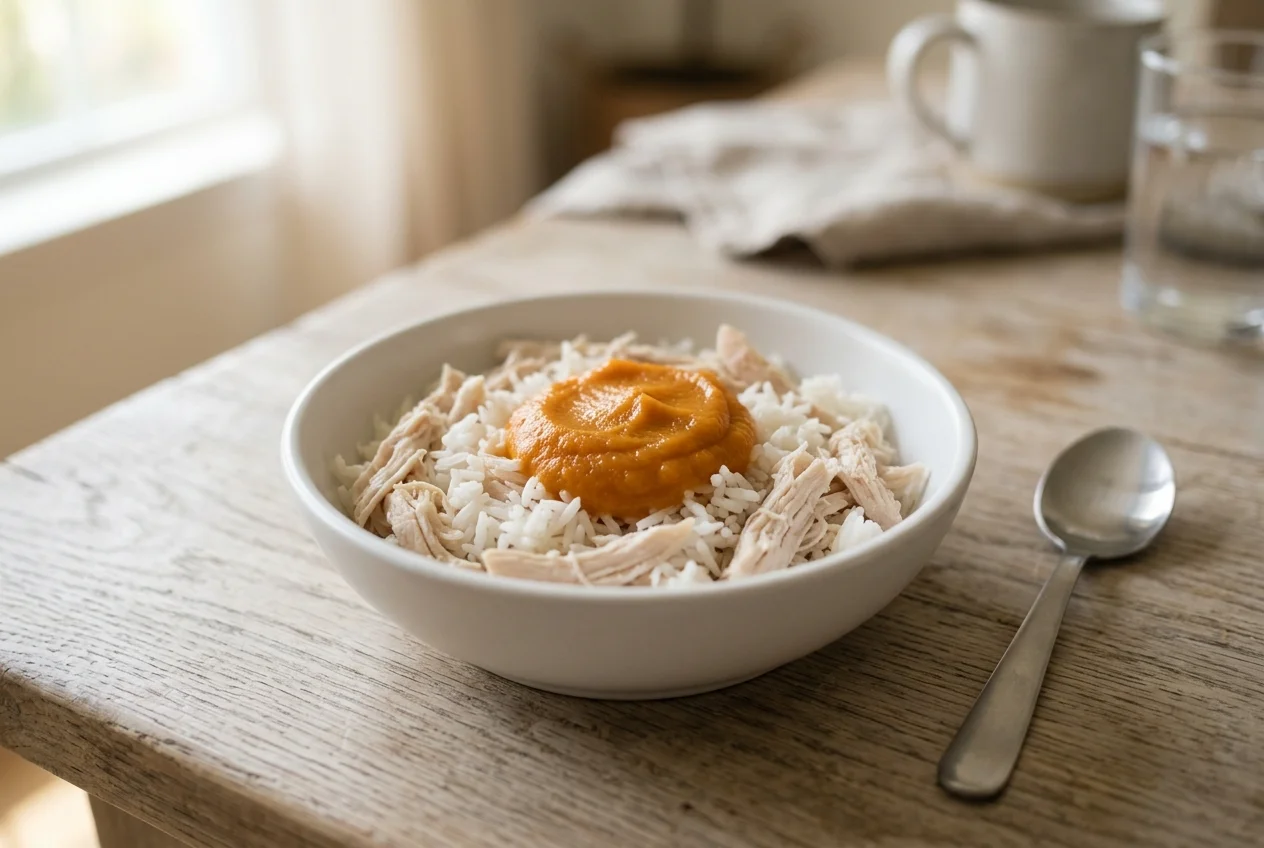
| After the rest period, if no vomiting | Offer 1 to 2 tablespoons of bland food (boiled chicken and white rice). Wait an hour. |
| Rest of day one | If it stays down, offer small bland meals every 3 to 4 hours. Keep water available. |
| Day two | Increase portion size gradually. Watch stool and energy. |
| Days three to five | Mix the regular food back in step by step. |
| Any time | Stop home care and call your vet if signs get worse or any red flags appear. |
Portions are in our bland diet guide.
What Can I Give My Dog for an Upset Stomach?
| Option | Safe at home? | Notes |
|---|---|---|
| Bland diet (boiled chicken or turkey with white rice) | Yes | Small, frequent meals for 2 to 3 days |
| Plain canned pumpkin | Yes, in small amounts | About 1 teaspoon per 10 lb mixed into food; not pie filling |
| Bone broth (no onion, garlic or salt) | Yes | Encourages drinking and eating; see bone broth for dogs |
| Veterinary probiotic | Usually | Choose one made for dogs |
| Pepto-Bismol | Not without your vet | Contains a salicylate (aspirin-like) and turns stool black, which can hide bleeding |
| Imodium (loperamide) | Not without your vet | Can be dangerous for herding breeds with the MDR1 gene mutation, such as Collies and Australian Shepherds |
| Antacids | Only as prescribed | Your vet may prescribe a dog-appropriate dose |
| Milk or yogurt | Not recommended | Dairy often worsens diarrhea |
Why Is My Dog’s Stomach Gurgling?
Gurgling (borborygmi) is gas and fluid moving through the gut. Occasional rumbling is normal, especially when hungry. Loud, frequent gurgling can follow a diet change or gulping air; smaller meals and a slow feeder help. Call your vet if it comes with vomiting or pain.
How Vets Diagnose and Treat Stomach Upsets
Your vet will examine the belly, check hydration and may run fecal tests, blood work or imaging. Treatment often includes anti-nausea medication, fluids and a gastrointestinal diet (see VCA on gastroenteritis).
How to Prevent Upset Stomachs: Switch Foods Slowly
Mix foods over about a week:
| Days | Old food | New food |
|---|---|---|
| 1 to 2 | 75% | 25% |
| 3 to 4 | 50% | 50% |
| 5 to 6 | 25% | 75% |
| 7 | 0% | 100% |
Dogs with sensitive stomachs may need 10 to 14 days.
- Keep trash, compost and toxic foods out of reach.
- Limit rich table scraps and fatty treats.
- Keep up with parasite prevention and deworming.
Upset Stomach in Puppies and Senior Dogs
A dog upset stomach in a puppy or senior deserves a lower threshold for calling the vet.
- Puppies swallow objects, catch parvovirus and dehydrate fast. Get vomiting checked the same day.
- Seniors may have an underlying cause such as kidney disease or pancreatitis. Repeated episodes warrant blood work.
Living With a Dog Who Has a Sensitive Stomach
If upsets keep recurring, work with your vet to find a pattern:
- Keep a food and symptom diary for a month, including treats, chews and anything scavenged on walks.
- Ask about a diet trial with a highly digestible, limited-ingredient or hydrolyzed diet for 8 to 12 weeks.
- Keep fat moderate and avoid rich treats; fatty foods are a common trigger.
- Choose simple treats with one or two ingredients, such as small pieces of carrot or cucumber.
Frequently Asked Questions
How long does an upset stomach last in dogs?
Mild upsets usually improve within 24 to 48 hours. If signs last longer, return, or your dog seems unwell, see your vet.
How do dogs lie when their stomach hurts?
Some stretch into a prayer position or can’t settle. A dog guarding its belly needs a vet.
Is a dog shaking with an upset stomach serious?
Shaking can be a sign of nausea, pain, fever or anxiety. If your dog is shaking and also vomiting, weak or refusing food, call your vet.
For more health topics, see our dog nutrition and health guide.
The Bottom Line
A dog upset stomach usually responds to rest, water and a few days of bland meals. Skip human medications unless your vet approves, switch foods slowly, and call your vet for any red flag. More in Nutrition & Health. This is general information, not veterinary advice; see our Veterinary Disclaimer.
References & Sources
Written by CPD Nutrition Desk using the sources below. We are not affiliated with these organizations, and this guide is not a substitute for advice from your veterinarian.
- VCA Animal Hospitals — VCA on gastroenteritis