
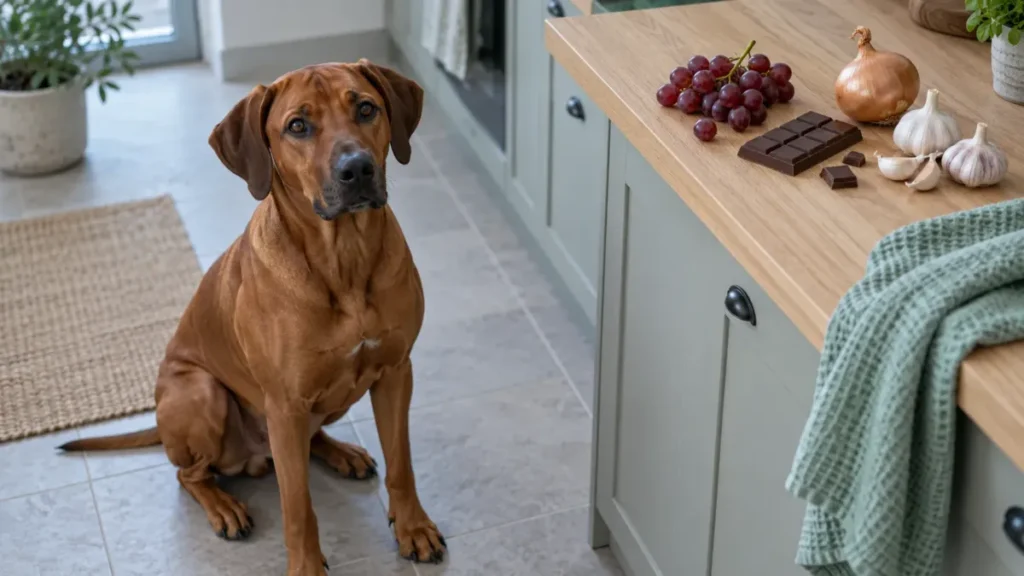

What foods are toxic to dogs? The most dangerous common ones are xylitol, chocolate, grapes and raisins, onions and garlic, macadamia nuts, alcohol and raw yeast dough. Others, like cooked bones, fatty leftovers, salty snacks and moldy food, aren’t poisons in the classic sense but cause plenty of emergencies. This guide ranks the risks, explains what each one does, and gives you a plan for the moment you realize your dog ate something they shouldn’t.
1. Xylitol, grapes and raisins, chocolate, onion and garlic, macadamia nuts, alcohol and raw dough are the big ones. 2. Small dogs get sick from smaller amounts. 3. Many foods are dangerous because of what’s mixed in, like xylitol in “sugar-free” baking or raisins in trail mix. 4. If in doubt, call your vet or a pet poison line right away, before signs appear.
Table of Contents
Toxic Foods for Dogs: The Main List
This chart summarizes the foods veterinary toxicology sources such as the ASPCA Animal Poison Control Center warn about most. Risk levels are our plain-language summary; the real danger always depends on the amount and your dog’s size.
| Food | Risk | What It Can Do | Where It Hides |
|---|---|---|---|
| Xylitol (birch sugar) | Severe | Sudden low blood sugar, liver damage | Sugar-free gum, mints, candy, baked goods, some peanut butters |
| Grapes, raisins, currants | Severe | Kidney injury, even in small amounts | Trail mix, cereal, bagels, holiday breads |
| Chocolate, cocoa, coffee, caffeine | High | Vomiting, racing heart, tremors, seizures | Baking chocolate, brownies, cocoa, energy drinks, coffee grounds |
| Onion, garlic, leeks, chives | High | Damage to red blood cells (anemia), sometimes days later | Stuffing, gravy, soups, baby food, seasoning powders |
| Macadamia nuts | High | Weakness, tremors, vomiting, fever | Cookies, nut tins, granola |
| Alcohol | High | Low blood sugar, wobbliness, breathing problems | Drinks, rum cake, eggnog, some sauces |
| Raw yeast dough | High | Painful bloating; the yeast also makes alcohol in the stomach | Rising bread or pizza dough |
| Cooked bones | High | Splinters, choking, blockages, gut injury | Turkey, chicken and rib bones, kitchen trash |
| Fatty foods | Moderate to high | Vomiting, diarrhea, pancreatitis | Turkey skin, ham, bacon, gravy, butter |
| Moldy food and compost | Moderate to high | Tremors and seizures from mold toxins | Garbage, compost, fallen nuts and fruit |
| Salty snacks and salt dough | Moderate | Thirst, vomiting; severe salt poisoning in large amounts | Chips, pretzels, play dough, salt ornaments |
| Avocado | Moderate | Fat-related stomach upset; pit can cause blockage | Guacamole (also has onion and garlic) |

The Most Dangerous Foods, Explained
Xylitol
This sweetener makes a dog’s body release a flood of insulin, and blood sugar can crash within an hour. The ASPCA notes it can also cause liver damage. It’s in more products every year, so read labels on anything “sugar-free” or “keto”.
Grapes and raisins
The ASPCA says tartaric acid is the suspected cause, and the effect is unpredictable: some dogs eat a few with no problem, others develop kidney injury. Treat any amount as an emergency.
Chocolate and caffeine
Dark chocolate, baking chocolate and cocoa powder are the worst. If it just happened, our dog ate chocolate guide has a step-by-step plan and a chart by weight.
Onions and garlic
All forms count: raw, cooked, dried and powdered. The damage to red blood cells can take a few days to show as weakness, pale gums or dark urine, so a dog that seems fine after eating stuffing still needs a call to the vet.
Macadamia nuts
Even a small handful can cause weakness, often in the back legs, within 12 hours. Most dogs recover, but mixed snacks with chocolate or raisins are more serious.
Less Obvious Dangers in the Kitchen
These foods aren’t classic poisons, but they send many dogs to the vet:
- Corn cobs, peach pits and other big pieces: blockages. See our corn guide.
- Nuts like pecans and black walnuts: fat, mold and choking risk.
- Horse chestnuts (buckeyes): toxic look-alikes of edible chestnuts.
- Green potatoes and the green parts of tomato plants: contain solanine.
- Large amounts of nutmeg: can cause disorientation and a racing heart.
- Candy canes and hard candy: sugar, sharp pieces and sometimes xylitol. See peppermint.
- Raw meat and eggs: bacteria such as Salmonella and E. coli.
Signs Your Dog May Have Eaten Something Toxic
| Sign | Possible Causes |
|---|---|
| Vomiting and diarrhea | Almost any toxic or fatty food |
| Restlessness, panting, racing heart | Chocolate, caffeine |
| Weakness, wobbling, collapse | Xylitol, macadamia nuts, alcohol |
| Tremors or seizures | Chocolate, xylitol, moldy food |
| Pale gums, dark urine, tiredness days later | Onion, garlic |
| Drinking and peeing less or more, not eating | Grapes, raisins (kidney injury) |
| Swollen, painful belly, retching | Raw dough, bones, blockages |
Not every dog shows signs right away. Some poisons, like grapes and onions, take a day or more. See our guide to food poisoning in dogs for more on spoiled food.

Which Dogs Are Most at Risk?
The same snack can be harmless for one dog and dangerous for another. Be extra careful with:
- Small breeds and puppies: a toxic dose is a much smaller amount of food.
- Food-motivated “counter surfers”: breeds and individuals that raid trash and countertops tend to eat large amounts fast.
- Seniors and dogs with heart, liver or kidney disease: their bodies may handle toxins less well.
- Dogs with a history of pancreatitis: one fatty meal can cause a relapse. See our low-fat foods guide.
Safe Foods to Share Instead
Knowing what not to feed is half the job. These plain foods are generally safe in small amounts for healthy dogs:
| Instead of… | Try… |
|---|---|
| Grapes or raisins | Blueberries or apple slices (no core or seeds) |
| Chocolate treats | Carob dog treats or banana slices |
| Fatty table scraps | Plain cooked chicken or turkey breast |
| Chips and salty snacks | Plain carrot sticks or cucumber |
| Cooked bones | A chew toy or dental chew your vet recommends |
| Sugar-free baked goods | Homemade peanut butter dog treats (xylitol-free) |

Holiday Foods to Watch Out For
Poison calls rise around the holidays, and the AVMA recommends keeping holiday food and trash well away from pets. Watch out for:
- Thanksgiving: turkey bones and skin, stuffing, gravy, buttery sides, pies.
- Christmas: chocolate gifts, fruitcake and stollen with raisins, gingerbread, nut tins, eggnog.
- Halloween and Easter: candy bags, chocolate eggs, wrappers.
- Summer cookouts: corn cobs, skewers, rib bones, guacamole, beer.
How to Dog-Proof Your Kitchen
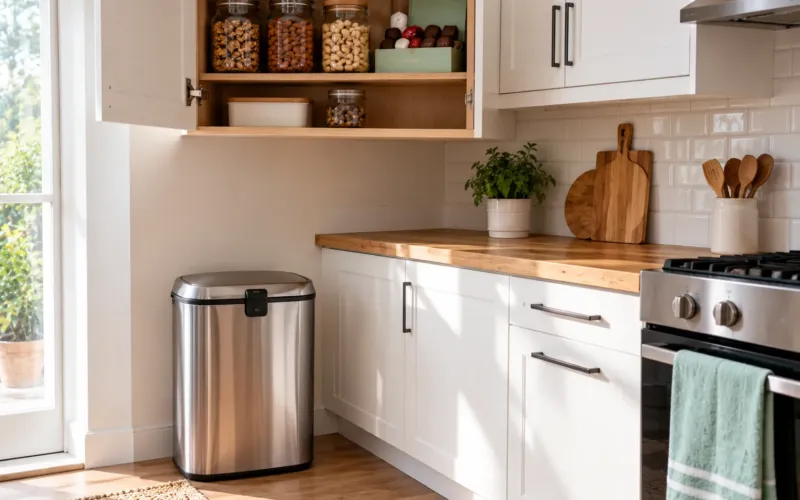
- Use a trash can with a locking lid, or keep it behind a closed door.
- Store chocolate, nuts, raisins, gum and medicines in high, closed cupboards.
- Push food back from counter edges, especially cooling baked goods.
- Check bags and coats of guests; gum and candy often live there.
- Keep a list of emergency numbers on the fridge: your vet, the nearest 24-hour clinic, and a pet poison line.
Want to share food safely instead? Browse our Can Dogs Eat? guides for safe snacks like carrots and blueberries.
Do you ever advise owners to induce vomiting at home? Only when a vet or poison line tells you to. Some items do more harm coming back up.
— Dr. Sarah Miller, DVM
Toxic Foods for Dogs: Quick Safety Guide
✓ What helps
- Read labels for xylitol
- Use a locking trash can
- Keep sweets and nuts up high
- Save poison line numbers on your phone
✕ Don’t
- Share grapes, raisins or chocolate
- Feed foods cooked with onion or garlic
- Give cooked bones or fatty scraps
- Wait for symptoms before calling
Puppies, small dogs and dogs with health conditions can get sick from smaller amounts. Call your vet early.
Frequently Asked Questions
What foods are toxic to dogs in small amounts?
Xylitol, grapes and raisins, and concentrated chocolate like cocoa powder or baking chocolate can cause problems in small amounts, especially in small dogs.
What can dogs not eat that humans can?
Chocolate, grapes, raisins, onions, garlic, macadamia nuts, xylitol-sweetened foods and alcohol are all fine for people but dangerous for dogs.
What fruits are toxic to dogs?
Grapes, raisins and currants are the main ones. Avocado, cherries and stone fruit pits are also risky because of fat or pits.
What vegetables are toxic to dogs?
Onions, garlic, leeks and chives. Green potatoes, green tomato plant parts and wild mushrooms are also unsafe.
Is peanut butter toxic to dogs?
Plain peanut butter isn’t, but some brands contain xylitol. Read our peanut butter guide before sharing.
How long after eating something toxic will a dog show signs?
Anywhere from minutes (xylitol) to hours (chocolate) to days (onion, grapes). Call your vet as soon as you know.
For more health topics, see our dog nutrition and health guide.
The Bottom Line
What foods are toxic to dogs? Xylitol, grapes and raisins, chocolate and caffeine, onion and garlic, macadamia nuts, alcohol and raw dough top the list, with cooked bones, fatty scraps and moldy food close behind. Keep them out of reach, read labels, and call your vet or a poison line the moment your dog eats something risky. More guides are in our Nutrition & Health section. This article is general information, not veterinary advice; see our Veterinary Disclaimer.
References & Sources
Written by CPD Nutrition Desk using the sources below. We are not affiliated with these organizations, and this guide is not a substitute for advice from your veterinarian.
- ASPCA — ASPCA Animal Poison Control Center
- AVMA — Holiday pet safety