


What fruits can dogs eat? Most dogs can safely eat small amounts of apples, bananas, blueberries, strawberries, watermelon, cantaloupe, mango, pineapple, pears, raspberries, blackberries, kiwi and papaya, as long as you remove seeds, pits, cores and rinds. Grapes, raisins, avocado, plums and cherry pits are the fruits to keep away from your dog.
Fruit is a healthy *treat*, not a meal. Serve it fresh or frozen, plain, cut to bite size, and keep all fruit inside your dog's daily treat budget (about 10% of calories). Never share grapes or raisins, even one.

Table of Contents
What Fruits Can Dogs Eat? The Complete List
Use this chart as a quick check. Each fruit links to our full guide with portions, prep and warning signs.
| Fruit | Verdict | Remove first | Best way to serve |
|---|---|---|---|
| Apples | Yes, in moderation | Core and seeds | Thin slices, skin on |
| Bananas | Yes, in moderation | Peel | Coins or mashed into a toy |
| Blueberries | Yes | Nothing | Whole for big dogs, halved for tiny dogs |
| Strawberries | Yes | Green tops | Sliced |
| Watermelon | Yes, in moderation | Rind and seeds | Cubes, fresh or frozen |
| Cantaloupe | Yes, in moderation | Rind and seeds | Small cubes |
| Mango | Yes, in moderation | Pit and skin | Small cubes |
| Pineapple | Yes, in moderation | Skin and core | Fresh chunks, never canned in syrup |
| Pears | Yes | Core and seeds | Slices |
| Raspberries | Yes, in moderation | Nothing | A few berries |
| Blackberries | Yes | Nothing | A few berries |
| Kiwi | Yes | Skin | Small peeled pieces |
| Papaya | Yes | Seeds and skin | Cubes |
| Peaches | Yes, in moderation | Pit | Fresh slices only |
| Oranges and mandarins | Yes, in moderation | Peel and seeds | 1-3 segments |
| Cranberries | Yes, in moderation | Nothing | Plain, not in sauce or juice |
| Pomegranate | Small amounts | Rind | A few arils |
| Coconut | Small amounts | Shell and husk | Unsweetened flesh |
| Figs | Small amounts | Stem | One fresh fig piece |
| Cherries | Flesh only | Pit and stem | Better to skip |
"In moderation" means sugar or acid can upset the stomach in larger amounts. Start with one piece and watch for 24 hours.
Fruits Dogs Should Not Eat
Some fruits are risky because of a toxin, others because of a pit or rind. These are the ones to keep out of reach:
- Grapes and raisins: linked to sudden kidney failure. There is no known safe amount, so call your vet or a poison line after any amount.
- Avocado: the pit can block the gut, and the skin and leaves contain persin. The flesh is high in fat.
- Plums: large pit, and pits, stems and leaves contain cyanogenic compounds.
- Cherry, peach and apricot pits: choking and blockage risk, plus cyanogenic compounds in the pit.
- Unripe or green tomatoes and the plant: the green parts contain solanine. Ripe tomato flesh in small bites is fine.
- Fruit products: fruit snacks, pie filling, canned fruit in syrup, jams and anything sweetened with xylitol.
If your dog ate grapes, raisins or a fruit pit, don't wait for symptoms. Call your vet or the ASPCA Animal Poison Control Center at (888) 426-4435 (a fee may apply).
How Much Fruit Can a Dog Eat?
Treats, including fruit, should stay within about 10% of daily calories. The table turns that into real portions, assuming fruit is only part of the day's treats.
| Dog size | Daily treat budget* | Blueberries | Apple slices | Banana coins |
|---|---|---|---|---|
| Small, 10 lb (4.5 kg) | about 35 kcal | up to 10 | 1-2 | 1-2 |
| Medium, 30 lb (14 kg) | about 80 kcal | up to 20 | 2-3 | 3 |
| Large, 60 lb (27 kg) | about 130 kcal | up to 30 | 4-5 | 4-5 |
*Estimate for a typical neutered adult: 70 x kg^0.75 x 1.6, then 10%. Apple slice = about 1/8 of a medium apple; banana coin = about 1/4 inch. Calorie values from USDA FoodData Central.
Which fruits have the most sugar?
Low-sugar fruits are the easiest everyday choice. Values are per 100 g of fresh fruit (USDA, rounded).
| Fruit | Sugar (g) | Calories |
|---|---|---|
| Raspberries | 4.4 | 52 |
| Strawberries | 4.9 | 32 |
| Blackberries | 4.9 | 43 |
| Watermelon | 6.2 | 30 |
| Cantaloupe | 7.9 | 34 |
| Blueberries | 10.0 | 57 |
| Apple | 10.4 | 52 |
| Banana | 12.2 | 89 |
| Mango | 13.7 | 60 |
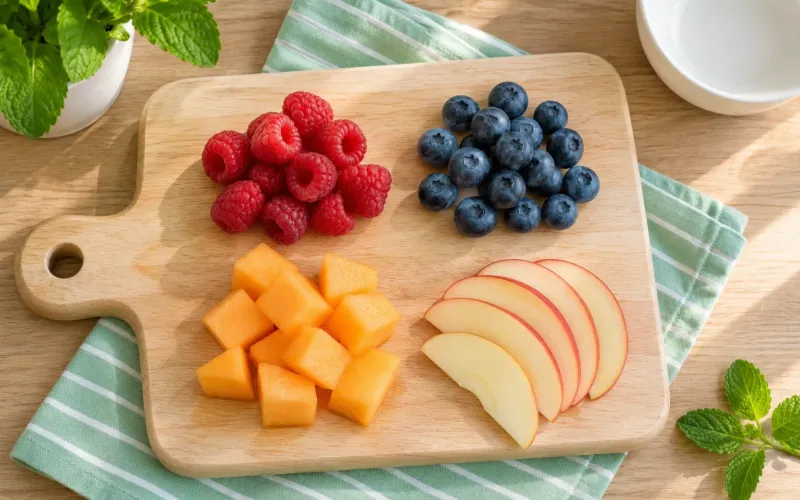
How to Prepare Fruit for Dogs
The 4-step prep rule
- Wash the fruit to remove dirt and residue.
- Remove every seed, pit, core, stem, peel and rind.
- Cut to a size your dog can't choke on (halve berries for toy breeds).
- Serve plain: no sugar, syrup, chocolate, yogurt coatings or spices.
Fresh, frozen, dried or canned?
Fresh and plain frozen fruit are best. Frozen blueberries or watermelon cubes make a cooling summer chew. Dried fruit is sugar-dense and easy to overfeed, and canned fruit often sits in syrup, so skip both. Fruit juice adds sugar without fiber. For more ideas, see our frozen dog treats and blueberry dog treats.

Puppies, Seniors and Health Conditions
- Puppies: fine to try tiny pieces after weaning, but their tummies are sensitive. Introduce one fruit at a time.
- Diabetic dogs: sugar matters. Ask your vet before adding fruit; berries in tiny amounts are usually the lowest-sugar option.
- Overweight dogs: swap a biscuit for a few frozen berries or cucumber slices (see overweight dog).
- Sensitive stomach or pancreatitis: introduce slowly and keep portions small; stop if stools soften.
- Kidney disease: some fruits are high in potassium (banana, kiwi). Check with your vet.
Which fruit do you most often recommend as an everyday low-sugar treat? Blueberries. They are small, low in calories (about 1 calorie per berry), need no peeling or seed removal, and are easy to portion for any size dog.
How quickly should I call after my dog eats grapes or raisins, even if the dog seems fine? Right away. There is no known safe amount, and early treatment to make the dog vomit and protect the kidneys works best within the first few hours, before any signs appear.
— Dr. Sarah Miller, DVM
Sharing Fruit With Your Dog
✓ Do
- Wash and cut to bite size
- Remove seeds, pits and rinds
- Start with one piece
- Freeze berries for summer
✕ Don't
- Grapes or raisins, ever
- Fruit in syrup or canned
- Dried fruit mixes
- More than the 10% treat budget
Fruit is a treat, not a meal.
Frequently Asked Questions
What fruits can dogs eat every day?
Low-sugar fruits like blueberries, strawberries, raspberries and watermelon can be a small daily treat if they fit the 10% treat budget. Rotate fruits rather than feeding a large amount of one.
What fruits are toxic to dogs?
Grapes and raisins are the main toxic fruits. Avocado, plums and the pits of cherries, peaches and apricots are also risky. See our list of foods toxic to dogs.
Can dogs eat fruit skin?
Thin skins on apples and pears are fine. Remove tough or bitter peels and rinds, such as banana peel, citrus peel, kiwi skin, melon rind and pineapple skin.
Is fruit good for dogs?
In small amounts, yes. Fruit adds water, fiber and antioxidants, and it is a lower-calorie swap for many store treats. It doesn't replace a complete and balanced dog food.
Can dogs eat dried fruit?
It's best to avoid it. Dried fruit is concentrated sugar, and mixes often contain raisins or sweetened cranberries.
The Bottom Line
So, what fruits can dogs eat? Most common fruits are safe in small, plain, prepared pieces: think berries, apple slices, banana coins and melon cubes. Remove seeds, pits and rinds, keep fruit inside the 10% treat budget, and never give grapes or raisins. For vegetables and other foods, see What Can Dogs Eat?.
References & Sources
Written by CPD Nutrition Desk using the sources below. We are not affiliated with these organizations, and this guide is not a substitute for advice from your veterinarian.
- ASPCA — ASPCA Animal Poison Control Center
- USDA — USDA FoodData Central