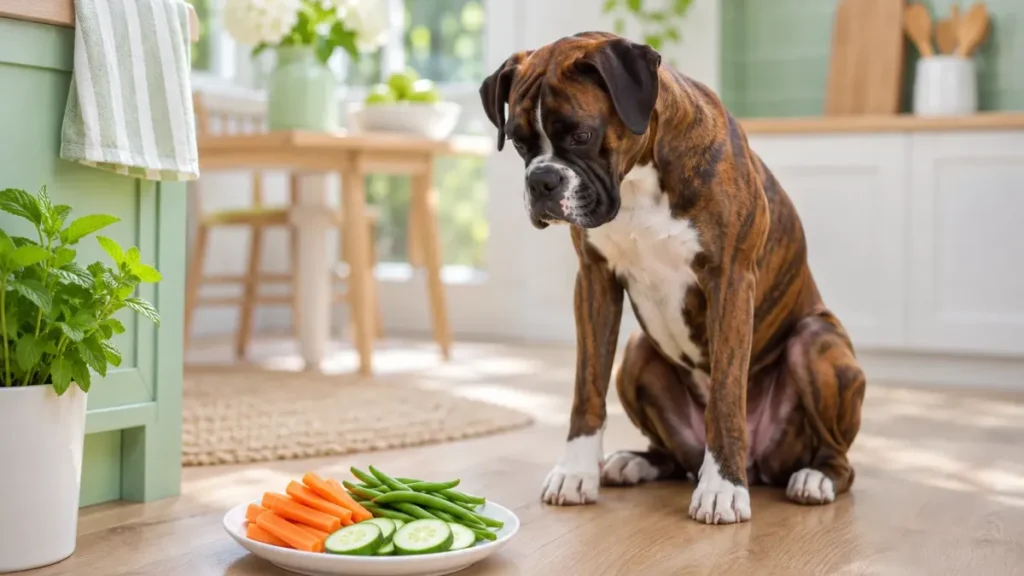

What vegetables can dogs eat? Carrots, green beans, cucumbers, zucchini, celery, peas, bell peppers, cauliflower, lettuce, asparagus, sweet potatoes, pumpkin and plain broccoli are all safe for most dogs in small, plain portions. Onions, garlic, leeks, chives, wild mushrooms, raw or green potatoes and tomato plants are the vegetables to avoid.
Vegetables make great low-calorie treats and food toppers. Serve them plain, washed and cut small; lightly steam hard vegetables for easier digestion. Keep veggies, like all extras, within about 10% of your dog's daily calories.

Table of Contents
What Vegetables Can Dogs Eat? The Complete Chart
Each vegetable links to our full guide with portions and warnings.
| Vegetable | Verdict | Raw or cooked? | Tip |
|---|---|---|---|
| Carrots | Yes | Both | Raw sticks for chewing; cut coins for small dogs |
| Green beans | Yes | Both | Plain only; no canned salt or seasoning |
| Cucumbers | Yes | Raw | Very low calorie; slice thin |
| Zucchini | Yes | Both | Slices or grated into food |
| Celery | Yes | Raw | Cut small; strings can be a choking risk |
| Peas | Yes | Cooked or thawed frozen | Green and snap peas; no canned |
| Bell peppers | Yes | Both | Remove seeds and stem; never spicy peppers |
| Cauliflower | Yes | Cooked best | Small florets; can cause gas |
| Lettuce | Yes | Raw | Mostly water; no dressing |
| Asparagus | Yes | Cooked | Raw stalks are tough; cut small |
| Sweet potatoes | Yes | Cooked only | Plain, mashed or cubed |
| Pumpkin | Yes, in moderation | Cooked or plain canned | Not pie filling |
| Broccoli | Yes, in moderation | Both | Keep under 10% of the diet |
| Brussels sprouts | Yes, in moderation | Cooked | 1-2 sprouts; gassy |
| Spinach | Small amounts | Cooked | High in oxalates |
| Cabbage | Yes | Cooked | Small amounts; gassy |
| Beets | Small amounts | Cooked | Can tint urine and stool red |
| Corn | Kernels only | Cooked | Never the cob |
| Potatoes | Cooked only | Cooked | Never raw or green |
| Edamame | Small amounts | Cooked, shelled | Unsalted |
"In moderation" means extra fiber, oxalates or gas can upset the stomach in larger amounts. Introduce one vegetable at a time.
Vegetables Dogs Should Not Eat
- Onions, garlic, leeks, chives and shallots: the allium family can damage red blood cells, raw, cooked or powdered.
- Wild mushrooms: some are deadly. Plain store-bought mushrooms are fine in small amounts.
- Raw or green potatoes and potato leaves: contain solanine.
- Tomato and potato plants (stems and leaves): green parts contain solanine. Ripe tomato flesh is OK in small bites.
- Rhubarb leaves: high in oxalates.
- Corn on the cob: the cob is a common cause of gut blockage.
- Seasoned vegetables: butter, salt, onion powder, garlic salt and creamy sauces.
If your dog ate onions, garlic, wild mushrooms or a corn cob, call your vet or the ASPCA Animal Poison Control Center right away.
How Much Vegetables Can a Dog Eat?
Vegetables count toward the 10% treat budget. Because most are very low in calories, you can give a decent handful, but go slowly to avoid gas and loose stool.
| Dog size | Daily treat budget* | Example vegetable portion |
|---|---|---|
| Small, 10 lb (4.5 kg) | about 35 kcal | 2-3 baby carrots or 6-8 green beans |
| Medium, 30 lb (14 kg) | about 80 kcal | 4-5 baby carrots or 1/3 cup green beans |
| Large, 60 lb (27 kg) | about 130 kcal | 1 cup mixed raw veggies |
*Estimate: 70 x kg^0.75 x 1.6, then 10%. Portions assume vegetables are only part of the day's treats.
Lowest-calorie vegetables (per 100 g)
Great swaps for dogs that need to lose weight. Values from USDA FoodData Central, rounded.
| Vegetable | Calories | Best use |
|---|---|---|
| Celery | 14 | Crunchy chew |
| Cucumber | 15 | Summer snack |
| Zucchini | 17 | Food topper |
| Lettuce (romaine) | 17 | Light snack |
| Asparagus | 20 | Cooked bites |
| Cauliflower | 25 | Steamed florets |
| Green beans | 31 | Diet filler |
| Broccoli | 34 | Small florets |
| Carrots | 41 | Dental crunch |
| Peas | 81 | Training rewards |
Raw or Cooked: Which Is Better?
Raw vegetables
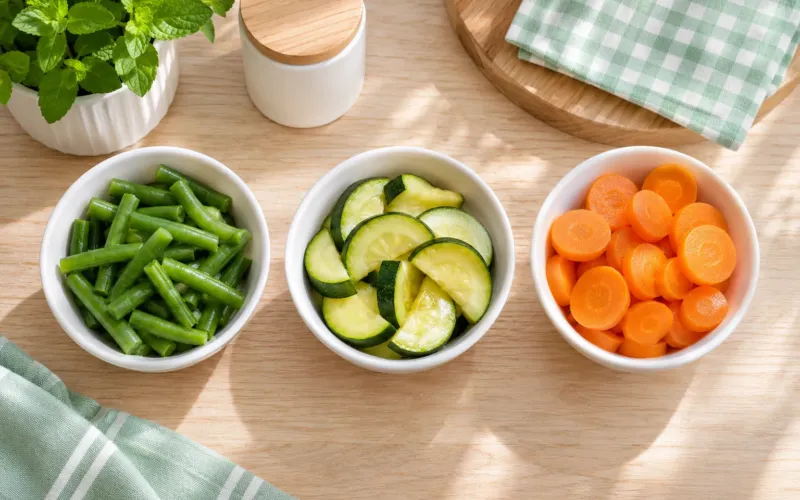
Crunchy raw carrots, cucumbers and bell peppers are great chews and keep all their vitamins. Cut them small enough to avoid choking.
Cooked vegetables
Dogs digest cooked vegetables more easily. Steam or boil without salt, butter or oil. Sweet potatoes, potatoes, pumpkin, asparagus and Brussels sprouts should always be cooked.
Canned and frozen
Plain frozen vegetables are a cheap, handy option (thaw peas and green beans first). Canned vegetables often have added salt; rinse them or choose "no salt added."
Best Vegetables for Specific Needs
- Weight loss: green beans, cucumbers, celery and zucchini (see overweight dog).
- Constipation: plain pumpkin and cooked sweet potato for fiber (see dog constipation).
- Chewing and boredom: frozen carrots for big dogs.
- Picky eaters: a spoon of mashed sweet potato or pumpkin as a food topper.

Raw or lightly steamed vegetables: which is better for most dogs? Lightly steamed for most dogs, because it is easier to digest and safer for gulpers. Crunchy raw carrots or cucumber are fine for dogs that chew well.
Which vegetable causes the most stomach upsets when owners overdo it? Broccoli and other cruciferous vegetables, which can cause gas and loose stool in larger amounts. Keep them to a small share of treats.
— Dr. Sarah Miller, DVM
Feeding Vegetables to Dogs
✓ Do
- Wash and cut small
- Steam hard vegetables
- Introduce one at a time
- Use as low-calorie treats
✕ Don't
- Onions, garlic, leeks, chives
- Butter, salt or seasoning
- Corn on the cob
- Raw or green potatoes
Plain and small is the rule.
Frequently Asked Questions
What vegetables can dogs eat every day?
Green beans, carrots, cucumbers and zucchini are good everyday choices in small portions. Rotate a few and keep them within the 10% treat budget.
What vegetables are toxic to dogs?
Onions, garlic, leeks, chives and shallots are the main toxic vegetables. Wild mushrooms, raw green potatoes and tomato or potato plant parts are also unsafe. See foods toxic to dogs.
Can I put vegetables in my dog's food?
Yes, a spoon or two of plain cooked or grated vegetables makes a healthy topper. If you cook complete meals, see homemade dog food recipes.
Do dogs need vegetables?
A complete and balanced dog food already covers your dog's needs. Vegetables are optional extras that add fiber, water and crunch.
Can dogs eat mixed frozen vegetables?
Plain frozen mixes of peas, carrots, green beans and corn kernels are fine thawed. Avoid mixes with onions or seasoning.
The Bottom Line
So, what vegetables can dogs eat? Most common, plain vegetables are safe in small pieces: carrots, green beans, cucumbers, zucchini, peas and pumpkin top the list. Skip onions, garlic and their relatives, cook starchy vegetables, and keep portions small. For fruit, see what fruits can dogs eat.
References & Sources
Written by CPD Nutrition Desk using the sources below. We are not affiliated with these organizations, and this guide is not a substitute for advice from your veterinarian.
- ASPCA — ASPCA Animal Poison Control Center
- USDA — USDA FoodData Central